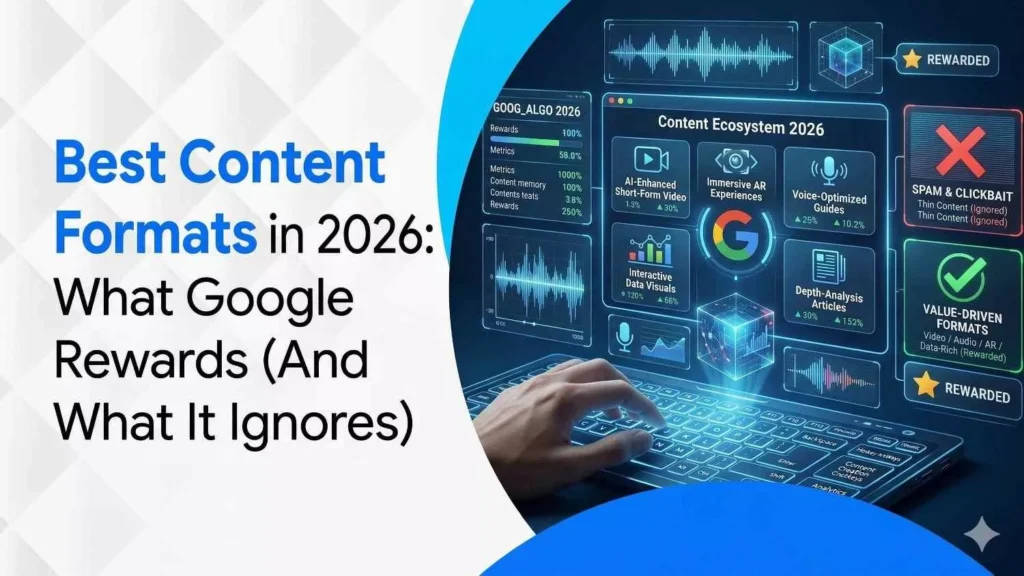
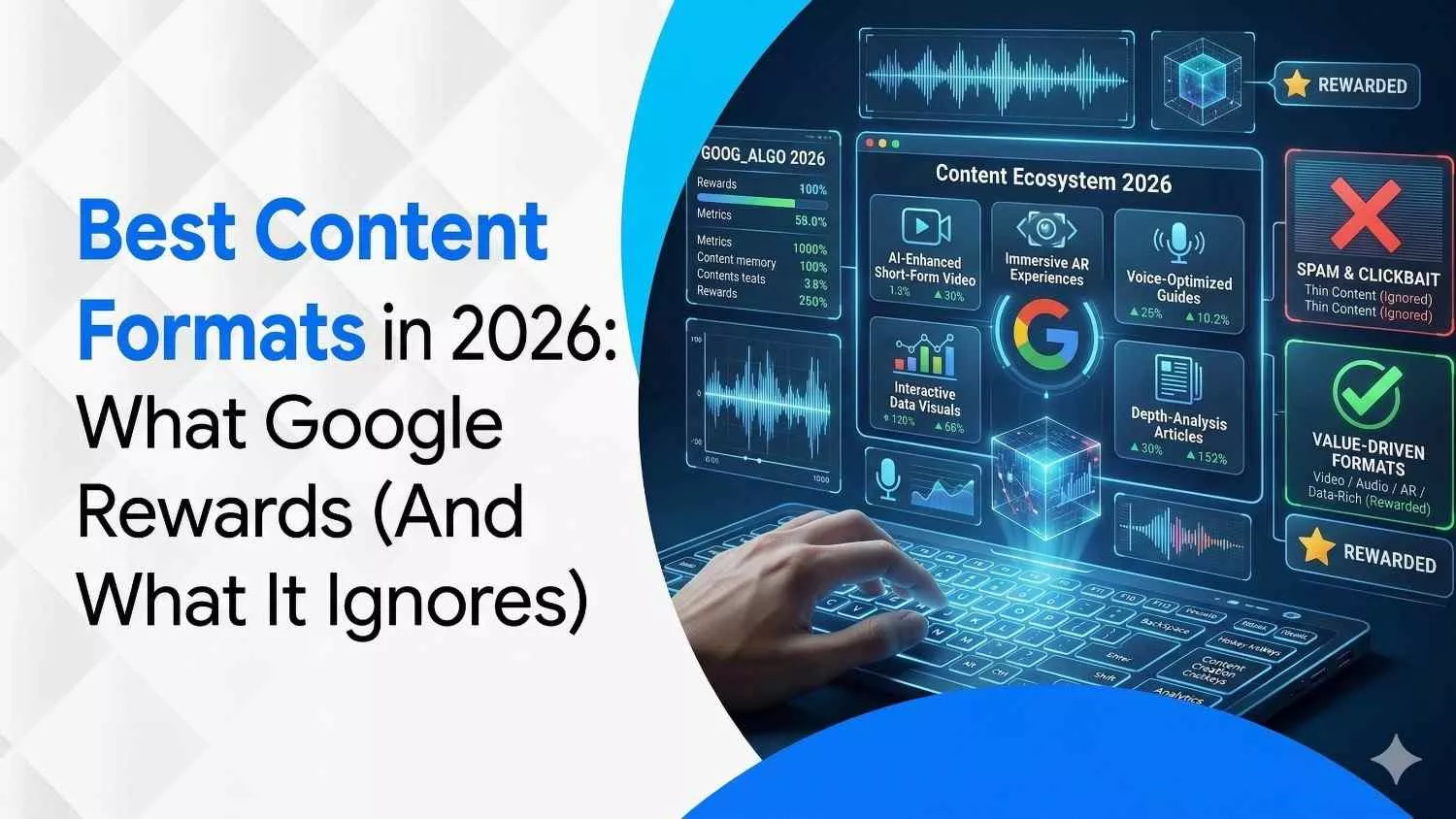
In 2026, Google rewards content formats that prove REAL expertise, REAL experience, and REAL usefulness.
That means short-form videos, structured visual content, and well-built articles that answer specific questions clearly. What Google mostly ignores now is generic AI-written filler, thin blog posts, and content that says a lot without proving anything. In short, Google can also identify bs a mile away.
Remember the good old days when getting found on Google was a piece of cake?
Pick a keyword, repeat it a few times, build some links, and hope for the best. For a while, that worked. Now the whole game has changed!
AI summaries answer questions before users click. Zero-click results keep people on Google. Short videos show up for more searches. Forums, creator content, and expert-led pages often sit beside traditional blog posts. Search has not stopped working, but it has changed what counts as useful content.
That is why the best-performing content usually does one of two things very well.
It either teaches something quickly, like a short video or a swipeable visual, or it explains it in depth, like a structured guide backed by examples, expert input, or real results. In both cases, the format supports the user’s goal. It does not exist just to fill space.
This is not one of those trend pieces that says a lot and explains nothing. It is a practical breakdown of what Google rewards in 2026, what it leaves in the digital graveyard, and how to match the right content format to the right topic.
Google 2026 Updates at a Glance
Let us look at the new updates first, because they explain why this blog matters now.
Google’s 2026 updates all point in the same direction: more weight on usefulness, originality, and topic trust, and less patience for scaled junk or empty formatting tricks.
Update
Dates
Scope
What does the signal mean for content
February 2026 Discover Update
Feb 5 to Feb 27, 2026
Discover only
Discover is no longer a lucky traffic bonus. It needs original, topic-relevant content that people actually want to read.
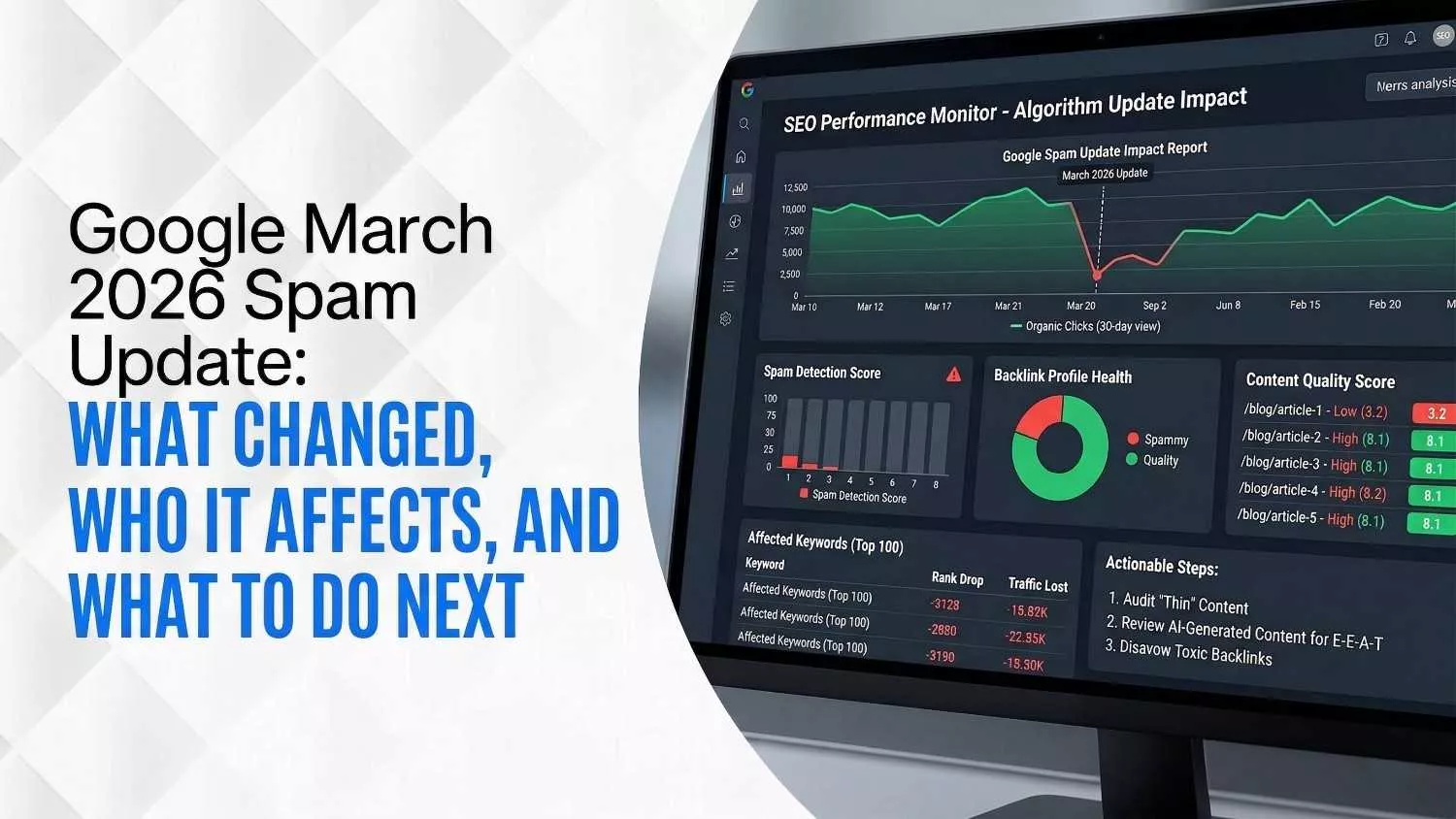
March 2026 Spam Update
Mar 24 to Mar 25, 2026
Global spam systems
Thin, manipulative, scaled content is even riskier. Google moved fast here, which tells you it already knew what it wanted to filter.
March 2026 Core Update
Started Mar 27, 2026
Broad Search ranking systems
Google is still refining how it surfaces relevant, satisfying content. Strong sites with real expertise usually handle this better than weak, mixed-topic sites.
The February 2026 update ran for about 21 days and was tied to Discover, not standard Search. The March 2026 spam update lasted about 19 hours and 30 minutes. The March 2026 core update began on March 27 and Google said it could take up to two weeks to complete.
The simple takeaway is this: Google is not changing course. It is getting stricter about rewarding content that is useful, trustworthy, and built with clear topic expertise. That is exactly why content format matters more in 2026.
How Google Evaluates Content in 2026: The New Rulebook
Before talking about formats, we need to talk about what Google is actually rewarding now.
In 2026, Google is not just looking at whether a page mentions the right keyword. It is looking at whether the page helps the searcher quickly, clearly, and credibly. Google’s own guidance says its systems prioritise helpful, reliable, people-first content, and its AI features use a broader set of supporting pages and sources than classic search alone.
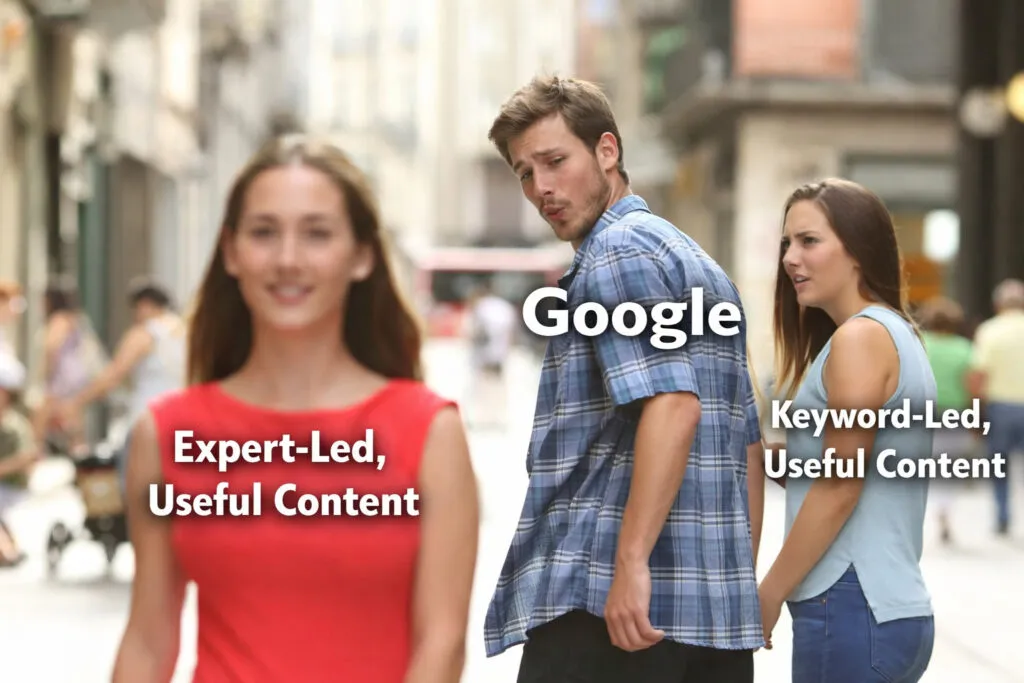
In plain terms, that means being relevant is not enough anymore. You also need to be expert-led useful content, trustworthy, and easy to understand.
If we have to summarise it kinda look like this:
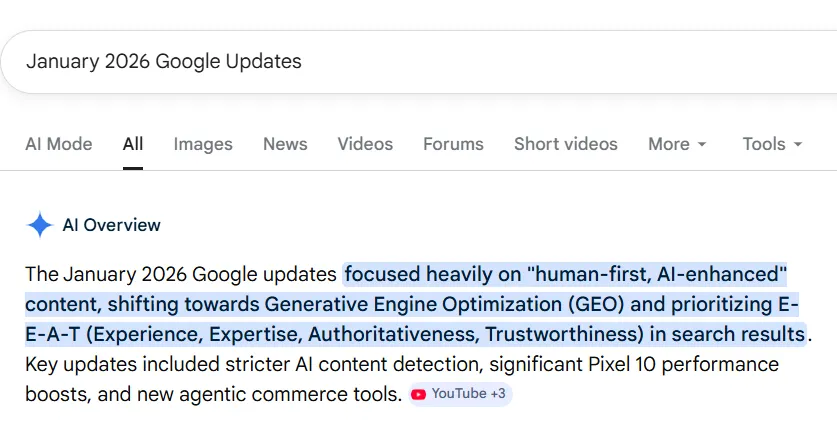
You will also keep hearing about E-E-A-T. That stands for Experience, Expertise, Authoritativeness, and Trustworthiness. It is not a magic score you “turn on” with a plugin. Even Google’s own public guidance says E-E-A-T is not a direct ranking signal in the simple sense people often imagine. It is better understood as a collection of trust cues.
Things like first-hand experience, clear authorship, accurate information, strong sourcing, and a site reputation that fits the topic all help Google decide whether you are a sensible source for that query.
There is one more shift that matters a lot in 2026: Google is judging topical depth across the site, not just page by page. This is often called topical authority. It means a site that consistently covers one subject in depth usually has an advantage over a general site that publishes one random article on that subject every few months. In other words, Google trusts specialists more than tourists.
So the new rulebook is fairly simple, even if the search results are not. Google wants content that answers the query well, comes from a source that makes sense, and fits into a broader pattern of expertise. That is the filter every content format now has to pass.
Content Formats Google Rewards in 2026
Long-Form, In-Depth Articles Still Matter
Long-form content is still one of Google’s safest bets, but only when the topic actually needs depth.
Some 2026 analyses continue to find that longer content earns more backlinks on average, including a widely cited figure that articles over 2,000 words attract materially more linking than shorter ones.
Another recurring benchmark places first-page article length around the mid-to-high four figures depending on niche and competition. That does not mean every page should be bloated into a small novel. It means depth still works when the query calls for depth.
What Google seems to reward is not raw length. It is coverage. A strong long-form article answers the main question early, covers related questions naturally, includes examples or evidence, and gets refreshed when facts change.
Long content that wanders, repeats itself, or hides the answer halfway down is just a long way of wasting everyone’s time.
Just like that nobody bothers reading your article because it fails to answer the real question!
However, authoritative guides still perform well for complex topics like tax, law, healthcare, software, finance, and strategy. Users need context there. Google knows that. A shallow answer on a deep topic looks thin. A useful deep answer looks earned.
Video Content Is No Longer the Side Dish
For years, video often depended on text around it to rank properly. That gap is shrinking.
Recent reporting on Google’s multimodal search systems says Google’s LLMs can now understand audio and video content more directly, rather than relying only on titles, tags, and transcripts. In simple terms, Google is getting better at understanding what a video actually says and shows. That matters because it reduces the old structural advantage text had over other formats.
Google also appears better at understanding what a video is about and even the style or approach it takes. That means authenticity, depth, and substance matter more than before. A useful, clear video can outperform a polished but empty one. Good lighting is nice. Being actually helpful is nicer.
For content creators, this changes the job.
Video is no longer just something you embed at the bottom of a blog post to look productive. It can now be a primary asset for ranking, discovery, and citation.
Short-Form Video Wins Discovery
Short-form video has become one of the strongest discovery formats in 2026.
Recent social and search analysis suggests that the best-performing brands use short-form video, often under 90 seconds, to capture attention and introduce a problem, idea, or quick solution. Then they use longer video or written content to build authority and explain the subject more fully. That split makes sense because short-form is good at opening the door, not always at finishing the conversation.
This is especially important for queries where the user wants a quick demonstration.
Think “how to clean white shoes,” “how to connect Shopify to Meta,” or “how to fix a leaky faucet.” In these cases, a short video can satisfy the intent faster than a wall of text.
Google has noticed that users often prefer that. So the format gets more visibility.
That does not mean every brand now needs to dance next to subtitles and point at floating text boxes. It means if the topic is visual, procedural, or simple to demonstrate, short video is often the right format.
Original Research and Data-Driven Content Carry More Weight
If Google has to choose between a page repeating the same recycled advice and a page bringing new information to the table, the second one has the better shot.
Google’s people-first guidance strongly aligns with original insights, evidence, and first-hand input. Independent 2026 analysis also suggests that publishing original data can produce measurable ranking benefits, while the mere use of AI is not what triggers weak performance. Quality, originality, and usefulness matter more than whether AI was somewhere in the workflow.
This is an important distinction. Google is not treating AI like garlic against vampires. It is treating low-value content like low-value content.
If a piece includes survey findings, internal data, real case studies, screenshots, before-and-after results, or expert commentary that adds something new, it stands out. If it just remixes what is already ranking, it blends into the wallpaper.
That is why information gain matters. Information gain means your page adds something the search results did not already have. New examples. Better framing. Fresh data.A sharper answer. In 2026, that extra value is one of the clearest ways to avoid producing content that looks interchangeable.
Structured, Extractable Content Is Built for AI Search
One of the biggest format shifts in 2026 is this: content now needs to be easy to extract, not just pleasant to read.
AI systems often work by identifying useful chunks, summaries, definitions, steps, and answers they can pull into overviews or citations.
One recent SEO analysis put it bluntly: AI systems do not “read” like humans do, they extract. That is why question-based headings, concise answers, summaries, and clear formatting are becoming more important.
This does not mean your blog needs to sound like a robot wrote it for another robot. It means your structure should help both people and machines find the answer quickly. Good examples include:
headings that match real questions
short definition paragraphs
step-by-step sections
comparison blocks
tables when they genuinely help
strong summaries at the top of sections
Structured data also matters, though it needs a quick reality check.
Structured data is code that helps search engines understand what a page contains. Google officially supports schema types such as FAQPage and Article for certain uses, and says structured data can help pages become eligible for rich results. But Google does not guarantee rich results, and some older features, like How-to rich results on desktop, have been reduced or deprecated.
So schema is useful context, not a magic trick.
Topic Clusters and Pillar Content Build Trust Across the Site
Google is rewarding content ecosystems more than isolated pages.
A pillar page is a broad, authoritative page on a core topic. A topic cluster is a group of related supporting pages that explore subtopics in more detail and link back to the pillar.
This model helps users navigate a subject and helps search engines understand that your site covers the topic in a complete, connected way.
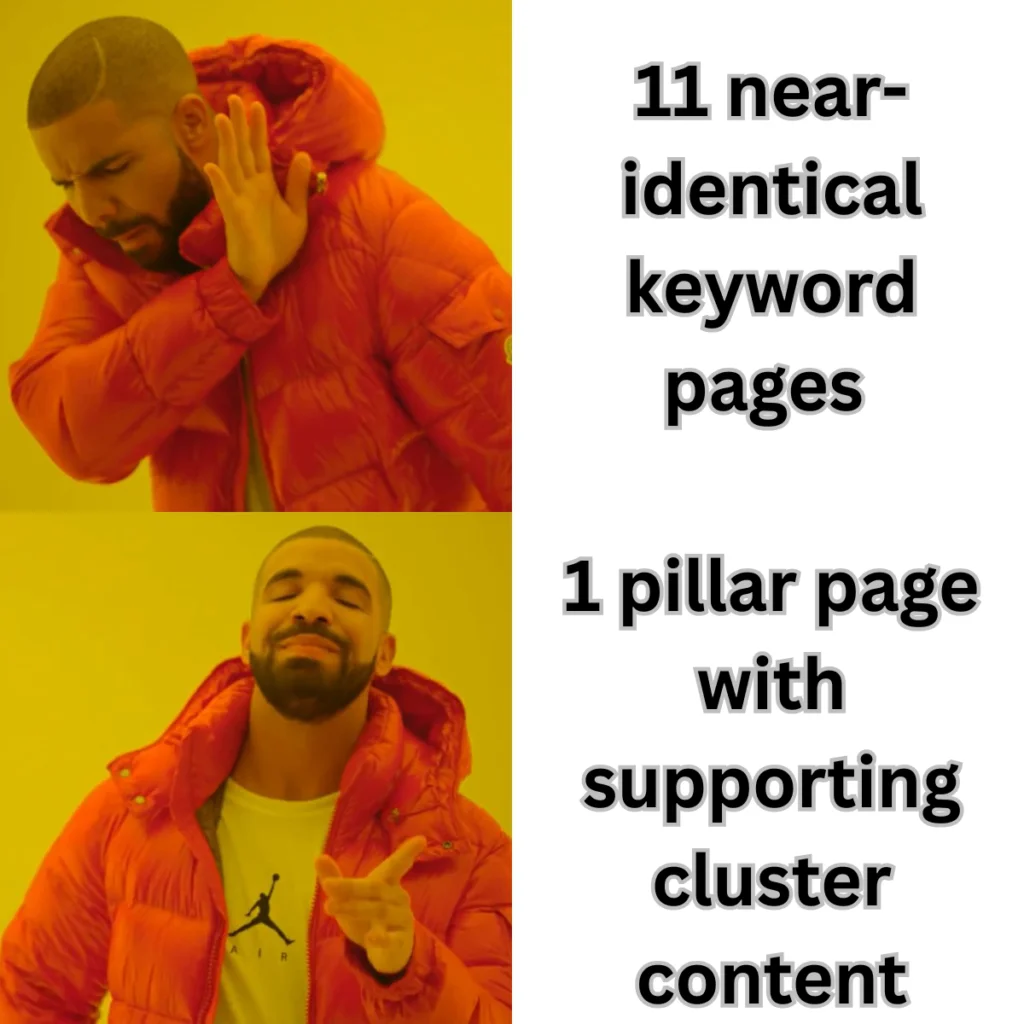
This works well in 2026 because Google is evaluating overall topic coverage more seriously. Instead of publishing ten disconnected articles all trying to rank for slight keyword variations, sites are often better off building one main resource and supporting it with useful related pages.
It is cleaner, clearer, and frankly less embarrassing than creating eleven near-identical pages and hoping no one notices.
Content Formats Google Is Increasingly Ignoring
Generic AI-Generated Content
Google’s guidance does not ban AI content outright. What it does push down is content made mainly to manipulate rankings rather than help users.
That means generic AI output without original thought, editing, experience, or added value is much more likely to underperform.
This is the content people often describe as AI mush. It sounds polished at first.
Then you realise it says the same thing five different ways, avoids real specifics, and somehow uses 1,800 words to communicate one damp sentence of value.
Thin, High-Volume Publishing
Publishing a huge number of weak pages is not a content strategy. It is a littering strategy.
A growing body of 2025 and 2026 SEO commentary warns that mass-publishing thin, repetitive pages can hurt site quality signals.
Google’s own people-first framework also points away from producing content mainly because search engines might click on it. In practice, a smaller library of genuinely useful pages usually beats a giant archive of forgettable filler.
So yes, twenty strong pages can absolutely outperform two hundred weak ones. That is not poetry. That is quality control.
Keyword-Stuffed, Format-Blind Articles
Keyword stuffing was already tired. In 2026, it looks even worse because AI systems often process your page before a human ever reaches it.
If your article is awkward, repetitive, hard to skim, or clearly written to hit phrase counts instead of answer questions, it becomes harder to extract, harder to trust, and easier to skip.
That is why conversational structure, direct answers, and clean formatting now matter more than old-school density games.
The same goes for format blindness. Not every topic should be a standard blog post!
Some should be a chart, a short explainer video, a comparison page, a case study, or a visual walkthrough. Using the wrong format for the intent is one of the quietest ways to make decent content invisible.
Off-Topic Guest Posts and Link-Farm Content
Google is also getting better at filtering content ecosystems that exist mainly to trade visibility rather than build real expertise.
If a site publishes random guest posts on unrelated subjects with little editorial control, that weakens topical consistency and trust.
Sites built around content volume and backlinks, rather than subject depth and quality, are becoming less reliable ranking vehicles.
In simple terms, if a website publishes crypto advice on Monday, kitchen tile tips on Tuesday, and dog grooming trends on Wednesday, Google may reasonably wonder whether anyone is steering the ship.
The AI Overviews Factor: A New Game for All Formats
AI Overviews changed the search results page in a way that affects nearly every format.
Google says AI Overviews appear when its systems think generative AI can help users quickly understand information from a range of sources. These answers sit high on the page and can reduce the need for a click, especially for informational queries where the user mainly wants a fast explanation.
That is why generic informational content is under more pressure now. If your article answers a common question in a completely generic way, Google may summarise the answer directly on the results page and send fewer clicks your way.
This is one reason brands are seeing more zero-click search behaviour. A zero-click search is when the user gets what they need from the search page and never visits a site.
But the picture is not all doom and dramatic LinkedIn posts.
Being cited in an AI Overview can still have value. Google’s AI systems can surface a wider and more diverse set of supporting links, and several industry analyses note that even when citations do not drive many clicks, they can still support brand visibility, recall, and authority.
So yes, fewer clicks can sting. But being the source users saw can still matter.
The practical takeaway is this: content now has two jobs. It needs to be good enough to get extracted and cited, and valuable enough to earn the click when the user wants more than the summary can provide.
That is where format choice matters again.
Short videos may help with discovery. Structured definitions may help with extraction. Long-form guides may help when users want depth, comparison, examples, or a decision. The format decides whether your content gets skipped, cited, clicked, or remembered.
Practical Takeaways: How to Format Content for 2026
Here is the part you can actually use without opening twelve tabs and pretending that counts as a strategy session.
Lead With the Answer
Put the main answer near the top. This is often called the inverted pyramid structure. It means you give the key information first, then add supporting detail underneath. It helps users, and it helps AI systems understand your page faster.
Use Clear, Question-Based Headings
Good headings improve scanning, clarify intent, and make extraction easier. They also force you to stay focused, which is helpful when your draft starts trying to become three articles at once.
Add Author Bios and Credentials
Clear authorship supports trust. If the topic requires expertise, show why the author is a credible source. That supports E-E-A-T far better than hiding behind “Admin Team.”
Include Original Data, Case Studies, or First-Hand Experience
This is how you create information gain and prove experience. Even one real example, screenshot set, internal data point, or case study can separate your page from a dozen generic lookalikes.
Embed Video With Captions and Useful Context
If the topic benefits from a visual explanation, use video. Give it captions, a clear title, and surrounding context so users and search systems can understand what problem it solves. As Google gets better at reading multimedia directly, this becomes more valuable, not less.
Use Relevant Structured Data
Implement schema where it genuinely fits the content. Article markup is a sensible baseline for many blogs. FAQ markup can help when the page includes real question-and-answer sections. Just do not treat schema like a costume you throw on weak content and hope nobody notices.
Update Older Content Regularly
Freshness matters when facts, tools, regulations, or search behaviour change. Updating old content helps maintain relevance, improve accuracy, and signal that the page is still being maintained by actual humans.
Final Thoughts
The best content formats in 2026 are not winning because they are trendy. They are winning because they fit how search works now.
Google rewards formats that help it understand the page quickly and help users solve the problem clearly. That is why in-depth articles, useful videos, original research, structured answers, and topic clusters are performing well. They do not just contain information. They deliver it in a format that matches the user’s intent and proves the creator knows the subject.
What gets ignored is the opposite: generic AI filler, thin content at scale, keyword-stuffed writing, and pages that exist mainly to chase rankings without adding anything useful.
If you want content that is built for how Google works now, not how it worked three years ago, Wide Ripples Digital can help. We create content strategies, topic clusters, and search-focused pages that are built to rank, built to help, and built to turn visibility into real business growth.
Neha Ghauri, a graduate, has seven years of experience in writing for the digital marketing, finance, and business industries. She specializes in SEO-driven...