In 2026, your best post can still flop fast. It can look great. It can be useful. But if it fails one early signal, it gets buried before anyone sees it. That is why most marketing feels random.
Here is the good news. Once you understand social media algorithms, you stop guessing. You start building posts that earn reach on purpose.
A social media algorithm is a ranking system. It decides what each person sees next. It exists because there is too much content for any feed to show in time order. So the platform predicts what you will watch, save, share, or reply to, then sorts the feed around that.
By the end, you will know what to post, why it works, and what to track.
What a Social Media Algorithm Really Is
The simple definition most people miss
An algorithm is not a magic trick. It is a ranking and recommendation system. Its job is to pick what each person sees next, based on what that person usually does.
Think of it like a coach. It watches what your audience reacts to. Then it sends more of that to them. If your post looks like something they skip, it gets less room.
Why feeds stopped being chronological
Chronological feeds break when volume explodes. People follow too many accounts. Brands post too often. Platforms also want you to stay longer. So they rank what seems most useful to each user, not what is newest. That is why you can post at the perfect time and still get weak results. Timing helps, but ranking signals decide the ceiling.
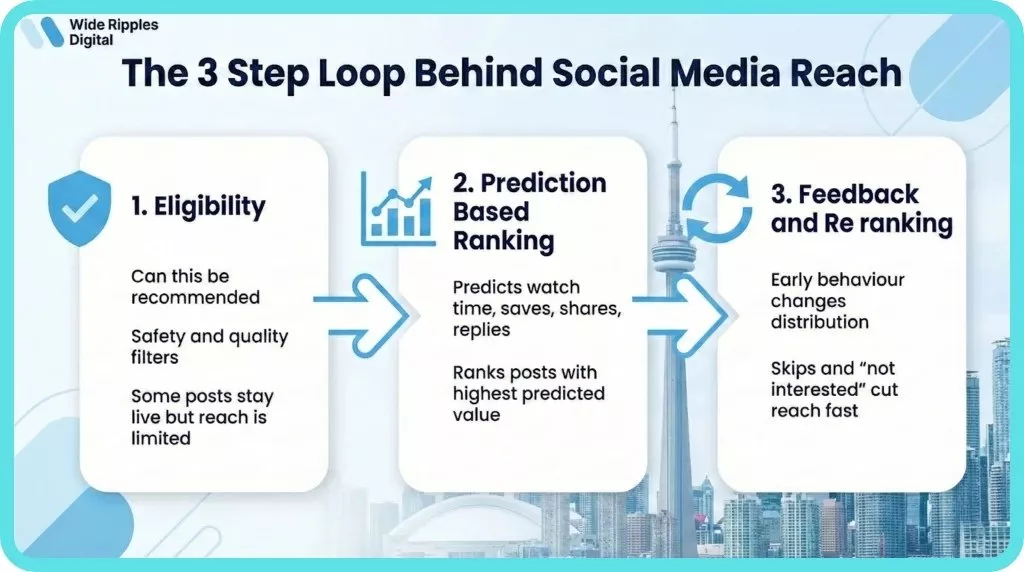
The 3 Step Loop Behind Nearly Every Feed
Step one, eligibility
First, the platform decides whether your post can be widely recommended. This is the part most marketers ignore. Your post can be allowed and still not get wide distribution. Here is the unique piece. Some platforms like TikTok apply “For You” eligibility rules. Content may stay live, but it can be limited from discovery surfaces if it is not suitable for broad recommendations. That is why reach can feel capped even when nothing is removed.
Step two, prediction-based ranking
Next, the system predicts actions. It guesses what people will do if they see your post. Watch time, saves, shares, replies, and profile taps matter because they show value, not just attention. Then the system ranks posts with the highest predicted value for that viewer. This is why one post can do well with a small group and fail with a bigger one. The prediction changes by audience.
Step three, feedback and re-ranking
Finally, real behaviour comes in. People react, skip, or engage. The system learns and adjusts the distribution. A strong early response can expand reach. A weak response can shrink it fast. Negative feedback is a shortcut to lower reach. Quick skips and “not interested” signals tell the system to stop pushing.
The Signals That Actually Move Reach in 2026
Retention signals
Retention is the base. If people do not stay, nothing else matters. Watch time, completion, replays, and dwell time tell the platform your post held attention.
Your practical move is simple. Match the first two seconds to the promise. If the hook says “three tips,” show the three tips quickly.
Value signals
This is where social media algorithms reward real usefulness. Saves, shares, and meaningful replies usually beat likes. A save means “I want this later.” A share means “someone else needs this.”
Your move here is to post things people keep. Checklists, templates, quick examples, and short how to steps work because they save.
Relationship signals
Platforms also look at the relationship between the viewer and the creator. If someone often replies to you, your content may show up more often to that person.
This is why comment replies matter. They are not just polite. They build a history that helps future posts.
Negative signals you must avoid
If people hide your post, skip fast, or report it, reach drops. Also, bait tactics can backfire. If the post feels misleading, people bounce. The system learns that pattern.
Your fix is to keep promises tight. No trick hooks. No vague captions. Clear topic, clear benefit.
Surfaces Matter More Than Most Marketers Think
Feed vs short video vs stories vs search
Not every surface wants the same thing. A discovery feed wants content that keeps strangers watching. Stories often favour people you already know. Search surfaces want clear topics and helpful text.
So your job is “surface fit.” One idea can work, but the packaging must match the surface goal.
Unique angle to add
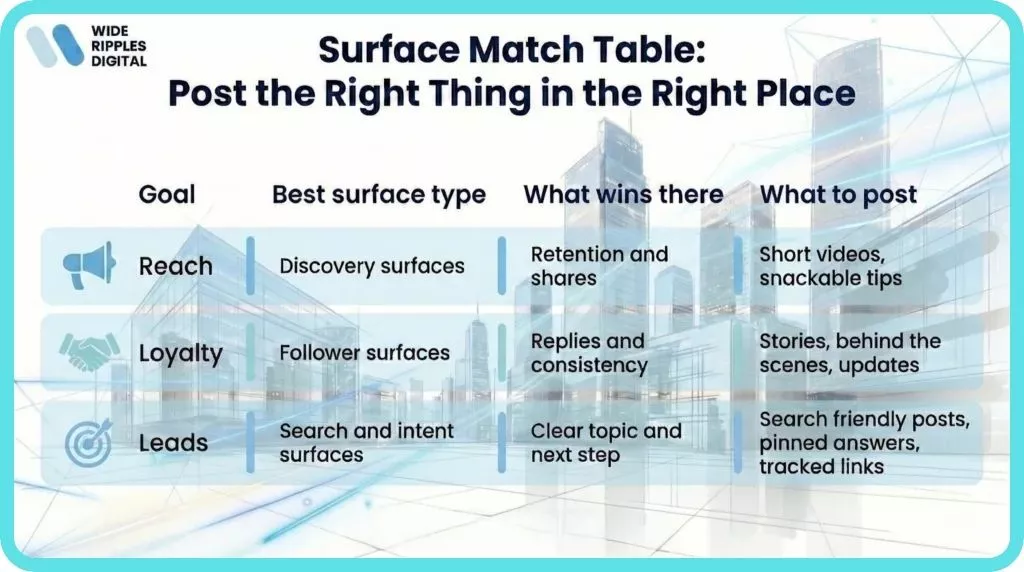
Here is a simple Surface Match Table you can use for planning.
Your goal
Best surface type
What wins there
What to post
Reach
Discovery surfaces
Retention and shares
Short videos, snackable tips
Loyalty
Follower surfaces
Replies and consistency
Stories, behind the scenes, updates
Leads
Intent surfaces
Clear topic and next step
Search friendly posts, pinned answers, links with UTMs
If your post keeps failing, do not blame the topic first. Check the surface. A lead post in a reach surface often feels like an ad. A reach post in a follower surface often lacks depth.
Platform Cheat Sheets for Engagement and Reach
Instagram and similar multi-surface apps
These apps behave like several apps in one. Feed, Reels, Stories, Explore, and Search do not rank the same way.
A useful concept is connected reach versus unconnected reach. Connected reach is your followers and people who already engage. Unconnected reach is discovery. If you want growth, plan content for both. One post to serve followers, one post built for new people.
TikTok discovery feeds
Discovery feeds learn from watching behaviour fast. They also include an eligibility layer. If the content is judged not suitable for broad recommendation, reach can be limited even if the post stays live.
Your practical play is to focus on one idea per video. Keep the promise clear. Earn full watches, then earn shares.
YouTube recommendation plus search
YouTube recommendations show up on Home and Up Next. They are personalized and heavily shaped by what people watch and what they ignore. If viewers do not click suggested videos, the system learns to stop showing similar ones.
That means packaging matters. Title and thumbnail set the click. The first 15 seconds set retention.
X ranking and open transparency trend
Some platforms, especially X, are moving toward more public algorithm talk, including open-sourcing parts of recommendation code. That shift matters because it pushes marketers toward clearer, less spammy tactics that hold up in daylight.
LinkedIn professional feeds
Professional feeds tend to value real conversations. Early engagement from the right people can help. Not just likes, but replies with substance.
Your practical play is to end posts with a real question that makes it easy to answer. Then reply quickly to keep the thread alive.
Social Search is the Quiet 2026 Reach Hack
Why captions and on-screen text now matter more
Social search is growing because people use platforms like search engines. Platforms index your text, your topic signals, and engagement patterns. If your post topic is unclear, it is harder to place and harder to find later.
The simple optimization checklist
Use this simple flow. Put the topic in the first line. Use the words people actually type. Add one question that matches what people ask. Then pin a comment that answers it in one clean paragraph.
This is the bridge between reach and leads. Discovery brings attention. Search brings intent.
Trust and Safety Filters That Change What Gets Recommended
Why borderline content gets limited
Recommendation systems do not only chase engagement. They also manage safety and quality. Some types of content may be allowed, but not boosted in recommendations. That is why you can be “fine” and still be capped.
The brand safety playbook
Keep it simple. Use real sources when you share claims. Avoid misleading edits. Avoid engagement bait. Add context so the post is hard to misread. Platforms have published guidance on content that may be reduced in recommendations, even when it stays up.
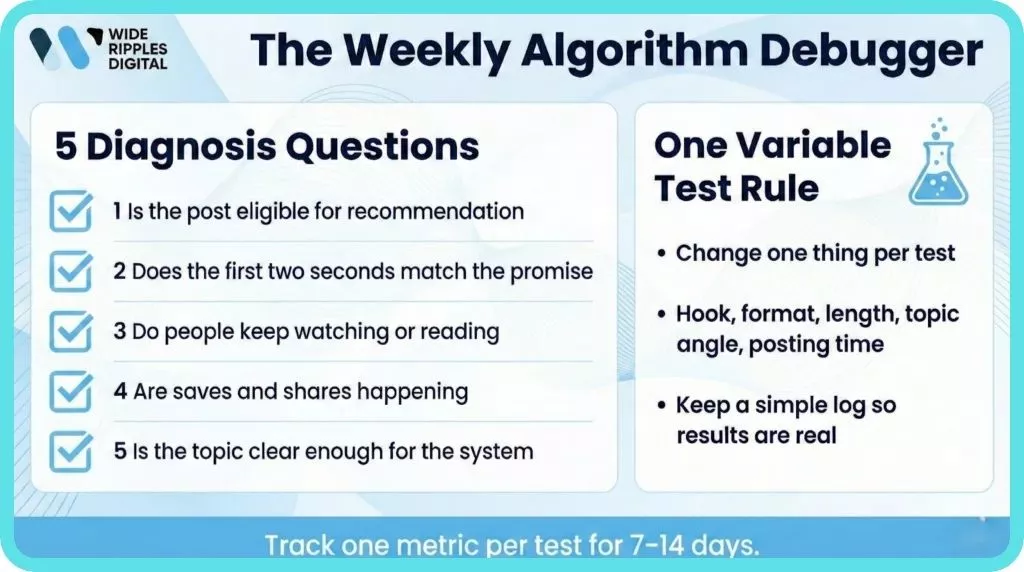
The Algorithm Debugger Marketers Can Use Weekly
The five questions to diagnose low reach
Is the post eligible for recommendation on this platform
Do the first two seconds match the promise
Do people keep watching or reading past the hook
Are saves, shares, or meaningful replies happening
Is the topic clear enough for the system to label it
If you answer “no” to any one of these, you have a clear fix.
One variable testing rule
Change one thing per test. Hook, format, length, topic angle, or posting time. Keep a simple log, so results are real. After four tests, patterns show up.
Measurement That Proves ROI, Not Just Likes
The four KPIs that map to revenue
Track four numbers. Reach, engaged reach, clicks or profile actions, and leads or sales. If you only track likes, you miss the path to money.
The basic tracking stack
Use platform analytics for reach and engagement. Use GA4 for site actions. Use UTMs so you can see which posts brought the visits and leads. Google’s Campaign URL Builder helps you build clean UTM links in minutes.
Canada has a large, active social audience, and social usage continues to be a major part of daily online behaviour in Canada, according to the Digital 2026 Canada report.
A Simple 30 Day Plan to Increase Reach Without Guessing
Week 1, baseline and cleanup
Fix your profile. Pin your best post. Set up UTMs. Write down your current averages.
Week 2, content that earns saves
Publish two helpful posts that solve one problem. Make them easy to save. Add one clear question.
Week 3, discovery posts
Publish two short videos. One idea, one outcome, one next step. Test two hooks.
Week 4, double down
Take the best topic and republish it in a second format. Turn a video into a carousel, or a post into a short clip. Keep the core idea the same so the test is fair.
Conclusion
If you remember one thing, remember this. Algorithms reward relevance, retention, and trust signals. When you build for those three, reach stops feeling random. If you want a complete growth framework, explore our social media marketing services to turn algorithm insights into consistent reach, leads, and conversions.
If you want a faster path, Wide Ripples Digital can help you audit what is holding your reach back, tighten your content plan, set up tracking, and build a simple testing loop that fits your team. If you want, ask for a quick audit of one week of posts, and you will get clear fixes you can apply right away.
Quick FAQs
What is a social media algorithm in simple terms?
It is a system that ranks content. It decides what each person sees based on predicted interest.
Why does my reach change week to week?
Because the system learns from results. Topic competition, audience behaviour, and early signals can change distribution.
What matters more in 2026, likes or watch time
Watch time and saves often matter more for reach. Likes can help, but they are usually weaker signals.
How long does it take to train an algorithm on my content?
You can see patterns in 30 days if you post consistently and test one variable at a time.
Why is my content live but not getting recommended?
It may be eligible to post but not eligible for broad recommendations. Or the early retention signals may be weak.
What is the safest way to test new content formats?
Change one thing per test, track results, and avoid misleading hooks that cause quick skips
Disclaimer:The information provided in this blog is for general informational purposes only. For professional assistance and advice, please contact experts.