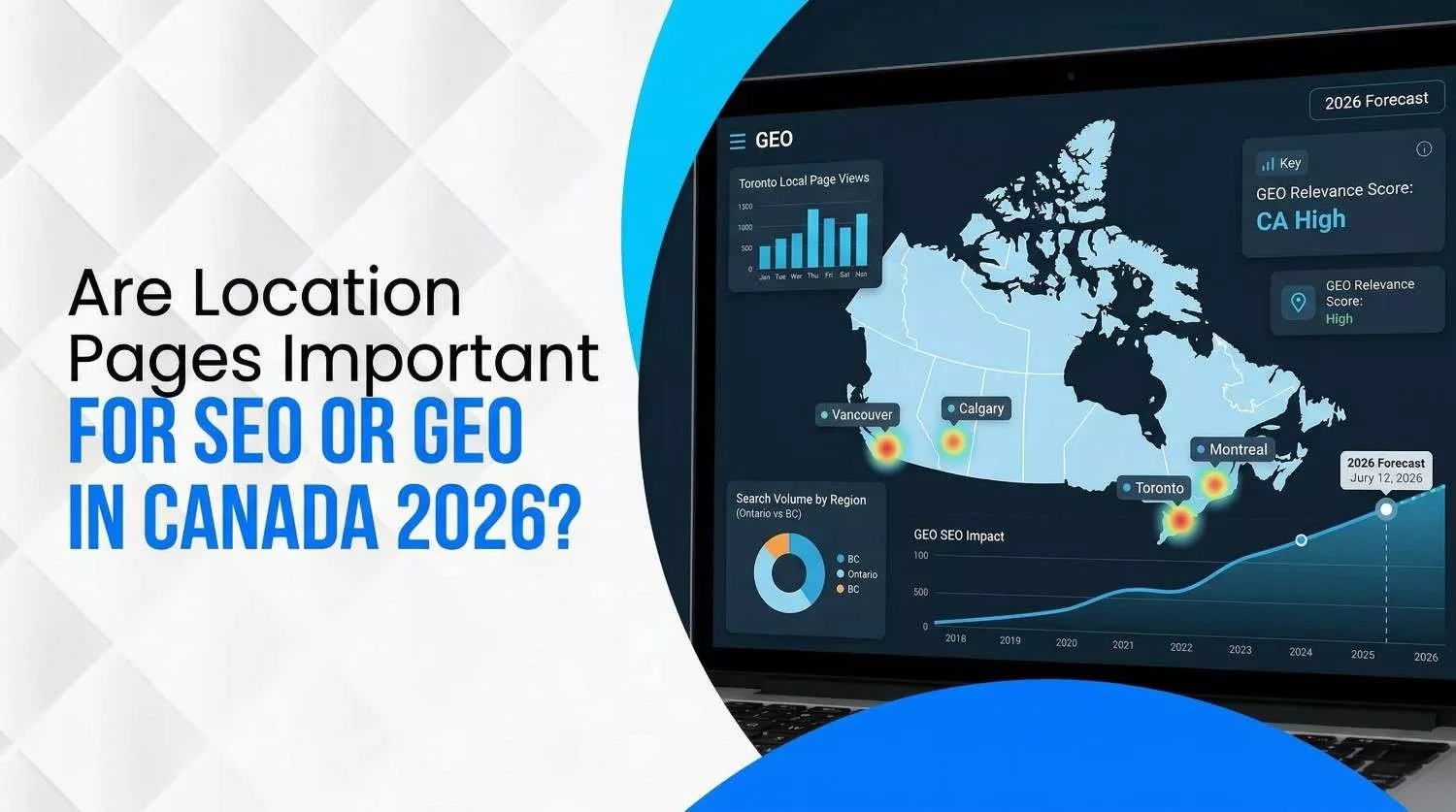
Do Location Pages Still Matter in 2026? Yes, But Only If They Are Built Properly
For a long time, location pages were one of the easiest ways to expand local visibility. Businesses would take one service page, swap out the city name, publish twenty versions, and expect to rank everywhere. That approach worked often enough in the past to become common practice. In 2026, that shortcut is no longer reliable.
Location pages still matter a great deal, but the pages that perform today look very different from the thin city pages many businesses used a few years ago. Search engines have become better at spotting duplicate patterns, weak local signals, and empty geographic targeting. At the same time, AI-powered search tools now pull information from websites in a different way, which means ranking in Google alone is no longer the whole game.
That is why location pages still deserve a place in your strategy. You just need to build them with real local value, not recycled copy.
What is a Location Page?
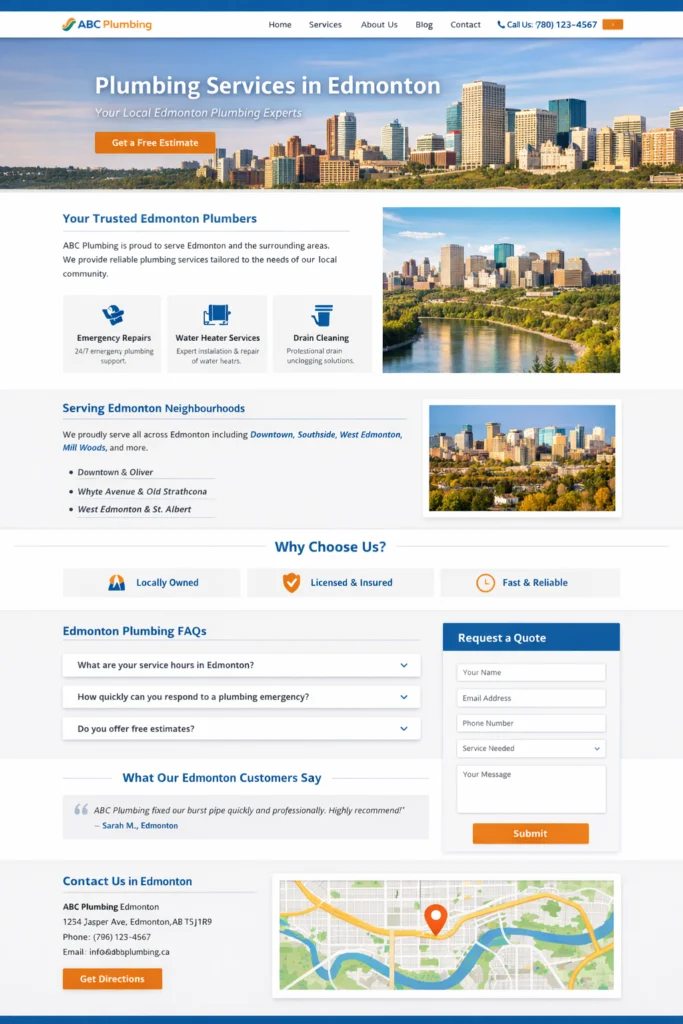
A location page is a page on your website built for a specific city, area, or branch your business serves. Its job is to help both people and search engines understand where you operate and what you offer there. These pages usually include things like the service area, address or contact details, hours, directions, and location-specific service information.
Example:
yoursite.com/plumber-edmonton
yoursite.com/web-design-ottawa
Those are location pages because they connect a service with a place. Pages like these are commonly used in local SEO, especially for businesses that serve multiple cities or have multiple branches.
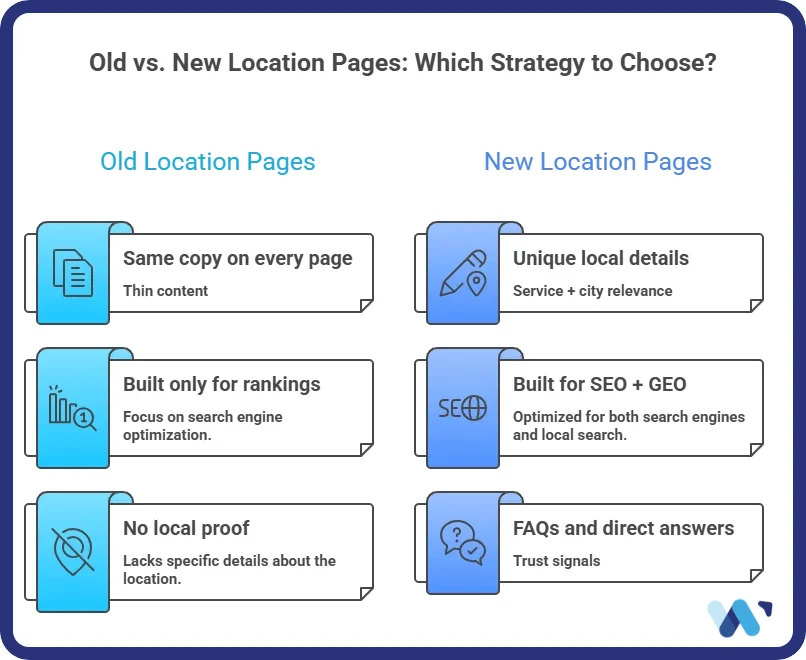
A good location page is not just a copied page with the city name changed. The stronger ones include unique local details and useful information for people in that area
Why location pages still matter
The answer is simple. Local intent still drives a huge share of searches.
When people look for a service, they often search with a city, region, or neighbourhood in mind. They want answers that feel close, relevant, and practical. A well-built location page helps match that intent. It tells both search engines and real people that your business understands the area, the service needs in that area, and the details that matter to buyers there.
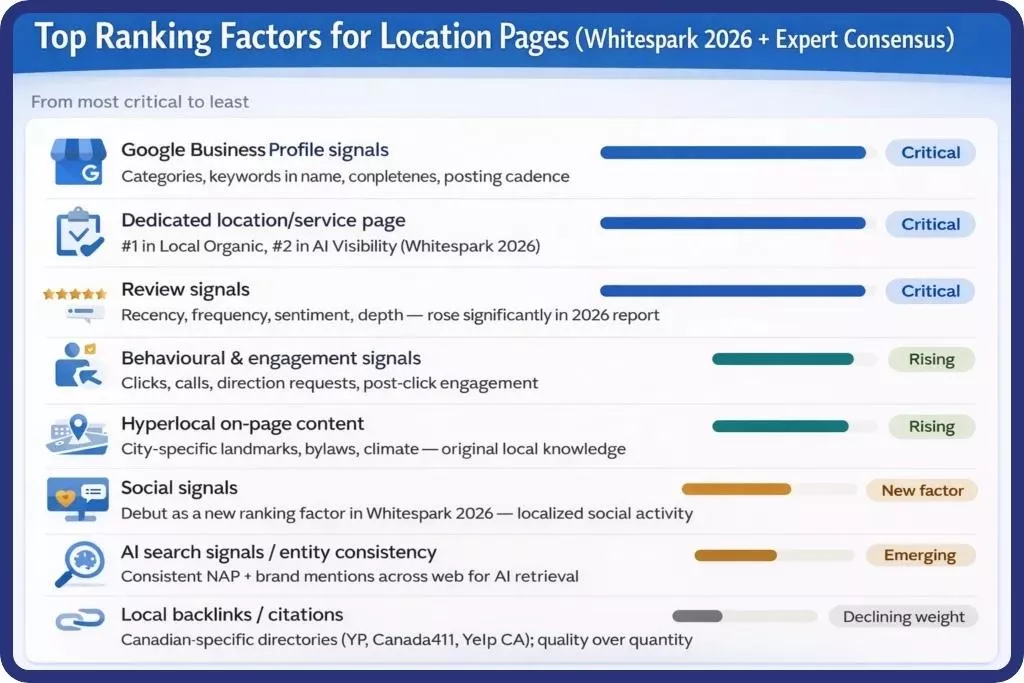
In local organic search, dedicated service pages remain one of the strongest on-page signals. That means businesses still benefit from having separate pages for each service-location combination, but only when those pages offer something specific and useful.
A page about web design in one city should not read exactly like a page for another city with only the place name swapped. That is where many websites still get it wrong.
The biggest shift is not that location pages stopped working. The shift is that the bar has become much higher.
Search engines now reward pages that show real local understanding. That includes things like neighbourhood references, province-specific context, local customer concerns, seasonal factors, service-area realities, and content that reflects how people in that city actually search and buy.
A page built for Winnipeg should not feel the same as one built for Ottawa. A page for Saskatoon should not sound like a Toronto template with a new headline. Different cities have different levels of competition, different buyer behaviour, different climate considerations, and different local trust signals.
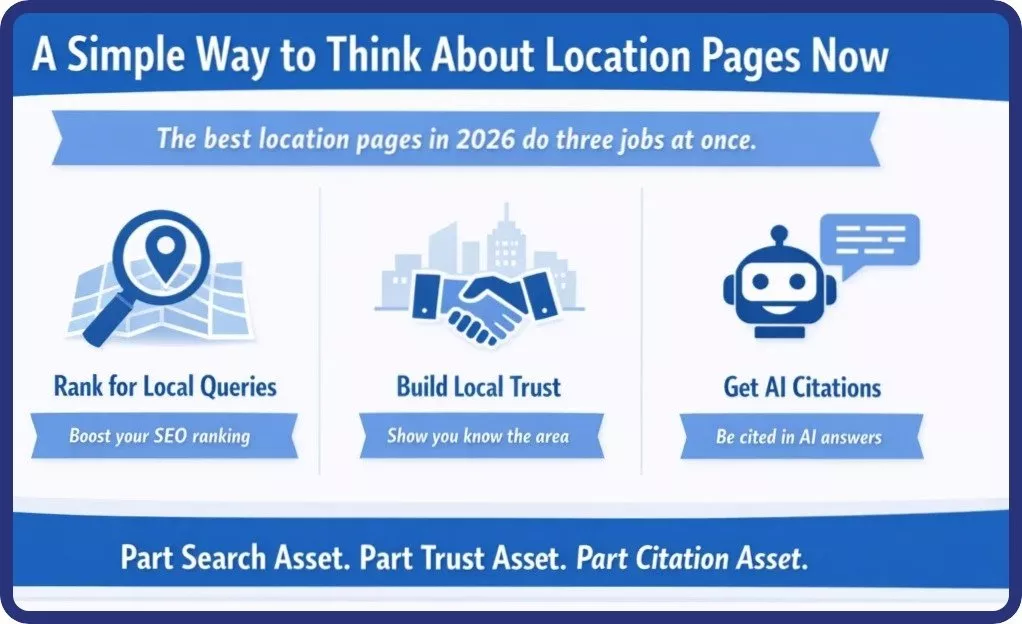
That matters even more now because AI search tools are using website content as source material. When someone asks an AI engine for the best options in a city, or for advice related to a service in a local market, the system may pull from pages that answer the question clearly and directly. A page does not just need to rank. It needs to be understandable, structured, and useful enough to be cited.
Why thin city pages are now a problem
Thin location pages do not just underperform. In many cases, they damage trust and waste crawl budget.
These pages usually have the same layout, the same wording, the same headings, and the same service claims. The only difference is the city name to a user who feels lazy. To a search engine, it signals low originality. To an AI engine, it gives little reason to use the page as a source.
A weak city page usually has these problems:
generic service copy with no local context
no mention of local issues, regulations, or conditions
no direct answers to common location-specific questions
no unique proof, case examples, or service details
no structure that makes the content easy to quote or summarise
That kind of page used to be tolerated more often. In 2026, it is easier to ignore, easier to outrank, and harder to justify.
What GEO means and why it changes the role of location pages
Before we talk about why location pages matter, it helps to understand GEO.
GEO stands for Generative Engine Optimization. It is the process of shaping your content so AI tools like ChatGPT, Google AI Overviews, and Perplexity can understand it, trust it, and use it in their answers. In simple terms, GEO helps your website become a source for AI-generated responses, not just a page that ranks in traditional search.
That is different from classic SEO. SEO focuses on helping your page rank in search results. GEO focuses on helping your content get picked up, summarised, and cited by AI systems. In 2026, both matter.
This shift changes the job of a location page. A location page can no longer be a thin page built just to target a city keyword. It now needs to clearly explain where you work, what you offer in that area, and why your business is relevant there. It should answer real local questions, use clear headings, include direct answers, and provide trustworthy details that AI systems can easily interpret.
This is why structured content has become so important. Pages with useful FAQs, clear service explanations, and verifiable local details are more likely to earn visibility in AI-driven results than pages filled with vague, repetitive sales copy.
That is also why location pages still matter so much. They are no longer only there to attract organic traffic. They now act as content assets that help AI engines understand your business in a local context.
It also explains why being in Google’s top ten is no longer enough by itself. AI systems do not always cite the same pages that rank highest in traditional search. A page can perform well in SEO and still be ignored in AI results if it is too generic, poorly structured, or lacking real local value.
What a winning location page should include in 2026
A strong location page needs to feel local, useful, and trustworthy from top to bottom.
Start with a clear service-location focus. The page should make it obvious what you offer in that city and who it is for. Then move beyond the headline. Add details that show real familiarity with the market.
Here is what helps a location page work today:
1. Genuine local context
Mention local neighbourhoods, business districts, service patterns, or city-specific needs where relevant. Keep it natural. The goal is not stuffing place names. The goal is proving relevance.
2. Service-specific detail
Do not describe your business in broad terms only. Explain how the service works for people in that area. What problems do customers in that city usually face? What does your process solve?
3. Province or region-specific considerations
Local content becomes stronger when it reflects real regional differences. In Canada, that may include weather patterns, operational realities, local competition, or province-level rules that shape customer decisions.
4. FAQ blocks
FAQs are valuable because they match the way people and AI engines both look for information. They also help you cover long-tail queries in a clean way.
5. Proof and trust signals
Add reviews, service examples, relevant experience, response times, or local case context where possible. A location page should not feel anonymous.
6. Strong internal linking
Connect the page to your main service pages, related blog posts, and contact page. This helps users move through the site and helps search engines understand topical relevance.
A big opportunity in mid-size Canadian cities
One of the smartest moves in 2026 is to stop chasing only the biggest, most crowded markets.
Mid-size cities such as Edmonton, Winnipeg, Ottawa, and Saskatoon offer a strong opportunity because the competition is often more manageable. In many cases, businesses can build traction there faster than they can in larger cities where the local search landscape is far more crowded.
That does not mean major cities should be ignored. It means strategy should be realistic. A business that struggles to gain ground in Toronto or Vancouver may build momentum faster by creating strong, useful pages for cities where the timeline to rank is more achievable.
This is especially useful for growing service businesses that want leads sooner, not just visibility later.
Final thoughts
Yes, location pages still matter in 2026. In fact, they may matter more than ever.
What changed is not their importance. What changed is the standard.
Thin, duplicated city pages are fading out. Useful, locally informed, well-structured pages are moving up. Businesses that adapt to this shift can win in both traditional local search and AI-driven discovery. Businesses that keep publishing template pages will likely find it harder to rank, harder to earn trust, and harder to appear in the next generation of search results.
The businesses that perform best now are not the ones publishing the most pages. They are the ones publishing the most relevant ones.
If your business needs location pages that do more than fill space, Wide Ripples can help. We build pages that are made for local rankings, real users, and the way AI search works now. Visit Wide Ripples to create location pages that are clear, credible, and built to convert.
Quick FAQs
Do location pages still work for SEO in 2026?
Yes, they still work. But thin pages with copied text do not perform well anymore. Strong location pages now need unique local details, useful content, and clear structure.
What makes a good location page in 2026?
A good location page includes local service information, area-specific details, clear headings, FAQs, trust signals, and content that feels genuinely relevant to that city or region.
Are city pages and location pages the same thing?
Most of the time, yes. People often use both terms to describe pages built for a specific city, neighbourhood, or service area.
Can I use the same content on every location page
No. That is one of the biggest mistakes businesses make. Each location page should have unique content that reflects the area, customer needs, and local search intent.
Why are thin location pages a problem?
Thin pages usually offer little value. They often repeat the same copy with only the city name changed. That can hurt rankings, reduce trust, and make the page less useful for AI search systems.
What is GEO and how does it relate to location pages?
GEO means Generative Engine Optimization. It is about helping your content appear in AI-generated answers. A well-structured location page can support both SEO and GEO.
Do location pages help with AI search visibility?
Yes. AI tools often use clear, structured, and trustworthy pages as sources. Location pages with direct answers, FAQs, and local context have a better chance of being referenced.
How many location pages should a business create?
Only create pages for areas you actually serve and can write about properly. It is better to publish fewer high-quality pages than many weak ones.
Should every service have its own location page?
In many cases, yes. A dedicated page for each main service and target location can help improve local relevance and organic visibility, as long as the content is unique and useful.
What should I include on a location page?
A strong location page should include a clear headline, localised intro, service details, neighbourhood or regional references, FAQs, trust signals, internal links, and a clear call to action.
Do location pages help businesses in smaller Canadian cities?
Yes. They can be especially useful in mid-size cities where competition is lower and ranking opportunities can be easier to win than in major markets.
Can a business rank without location pages?
Sometimes, yes. But if local search is important to your growth, location pages usually make it much easier to target specific cities and service areas properly.
What is the biggest mistake with location pages?
The biggest mistake is publishing templated pages that all say the same thing. In 2026, relevance, clarity, and local usefulness matter much more than volume.
How often should location pages be updated?
Review them regularly. Update them when your services, service areas, local details, FAQs, reviews, or search trends change.
Disclaimer:The information provided in this blog is for general informational purposes only. For professional assistance and advice, please contact experts.
Neha Ghauri, a graduate, has seven years of experience in writing for the digital marketing, finance, and business industries. She specializes in SEO-driven...