Inbound vs Outbound Marketing: Which Strategy Works Best?
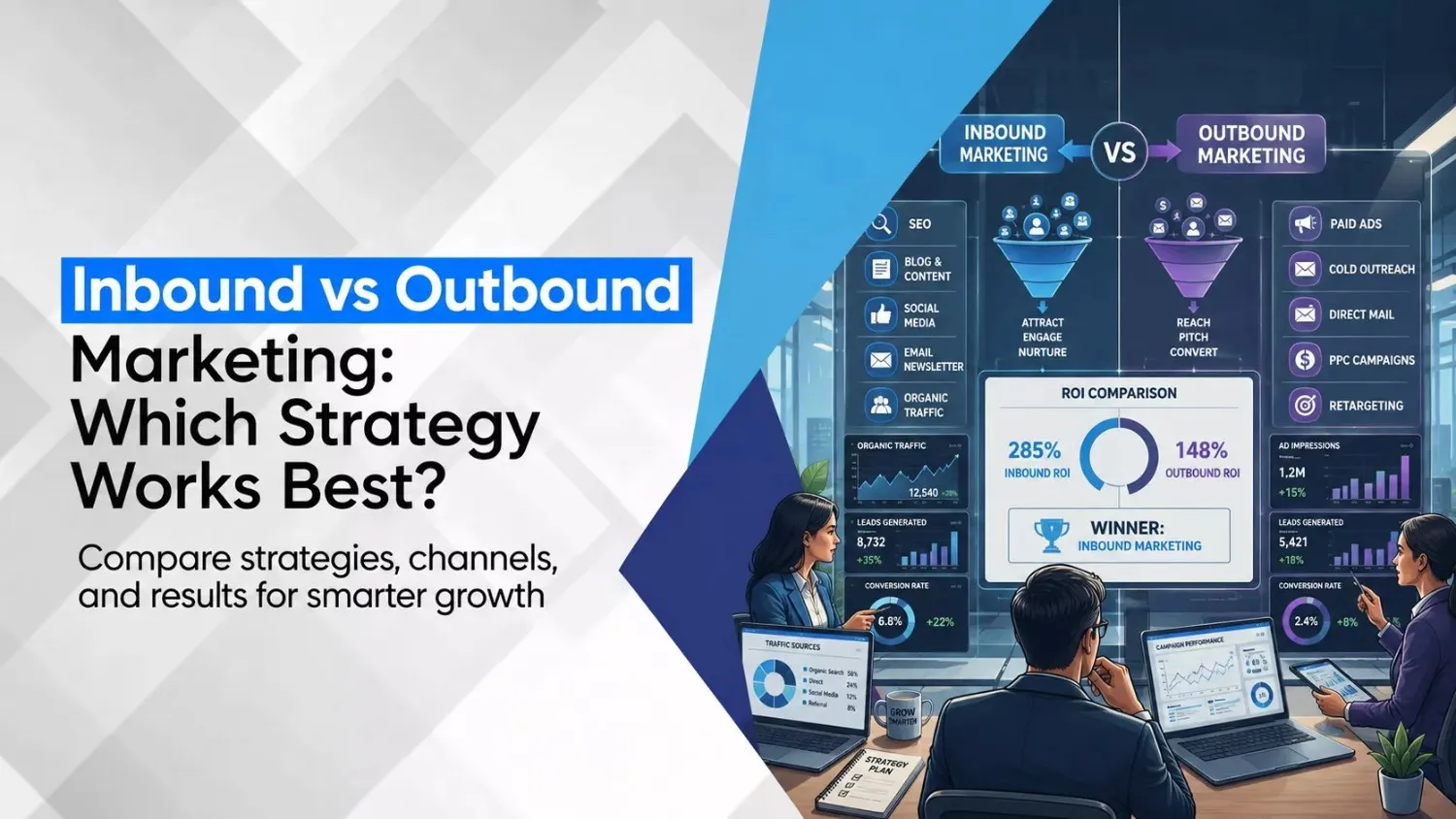
Inbound vs outbound marketing is not a boxing match where one strategy walks away wearing sunglasses while the other strategy gets carried out by the intern. The better question is not “which one wins?” but “which one should do the heavy lifting right now?” Inbound marketing builds trust by making helpful content easy to find, while outbound marketing creates conversations by reaching the right people before they start searching. A healthy business often needs both, because pipelines behave like refrigerators: if you only open the door when you are hungry, you will eventually discover three pickles and regret.
For most growing companies, the smartest answer is simple: use inbound to become findable and trustworthy, then use outbound to speed up demand when the pipeline needs movement. At Wide Ripples Digital, this is close to how modern growth should feel: simple, measurable, and built around real customer behaviour rather than random tools thrown into a marketing blender.
This guide breaks down the difference between inbound and outbound marketing, shows practical inbound and outbound marketing examples, and gives you a decision framework you can actually use before spending another dollar on ads, blogs, cold email, or “quick growth hacks” that age like milk.
What Is Inbound Marketing?
Inbound marketing is a strategy that attracts people by helping them before asking them to buy. It uses content, SEO, social media, newsletters, case studies, guides, videos, and useful resources to pull buyers closer when they are already curious, researching, comparing, or secretly judging your website at 11:37 p.m.
A strong inbound marketing strategy does not start with “let’s publish more blogs.” It starts with a sharper question: what does our ideal customer need to understand before they feel safe choosing us? Once you answer that, every blog, landing page, comparison guide, FAQ, case study, and social post gets a real job instead of floating around the internet like a motivational quote with no rent to pay.
Examples of inbound marketing include SEO service pages that answer buyer questions, blog posts that explain confusing decisions, YouTube videos that teach a useful process, downloadable checklists, email newsletters, case studies that prove outcomes, and optimized local pages that help nearby customers find you when they are ready to act. Wide Ripples’ SEO & Content Strategy service is a natural inbound fit because it connects keyword research, on-page SEO, blog writing, internal links, and content that helps people trust the brand before they contact the team.
What Is Outbound Marketing?
Outbound marketing is a strategy where your business starts the conversation. Instead of waiting for people to search, you reach out through cold email, cold calls, LinkedIn DMs, paid ads, retargeting, direct mail, event outreach, sponsorships, or targeted partnerships. It is the marketing version of raising your hand and saying, “Hello, we noticed a problem, and we may have a useful solution.”
A good outbound marketing strategy is not spam wearing a tie. It is specific, researched, timely, and useful enough that the receiver does not feel like they were added to a spreadsheet by a robot with commitment issues. The best outbound messages often feel less like a pitch and more like a helpful observation, a quick audit, a relevant idea, or a direct invitation to solve a clear problem.
Examples of outbound marketing include sending a personalized audit to a dream client, running Google Ads for high-intent keywords, using Meta or LinkedIn ads to reach a defined audience, inviting prospects to a webinar, following up after a trade show, or creating a small account-based campaign for companies that match your best customer profile. Wide Ripples’ Lead Generation & Conversion service fits this side because it focuses on campaigns, landing pages, A/B testing, email nurture, and clear ROI tracking.
Inbound vs Outbound: The Real Difference
The difference between inbound and outbound marketing is not only about channels. It is about who starts the conversation, how much trust already exists, how fast you need results, and whether you are capturing existing demand or creating new demand.
| Factor | Inbound Marketing | Outbound Marketing | What It Means in Real Life |
|---|---|---|---|
| Main motion | People find you. | You reach people. | Inbound is the magnet; outbound is the knock on the door. |
| Speed | Slower to start, stronger over time. | Faster to start, needs constant management. | One compounds, the other accelerates. |
| Trust level | Usually warmer because the buyer came looking. | Usually colder unless the message is highly relevant. | Trust is either earned before the click or built after the contact. |
| Cost pattern | Often expensive upfront in time and content, then more efficient later. | Often immediate cost per impression, click, lead, or contact. | Budget pressure shows up differently in each system. |
| Best use | Education, authority, SEO, long-term demand. | Testing, launches, niche targeting, short-term pipeline. | The best mix depends on your growth stage. |
In plain English, inbound versus outbound marketing is like owning a bakery. Inbound is the smell of fresh cinnamon rolls drifting into the street, the pretty display window, the glowing reviews, and the “best bakery near me” ranking. Outbound is handing a sample to someone walking by and saying, “This just came out of the oven, and yes, it may improve your entire Tuesday.” Both can work. The magic is knowing when to let the smell do the selling and when to offer the sample.
Which Is Better: Inbound or Outbound Marketing?
Which is better inbound or outbound marketing? For long-term growth, inbound usually gives you stronger trust, better brand equity, and a compounding library of content that can keep working after it is published. For short-term traction, outbound usually gives you more control, faster testing, and a clearer path to conversations when waiting for organic search feels like watching paint dry in slow motion.
The mistake is choosing based on personal comfort. Many founders love inbound because it feels safer, so they hide behind content while avoiding sales conversations. Others love outbound because it feels active, so they keep chasing new prospects while their website, case studies, and content fail to support the sale. Both mistakes create the same problem: a pipeline that looks busy but behaves moody.
The better answer is based on business stage, cash flow, buying cycle, market awareness, and proof. If your offer is new and you need feedback, outbound should lead. If your offer is proven and buyers already search for it, inbound should become a serious growth asset. If your market is competitive, expensive, and trust-heavy, you need both working together like two pedals on the same bicycle. Use one pedal only, and the ride gets weird fast.
The Two-Pedal Growth Model
Here is the practical framework most basic Google results skip: inbound and outbound should not sit in separate departments like awkward cousins at a wedding. They should feed each other. Outbound creates conversations, objections, questions, and patterns. Inbound turns those patterns into content, proof, pages, and assets. Then inbound makes the next outbound message warmer because the prospect can check your website and find evidence that you know what you are talking about.
Think of it as a loop:
- Outbound identifies real buying pains through direct conversations.
- Sales notes reveal the questions prospects keep asking.
- Inbound content answers those questions publicly and clearly.
- SEO, case studies, and social proof make future outreach more credible.
- Paid ads and email campaigns amplify the best-performing inbound assets.
- CRM automation tracks what moves leads from “curious” to “booked.”
This is where Marketing Funnel & CRM Automation becomes important. A blog can attract the lead, an ad can bring them back, a landing page can convert them, and a CRM workflow can make sure nobody forgets to follow up while pretending they are “waiting for the right time.”
How to Choose the Right Mix by Growth Stage
A business with zero clients should not market like a business with ten years of case studies, and a local service company should not copy a SaaS company just because someone on LinkedIn used a dramatic chart. Use this stage-based mix instead.
| Stage | Main Priority | Suggested Mix | Why It Works |
|---|---|---|---|
| 0-3 clients | Validate the offer. | 70% outbound / 30% inbound | You need real conversations faster than you need a 48-page content calendar. |
| 3-6 clients | Turn learning into proof. | 50% outbound / 50% inbound | Use project lessons, FAQs, and small wins to build trust assets. |
| 6-10 clients | Build repeatable demand. | 35% outbound / 65% inbound | Your proof can now support SEO, case studies, landing pages, and nurture campaigns. |
| 10+ clients | Scale with systems. | 25% outbound / 75% inbound | Inbound compounds while outbound supports launches, partnerships, and priority accounts. |
These ratios are not sacred math from a mountain prophet. They are working defaults. If your sales cycle is long, your outbound may stay higher for longer. If your category has huge search volume, inbound may deserve more budget earlier. If your website looks like it was last updated when people still said “surfing the web,” fix that before blaming either strategy.
Inbound and Outbound Marketing Examples That Actually Make Sense
Let’s make this real with examples, because “create valuable content” is advice so vague it should come with a fog machine.
Example 1: A Local Service Business
A plumbing company wants more booked jobs. Inbound means local SEO pages, Google Business Profile optimization, helpful blogs about emergency issues, review building, and service pages that explain pricing, areas served, and response times. Outbound means Google Search Ads for urgent keywords, retargeting ads for visitors who did not call, and a small email campaign to property managers. The inbound work builds trust, while the outbound work catches demand when pipes decide to become indoor waterfalls.
Example 2: A B2B Consultant
A consultant wants higher-ticket clients. Inbound means LinkedIn thought leadership, case studies, a clear service page, a diagnostic checklist, and a newsletter that teaches decision-makers how to spot the problem. Outbound means sending a short personalized Loom audit or useful teardown to five dream clients each week. The goal is not to say “hire me” immediately; the goal is to prove insight before asking for time.
Example 3: An E-commerce Brand
An e-commerce brand wants profitable growth. Inbound means SEO category pages, product guides, comparison content, reviews, and post-purchase education. Outbound means Meta ads, Google Shopping, influencer outreach, abandoned cart email, and seasonal campaigns. The smart move is to use outbound to find winning offers quickly, then turn those winners into inbound assets that reduce dependence on paid traffic.
Example 4: A Professional Services Firm
A law, accounting, consulting, or real estate firm needs trust before leads. Inbound means detailed service pages, case studies, local SEO, FAQ content, and clear proof that the firm understands the client’s situation. Outbound means referral outreach, LinkedIn networking, event follow-ups, and account-based email to companies that match the ideal client profile. In this category, weak content can quietly sabotage strong outreach because prospects almost always check the website before replying.
The Hidden Problem: Pipeline Mood Swings
Most teams do not have a marketing problem. They have pipeline mood swings. One month is packed, the next month is quiet, then everyone panics and suddenly wants ads, blogs, emails, partnerships, and a brand video by Friday. This is how businesses accidentally turn marketing into emergency cardio.
Inbound reduces panic by creating assets that can keep attracting and educating people. Outbound reduces panic by giving you a way to start conversations when search demand, referrals, or seasonality slows down. When you combine them, you get a calmer pipeline because you are not relying on one source of attention to behave perfectly every month.
The practical fix is a 90-day pipeline rhythm: publish one helpful inbound asset every week, run one targeted outbound campaign every month, review conversions every two weeks, and update your landing pages based on real objections heard in calls. This sounds simple because it is simple. The hard part is doing it consistently instead of chasing shiny tactics like a raccoon with Wi-Fi.
How to Build an Inbound Marketing Strategy
A strong inbound marketing strategy should begin with buyer questions, not keyword volume alone. Search data tells you what people type, but sales conversations tell you what people are scared to admit. The best inbound content usually lives at the intersection of both.
- Map the buyer journey from problem awareness to final decision.
- Collect real questions from sales calls, emails, reviews, comments, and customer support.
- Build service pages that explain outcomes, process, pricing factors, and proof.
- Create comparison content for buyers who are choosing between options.
- Publish case studies that show the before, the work, and the result.
- Use internal links to guide readers from education to service pages.
- Improve website speed, mobile experience, forms, and calls to action.
- Measure leads, not just traffic, because traffic without conversion is just digital sightseeing.
This is why inbound is closely tied to website quality. If your content attracts the right person but your site is slow, confusing, or vague, you have basically invited guests over and hidden the front door. Wide Ripples’ Website Design & Development service supports the conversion side because strong inbound needs pages that load fast, explain clearly, and guide people toward action.
How to Build an Outbound Marketing Strategy
A strong outbound marketing strategy starts with targeting, timing, and usefulness. The biggest outbound mistake is writing one generic message and launching it at strangers like confetti from a cannon. Confetti is fun at weddings; it is less fun in someone’s inbox.
- Define your best-fit customer by industry, location, size, problem, and buying trigger.
- Choose a small list before choosing a big automation tool.
- Research each prospect enough to make the message feel specific.
- Lead with a helpful observation, audit, idea, benchmark, or missed opportunity.
- Connect your outreach to a relevant landing page, case study, or resource.
- Follow up with patience and context, not guilt trips and fake urgency.
- Track replies, booked calls, cost per lead, close rate, and sales cycle length.
- Feed common objections back into inbound content so the next campaign gets warmer.
The best outbound does not feel random. It feels like a useful shortcut. When you send someone a resource that directly relates to their market, website, campaign, or growth problem, you move from “stranger asking for time” to “person who noticed something worth discussing.” That shift changes everything.
Inbound vs Outbound Sales and Marketing
Inbound vs outbound sales and marketing also affects how your sales team behaves. Inbound sales usually responds to people who have already shown interest, so the job is to understand intent, clarify fit, and guide the buyer. Outbound sales usually starts with colder contacts, so the job is to create relevance, earn attention, and open a conversation without sounding like a copy-paste festival.
Marketing should make both sales motions easier. Inbound content should answer common questions before the call. Outbound campaigns should point to proof that supports the message. Case studies should help sales show credibility without delivering a 17-minute monologue. CRM workflows should keep follow-up clean, because even a great lead can disappear if your process relies on memory and vibes.
Quick Decision Guide: Which Strategy Should You Use First?
Use inbound first if buyers already search for your service, your sales cycle needs trust, your website can convert traffic, and you can commit to consistent content for at least six months. Use outbound first if your offer is new, your niche is narrow, your pipeline needs conversations now, or your ideal clients are easy to identify but not actively searching. Use both if you have a proven offer, a clear audience, useful proof, and a need for both short-term pipeline and long-term brand authority.
A simple test: if people already know they need your service, inbound can capture that demand. If people do not yet realize the problem is costing them money, outbound can create the conversation. If people know the problem but do not trust you yet, combine both and let content warm the room before outreach walks in.
Common Mistakes to Avoid
- Publishing content without a conversion path, then wondering why “awareness” does not pay invoices.
- Running ads to a weak landing page that explains everything except why someone should act now.
- Sending outbound messages without proof, personalization, or a useful reason to reply.
- Treating SEO and paid ads as enemies when they often work better as a tag team.
- Measuring inbound by traffic only and outbound by replies only, instead of looking at revenue movement.
- Stopping inbound too early because it did not explode in month one like a movie trailer promised.
- Scaling outbound too fast before the message, offer, list, and follow-up process are proven.
The Best Strategy Is Usually a Balanced System
Inbound marketing vs outbound marketing should not become a personality test. You do not need to be the “content brand” or the “cold outreach brand.” You need a system that matches your market, your goals, your timeline, and your ability to execute consistently. Inbound builds the trust layer. Outbound creates the motion layer. CRM and conversion work connect the two so leads do not leak out of the bucket like soup in a shopping bag.
The best modern strategy usually looks like this: create useful content that answers real buyer questions, optimize your website so people can find and trust you, run targeted outbound to reach specific accounts or high-intent buyers, send traffic to pages that convert, and track the full journey from first touch to booked call. This is not fancy. It is just clean marketing with fewer magic tricks and more math.
If you want help building that kind of system, Wide Ripples Digital offers SEO and content strategy, lead generation, website design, and marketing funnel automation under one roof, which matters because inbound and outbound work best when they are planned together instead of stitched together after something breaks. You can also browse the Wide Ripples blog for more practical digital marketing guides.
Quick FAQs
What is the main difference between inbound and outbound marketing?
Which is better inbound or outbound marketing?
What are examples of inbound and outbound marketing?
Is paid advertising inbound or outbound?
Can small businesses use both inbound and outbound marketing?
How long does inbound marketing take to work?
How do I know if my outbound strategy is working?
Disclaimer: The information provided in this blog is for general informational purposes only. For professional assistance and advice, please contact experts.
Written by Neha Ghauri
Last updated July 14, 2026