Why Your Google Ads Leads Are Low Quality And How to Fix It
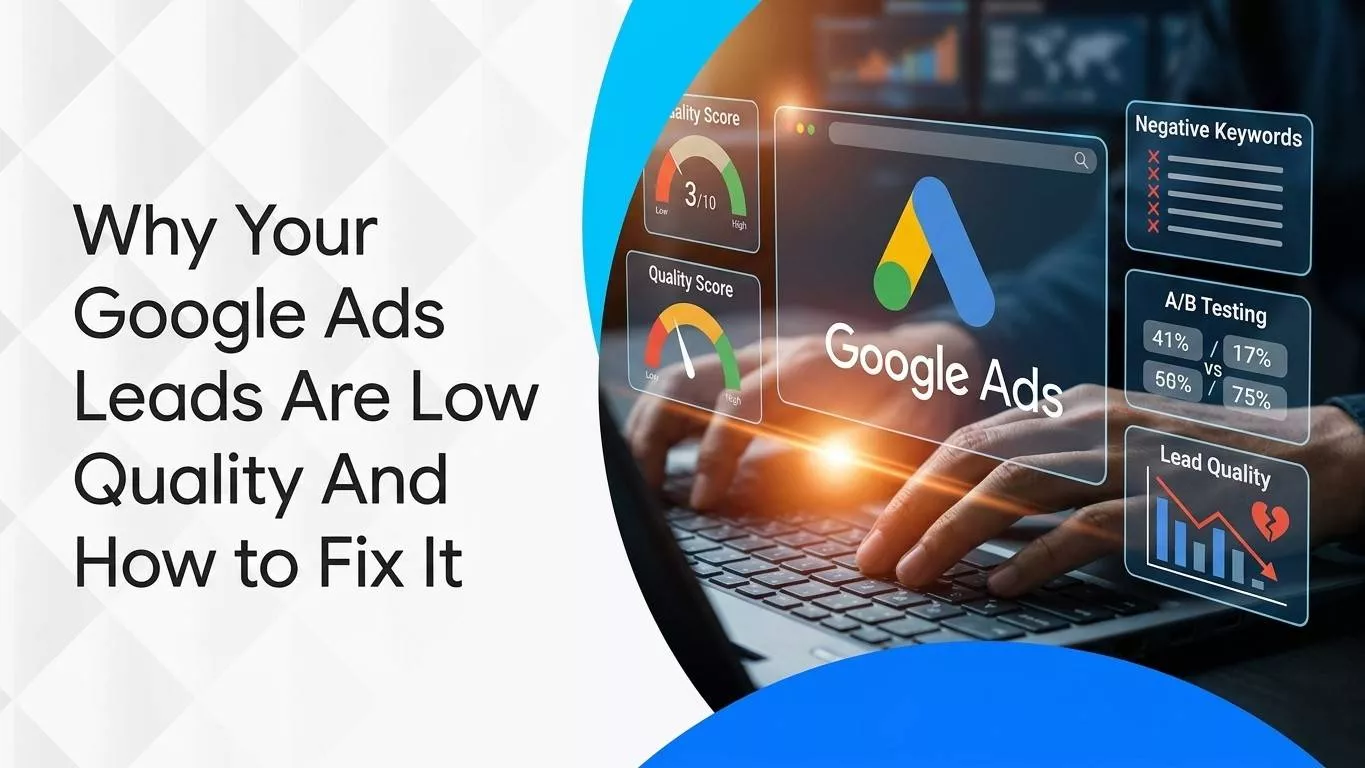
Low-quality Google Ads leads usually come from poor targeting, mismatched intent, weak qualification, or overly broad campaigns, but the good news is, all of it is fixable.
Picture this: You finally set up your Google Ads campaign. You chose your keywords, wrote your copy, set your budget, and hit launch. Then the leads start rolling in.
Exciting, right?
Except... one person wants to know if you're hiring. Another is looking for the same service but in Winnipeg and you're based in Halifax. And the third one, bless their heart, just wanted a quote to compare against a price they already got three years ago and will never actually move forward with.
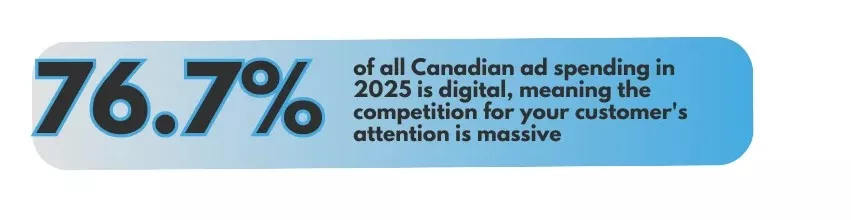
Welcome to the very Canadian reality of low-quality Google Ads leads. You're not alone, you're not doing anything wrong per se, but you ARE leaving serious money on the table. And with Canadian digital advertising spending hitting an estimated $16.19 billion CAD in 2024, a 10% jump year-over-year, competition for those high-quality leads is fiercer than a Stanley Cup game seven.
So let's dig into why this is happening, and more importantly, how to fix it, with a little humour along the way, because if you can't laugh at your ad spend disappearing, what can you do?
The State of Google Ads in Canada: The Numbers Don't Lie
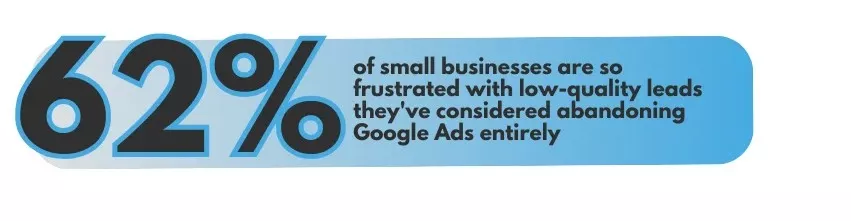
Before we get into the whys and how-to-fixes, let's ground ourselves in some cold, hard Canadian facts (pun fully intended).
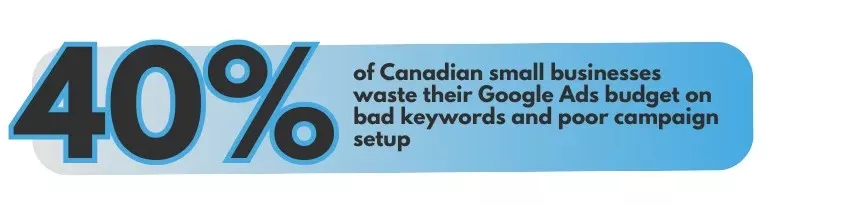
And here's a kicker: the average cost per lead on Google Ads across all industries climbed to $70.11 USD in 2025. That's a lot of maple syrup to be spending on someone who just wanted a job application.
Now, to be fair, Google Ads themselves aren't broken. The platform works. The issue is almost always in how campaigns are set up and managed. So let's get into it.
5 Reasons Your Google Ads Are Attracting The Wrong People
1. Your Keywords Are Too Broad (You're Fishing With a Net the Size of Lake Ontario)
The biggest culprit for low-quality leads? Broad match keywords. When you target something like "plumbing services" without restrictions, Google interprets that very... creatively. You might show up for "plumbing job openings," "DIY plumbing tips," or "plumbing courses in Mississauga", none of which are your paying customers.
Google itself acknowledges this: broad match keywords show your ads on searches that are related to your keyword, which can include searches that don't contain your keyword terms at all. Sounds terrifying? That's because it kind of is, if you're not managing it carefully.
2. You Have Zero Negative Keywords (The Door You Forgot to Close)
Negative keywords are the bouncers at your ad's club. Without them, everyone gets in, the curious, the students, the job seekers, the just-browsing-on-their-lunch-break crowd. A real-world complaint from a Google Ads business owner: their ads were generating leads from people asking about job opportunities. Classic negative keyword oversight.
If you're a B2B accounting firm, your negative keyword list should probably include words like "free," "DIY," "how to," "template," "tutorial," "career," and "job." Otherwise, you're paying for clicks from people who will never sign a contract with you.
Think of negative keywords as your campaign's politest "No, thank you", automated and at scale.
3. Your Landing Page Is Lying (Or At Least, Being Misleading)
Here's a scenario that's more common than you'd think: your ad promises "Free Roofing Consultation in Toronto" and the person clicks through... to your generic homepage. No mention of Toronto. No mention of free consultations. Just a hero image of a roof and a phone number buried at the bottom.
Google measures your landing page experience as part of your Quality Score, a 1–10 rating that affects both where your ad shows up and how much you pay per click. A poor landing page experience doesn't just frustrate potential customers; it literally costs you more money per click, while delivering worse results.
Ad-to-landing-page alignment isn't optional. It's the difference between a lead and a bounce.
4. You're Targeting Everyone, Which Means You're Targeting No One
Geography matters enormously in Canada. If you're a local personal injury law firm in Vancouver, you should not be showing ads to someone searching from Thunder Bay. But many new advertisers set their geographic targeting to "Canada" and call it a day then wonder why their cost per lead is through the roof.
Mobile ad spending accounts for over 54% of Canada's total digital ad spend, which means most of your potential leads are searching on the go, near you, right now. Local targeting isn't just good practice, it's essential for service businesses in Canada.
5. Your Ad Copy Is Too Vague (Or Too Clever For Its Own Good)
"We provide solutions that help your business grow." Cool story. So does every other ad on the SERP. If your ad copy doesn't immediately communicate what you do, who you help, and why someone should click, you'll get clicks from the wrong people, and the right people will scroll past.
Likewise, being too clever can backfire. "Eh-mazing Service!" might get a chuckle, but does it tell me what you sell? On Google, clarity beats cleverness every single time.
The 'Is My Lead Actually a Lead?' Canadian Audit Checklist
Here's something you won't find in most Google Ads guides: a dead-simple lead quality scorecard. Run every lead you get through this before handing it to sales. We call it the Timmies Test, because just like a double-double, you want to make sure what you're getting is actually what you ordered.
- Did they mention a specific service or product you offer?
- Are they located in your service area?
- Did they use buying-intent language (e.g., 'quote,' 'pricing,' 'hire,' 'book')?
- Do they have a realistic budget for your service?
- Is their timeline reasonable and within your availability?
- Are they asking if you're hiring?
- Did they mention comparing you to a free alternative?
- Is their email address something like 'noreply@test.com'?
How to Fix It: A Canadian Advertiser's Action Plan
Step 1: Add Negative Keywords (Immediately, Like Right Now)
Log into your Google Ads account today and add a negative keyword list. Start with these universal offenders:
- "free," "DIY," "how to," "tutorial," "template"
- "jobs," "careers," "hiring," "employment"
- "reviews," "complaints," "is it worth it"
- Any city outside your service radius
Then review your Search Terms Report every single week. This shows you the actual searches that triggered your ads. It is one of the most eye-opening reports in all of digital marketing.
Step 2: Switch to Phrase or Exact Match Keywords
Especially for Canadian small businesses with tighter budgets, broad match keywords are a liability, not an asset. Phrase match and exact match give you far more control over who sees your ads, and who doesn't. Yes, you'll get less volume. But you'll get better quality dramatically.
Step 3: Build Dedicated Landing Pages (One Per Campaign)
Each ad campaign should point to a page that mirrors the promise of the ad. Running an ad for "Emergency Plumbing in Ottawa"? That landing page should say "Emergency Plumbing in Ottawa" in the headline, within the first sentence, and in the meta description. Message match is the single highest-impact landing page optimization you can make.
Step 4: Use Lead Form Extensions Wisely
Google's Lead Form Extensions are convenient, but they can lower your lead quality if you're not filtering well. Add qualification questions. Ask for a phone number (not just email). Ask about project size or timeline. The extra friction scares away window shoppers and attracts serious buyers.
Step 5: Turn On Lead Quality Feedback in Google Ads
Google allows you to mark leads as high or low quality, which feeds back into their Smart Bidding algorithm. Once you connect your CRM or use lead scoring, you can literally teach Google to find more people like your best customers. This is like training a golden retriever give it good feedback and it gets better over time.
According to Google's own documentation on ad quality, higher quality signals lead to better performance, including better ad positions and lower cost. That feedback loop is real and it compounds over time.
Step 6: Use Location Targeting With Precision (Canada Is BIG)
Canada is the second-largest country in the world by area. "Target all of Canada" is almost never the right call for a service business. Use radius targeting around your office or service zones. Exclude provinces where you don't operate. If you're in Montreal, focus on Montreal, not Moose Jaw.
The Bonus: One Weird Trick That Actually Works
Add your price or a starting price to your ad copy.
Yep, that's it. Something like "Roofing Inspections from $199" does something magical: it pre-qualifies your leads automatically. People who can't afford or aren't willing to pay that get filtered out before they click. People who do click are already primed for what you charge.
The clicks go down. The quality goes up. Your cost per qualified lead drops. It's counterintuitive and it absolutely works.
Final Thoughts: Your Ads Aren't the Problem. Your Setup Is.
Low-quality Google Ads leads aren’t random bad luck, they’re signals. Signals that something in your targeting, messaging, or funnel isn’t aligned yet. The moment you fix that alignment, everything changes. Fewer clicks, yes, but far better ones. The kind that actually convert, show up, and pay.
The strategies in this guide aren’t theory. They’re the same optimizations experienced advertisers use every day to filter out noise and attract real buyers. But here’s the honest part: execution is where most campaigns fall apart. Small missteps, the wrong keyword match type, weak negatives, poor landing page alignment, quietly drain your budget without you realizing it.
That’s where working with specialists makes a measurable difference.
If you want a second set of expert eyes on your campaigns, the team at Wide Ripples can audit your setup, identify where quality is leaking, and help you rebuild campaigns that prioritize revenue, not just lead volume.
They don’t promise overnight miracles or “10x results” fluff. What they focus on is far more valuable:
- Cleaner targeting
- Stronger qualification
- Better conversion alignment
- And consistent, trackable improvement over time
That’s how ROI actually becomes predictable.
If you’re tired of paying for leads that go nowhere, it might be time to stop guessing and start optimizing with intent.
Because life's too short, and your ad budget too limited, to spend it chasing leads that were never going to buy.
Quick FAQs
Why am I getting clicks but no real customers from Google Ads?
How do I improve lead quality without increasing my budget?
What are negative keywords and why are they important?
Should I stop using broad match keywords?
How do landing pages affect lead quality?
Is it better to get fewer leads if they’re higher quality?
How can I tell if a lead is actually qualified?
Does adding pricing to ads really help?
How long does it take to fix low-quality leads?
When should I hire a Google Ads expert?
Written by Neha Ghauri
Last updated May 7, 2026