Link Building Strategies That Still Work in 2026
Link building in 2026 is alive, well-funded, and pickier than a landlord reviewing rental applications. Every few months someone announces that backlinks are dead, and every few months the data walks in, sits down, and politely disagrees. Backlinks remain one of Google's top-three ranking signals, and the numbers are almost rude about it: the #1 result on Google has 3.8x more backlinks than the pages sitting in positions 2 through 10 (Backlinko's study of 11.8 million search results).
Here's the plot twist that should make you sit up.
Around 96% of all web pages have zero backlinks.
Ninety-six percent.
That's not a competitive field; that's an empty parking lot with a "reserved" sign waiting for your name on it.
So the real question isn't whether link building works in 2026. It's which tactics still pull their weight, and which ones belong in a museum next to keyword-stuffed footers and 2011-era article directories.
Do Backlinks Still Matter in 2026?
Short answer: yes, and it's not close.
Pages with at least one backlink are 77% more likely to rank in the top 10 than pages with none. Sites holding 30 to 35 quality backlinks pull in more than 10,500 organic visits a month on average (uSERP). And 78.1% of SEO professionals report positive ROI from their link-building work (Editorial.link 2026 survey).
The catch is that Google no longer counts links the way a kid counts Halloween candy. It counts them the way a sommelier tastes wine, quality first, quantity never.
Google's own Search Advocate, John Mueller, put it plainly: “a few high-quality links will do more for you than thousands of low-quality ones.”
That single sentence is the entire 2026 playbook in fourteen words. Frame it. Hang it above your desk.
What Google's Spam Policy Actually Says (The One Word That Matters)
Before the strategies, one ground rule. Google's link spam policy, updated most recently in December 2025, defines link spam as any practice that manipulates links with the intent of manipulating rankings (Google Search Central).
The load-bearing word is intent. The exact same backlink can either lift your rankings or trigger a manual penalty, depending entirely on why it exists. A link placed because your content is genuinely useful is a gift. A link placed to game PageRank is a liability that Google's SpamBrain system, upgraded through the August 2025 spam update, is very good at spotting and quietly ignoring.
The Link Building Strategies That Still Deliver
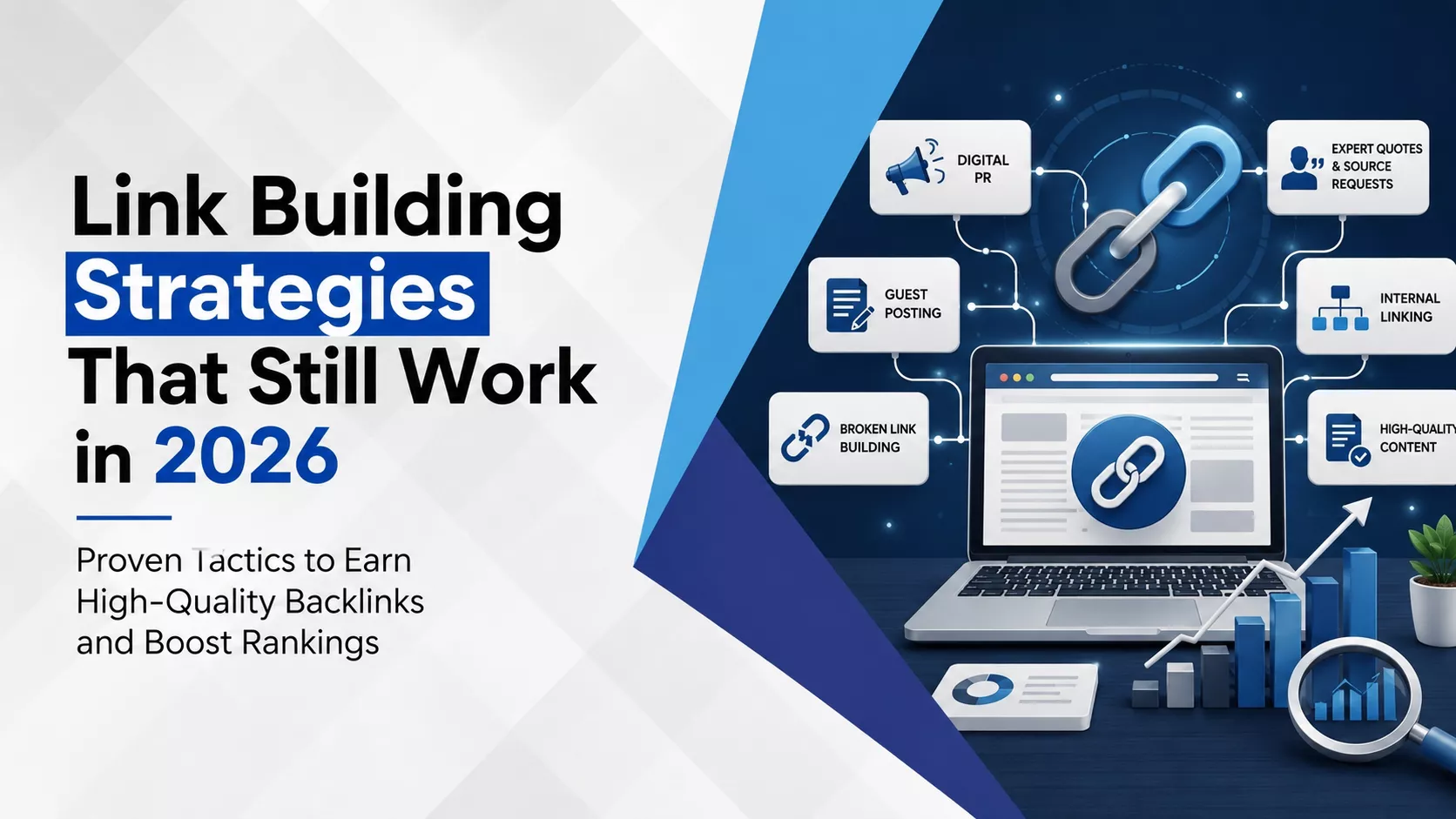
1. Digital PR (The Undisputed Heavyweight Champ)
Digital PR is now the most effective link-building method in the game, with 48.6% of experts naming it their top strategy for 2026. The idea is refreshingly honest: create something genuinely newsworthy, original data, a survey, a bold-but-defensible take, and pitch it to journalists who want to cover it.
You're not begging for a link. You're handing a reporter their next headline. The link is just the thank-you note.
Why it works in 2026: journalists link to primary sources, and primary sources are exactly what AI search engines and Google both reward. One good data study can earn dozens of editorial links from domains you could never buy your way into.
2. Guest Posting (Still Alive, Now With Standards)
Guest posting didn't die. It just went to finishing school. The spray-and-pray version, 400 words of filler on a site nobody reads, is dead weight. The version that works trades real expertise on genuinely relevant, well-trafficked sites.
The bar is higher because inboxes are drowning. Cold outreach reply rates have collapsed to just 3.43% in 2026, down from 8.5% back in 2019. Translation: generic pitches get ignored, personalized pitches to relevant sites still land.
3. Broken Link Building (The Polite Opportunist)
Find a broken link on a relevant page, then offer your working resource as the replacement. You're helping a webmaster fix a genuine problem, and quietly earning a link while you do it. It's the SEO equivalent of returning a stranger's dropped wallet and getting a coffee out of gratitude. Low drama, high hit rate, ages beautifully.
4. Expert Quotes and Source Requests
Reporters and bloggers constantly need credible sources. Respond fast, sound like a human, and bring a real opinion instead of a press release, and you'll pick up authoritative links from publications that would never accept a guest post. This is one of the cleanest ways for a small brand to appear next to much bigger names.
5. Internal Linking (The Free Win Everyone Ignores)
Not every link has to come from someone else's website. The links between your own pages tell Google how your site fits together and pass authority to the pages that need it most. It costs nothing, it's fully in your control, and most sites do it lazily.
If you want a working example, notice how a solid content operation connects related topics the way our own SEO and content strategy work threads supporting articles into service pages so nothing sits stranded. A well-linked site is a well-understood site.
What These Strategies Miss: Building Links for AI Search
Here's the part most 2026 roundups skip, and it's the biggest shift since the Penguin update.
Google's AI Overviews, ChatGPT, Perplexity, and Gemini don't rank the web the way classic search does. Ahrefs studied 75,000 brands across AI Overviews, ChatGPT, and AI Mode, and found that branded web mentions correlate with AI visibility at r = 0.664, the single strongest signal they measured. Traditional backlinks correlated at only r ≈ 0.22–0.30 (Ahrefs, 2025).
Read that again. In AI search, being mentioned mattered roughly three times more than being linked. Brands in the top quartile of web mentions earned 10x more AI Overview appearances than the next tier down.
And 73.2% of SEO experts now believe backlinks still influence whether a brand shows up in AI answers so this isn't links versus mentions. It's links and mentions, working together.
The 2026 move: stop chasing only the linked mention. Chase the mention, period. An unlinked brand reference in a trusted publication, your name in a "best agencies in Canada" list, a quote in an industry article, a founder cited in a report, now feeds the engines that a growing share of your customers actually ask for recommendations. Build a brand worth naming, and the links follow as a bonus.
If you're weighing where brand-building fits alongside direct-response tactics, our breakdown of inbound vs outbound marketing maps out how the two feed each other.
What Link Building Costs in 2026 (So You Don't Get Fleeced)
Let's talk money, because the "just build a few links" crowd never does.
The average price marketers consider acceptable for a single high-quality backlink is now $508.95. In-house teams spend about 36% of their SEO budget on links; agencies allocate around 32%. And 80.9% of SEOs expect link costs to keep rising over the next two to three years, largely because AI-generated content is flooding editor inboxes and making real editorial placements harder to earn.
The global link-building services market hit roughly $25.97 billion in 2025 and is projected to nearly double by 2030. This is an industry now, not a side hustle.
Pro tip: If a service offers you 500 backlinks for $99, they are selling you 500 ways to get penalized. Real links from real sites cost real money, or real effort. There is no cheat code, only trade-offs.
Link Building Mistakes That'll Sink You
- Buying links in bulk. SpamBrain analyzes patterns across entire networks, not just single links. Cheap link farms are the online equivalent of wearing a name tag that says "Please Penalize Me."
- Exact-match anchor text everywhere. If every link says "digital marketing agency Mississauga," Google notices. Vary it or lose it.
- Chasing quantity over relevance. One link from a respected site in your niche outperforms fifty from unrelated blogs.
- Ignoring the content behind the link. A link points to a page. If that page is thin, the link is a bridge to nowhere.
- Panic-disavowing everything. As covered above, you're usually just deleting your own free time.
How Long Until Link Building Works?
About 57% of people see results within 1 to 3 months, and a majority see measurable movement from a digital PR campaign within 3 to 6 months. Link building is a slow cooker, not a microwave. The brands that win are the ones still stirring the pot in month six while everyone else quit in month two.
The Bottom Line
Link building in 2026 rewards patience, quality, and a brand worth talking about. The tactics that still work, digital PR, relevant guest posting, broken-link outreach, expert sourcing, smart internal linking, and now brand-mention building for AI search, all share one trait: they earn the link instead of faking it.
If wrangling all of that sounds like a second full-time job, that's because it is. At Wide Ripples Digital, we build clean, high-authority links and the content that deserves them, the same approach that helped our clients post gains like a 159% revenue lift and thousands of qualified leads.
👉 Book a free strategy call and we'll show you exactly where your link profile stands, and where the easy wins are hiding. Want more like this first? Our blog and full service lineup are a good place to start.
Frequently Asked Questions
Is link building still worth it in 2026?
How many backlinks do I need to rank?
Can I build links myself, or should I hire help?
Do unlinked brand mentions actually help?
Is buying backlinks safe?
Disclaimer: The information provided in this blog is for general informational purposes only. For professional assistance and advice, please contact experts.
Written by Khadija
Last updated July 25, 2026