How Subject Matter Experts Improve E-E-A-T and Search Rankings

Subject matter experts improve E-E-A-T and search rankings by making your content more accurate, trustworthy, and genuinely useful. In simple words, they help Google and readers see that your content was not written by someone who Googled the topic for 10 minutes and hoped for the best.
A subject matter expert is someone with real knowledge in a specific field. That expertise can come from years of professional work, advanced education, hands-on research, or all three. When a doctor explains a health topic, a certified accountant breaks down tax rules, or an SEO specialist reviews a ranking guide, that is subject matter expertise in action.
For Canadian readers, the stakes are high. A 2024 survey of 1,500 Canadians found that nearly six in ten Canadians (59 %) lack confidence in their ability to protect their personal data, and 66 % believe companies share their data without consent. When people feel exposed and vulnerable online, they’re more likely to trust content written by a real expert than a generic marketing article. In other words, bringing in credible voices isn’t just good for ranking, it’s good for building trust.
E‑E‑A‑T Explained (Experience, Expertise, Authoritativeness, Trustworthiness)
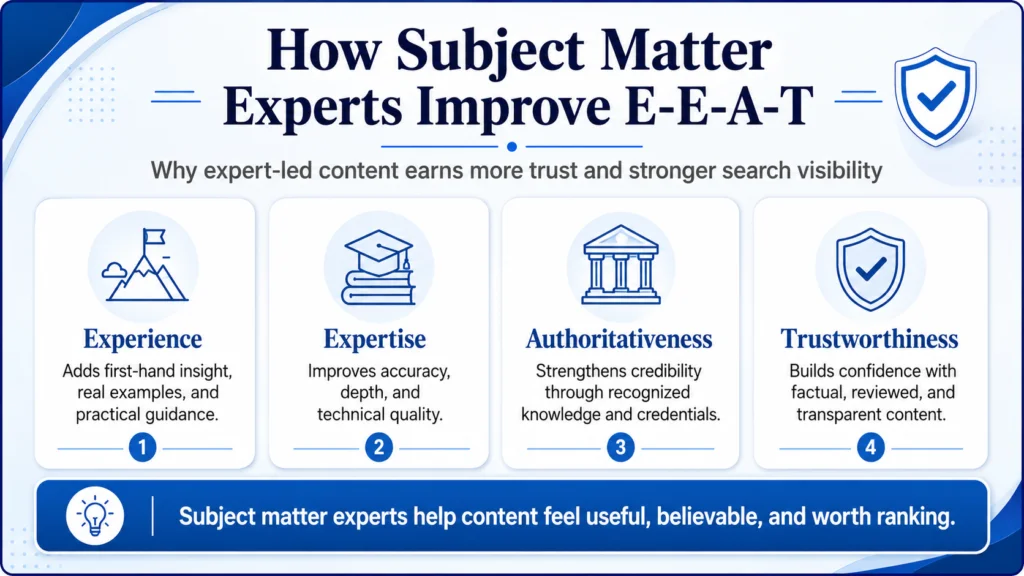
Google introduced the concept of E‑E‑A‑T in its Search Quality Rater Guidelines to help human reviewers evaluate content quality. Here’s a quick breakdown:
- Experience: Does the content creator have first‑hand, real‑world experience with the topic? Adding an “E” for Experience in 2022 underscored the importance of personal, tried‑and‑tested insights.
- Expertise: Does the creator have verifiable knowledge, credentials or skills? Content reviewed by experts, such as a doctor reviewing medical advice, builds confidence.
- Authoritativeness: Is the creator or website recognized as a trusted source in that field? Backlinks and brand reputation often signal authority.
- Trustworthiness: Is the content accurate, transparent and secure? Trust is the most important element, Google wants to protect users from harm, especially in topics that affect our money or health (YMYL topics).
Google’s documentation also emphasises people‑first content. Its systems prioritise helpful, reliable information created to benefit people rather than content designed to manipulate search rankings. When evaluating your pages, ask if the content demonstrates first‑hand expertise and leaves readers feeling satisfied.
Why Subject Matter Experts Matter for E‑E‑A‑T
1. They Provide First‑Hand Experience
SMEs can speak from personal experience. When a professional arborist writes about tree disease or a licensed dietitian reviews a recipe, they draw on real‑world practice. According to Google’s guidelines, first‑hand experience allows you to provide tried‑and‑tested advice and authentic insights. This kind of content doesn’t just satisfy the algorithm; it reassures readers that the advice is practical, not theoretical.
2. They Bring Verifiable Expertise
Expertise isn’t just about opinion; it’s about credentials and knowledge. Google values content written or reviewed by experts who demonstrably know the topic. By listing the author’s qualifications, linking to their professional profiles and citing relevant publications, you signal to both readers and search engines that your content is trustworthy.
3. They Strengthen Authoritativeness
Authoritativeness comes from reputation. When well‑known experts contribute to your content, other sites are more likely to reference and link to it, boosting your backlink profile. High‑quality backlinks are a key indicator of authority. If the head chef at a renowned Vancouver restaurant writes a blog about sustainable seafood, food bloggers and news outlets may cite it, increasing your domain’s authority.
4. They Enhance Trustworthiness
SMEs help ensure content is accurate, up‑to‑date, and ethical. Google stresses the importance of protecting visitors and providing honest information. Subject matter experts can spot inaccuracies, provide citations and ensure ethical considerations (like privacy and accessibility) are addressed.
How Subject Matter Experts Improve Search Rankings
E‑E‑A‑T Is Not a Direct Ranking Factor… But It Matters
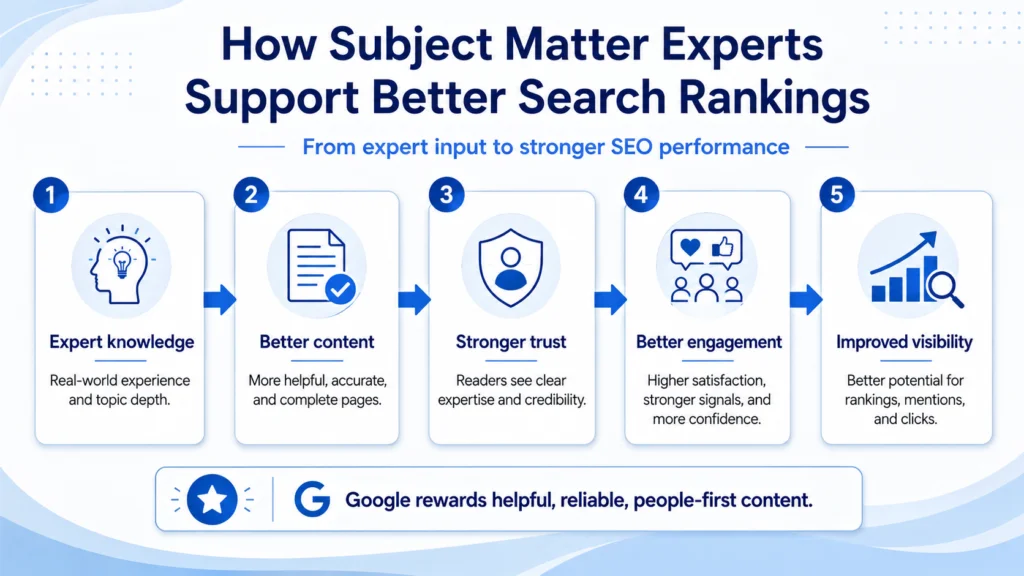
Google’s engineers have said that E‑E‑A‑T is not a single ranking factor; rather, it’s a holistic framework that helps evaluate whether content appears helpful and trustworthy. However, the individual signals that contribute to E‑E‑A‑T, such as backlinks, author profiles, user engagement and on‑page quality, do influence rankings.
Subject matter experts elevate these signals by:
- Generating Quality Backlinks: Other websites and journalists are more likely to link to articles authored by recognized experts, which boosts authority.
- Improving Engagement: Readers tend to spend more time on expert‑driven content, reducing bounce rates and increasing dwell time, metrics that correlate with ranking performance.
- Driving Social Shares: People are more inclined to share content that feels valuable and authentic, expanding your organic reach and brand awareness.
- Providing Unique Perspectives: Original insights differentiate your content from generic AI‑generated articles, increasing your chances of earning featured snippets and people‑first rankings.
Realistic Expectations
Using SMEs doesn’t guarantee overnight ranking boosts, but it does ensure your site aligns with Google’s long‑term goals of delivering safe, useful content. For industries like healthcare, finance, legal services and even travel, expert‑reviewed content can mean the difference between ranking on page one or getting buried.
How to Leverage Subject Matter Experts in Your Content Strategy
- Identify Internal Experts: Every organisation has in‑house experts engineers, customer service managers, researchers, regional managers. Give them a platform to share insights.
- Collaborate with External Professionals: Partner with accredited professionals, academics or industry leaders. Interviews, guest posts and expert quotes enrich your content and expand your network.
- Build Editorial Standards: As Semrush suggests, adopt strict editorial processes: fact‑check and proofread content, use style guides, define sourcing rules and schedule regular updates.
- Create Detailed Author Bios: List each author’s credentials and experience. Link to a dedicated author page with their qualifications and past work.
- Use Credible Sources: Always back claims with trustworthy references. Google stresses linking to credible sources and avoiding misinformation.
- Encourage User‑Generated Content: Allow readers and customers to share reviews, photos or tips. User‑generated content builds trust and showcases real experiences.
- Be Transparent About Data and Privacy: With Canadians increasingly concerned about data privacy, clearly state how you handle user data. Provide opt‑in consent and give users control, reflecting the 80 % of Canadians who want more control over their online information.
Conclusion
For Canadians, where concerns around privacy and data exposure are high, expert voices build the trust needed to turn visitors into loyal readers and customers. When you combine authoritative insights with people‑first content, your brand stands out, not just in search results but in hearts and minds.
If you’re ready to elevate your content, start by identifying the subject matter experts in your organisation or network. Give them a platform, follow best practices, and watch your E‑E‑A‑T, and your search rankings grow.
Quick FAQs
1. What is a subject matter expert?
2. Why are subject matter experts important for SEO?
3. What does E-E-A-T mean in SEO?
4. How do subject matter experts improve E-E-A-T?
5. Does having a subject matter expert guarantee higher rankings?
6. Should every blog be reviewed by a subject matter expert?
7. What is the difference between a writer and a subject matter expert?
8. How can businesses show subject matter expertise on their website?
9. Why does Google care about expert content?
10. How can Canadian businesses use subject matter experts in content?
Written by Neha Ghauri
Last updated June 9, 2026