How Is AI in Ecommerce Changing the Way Shoppers Find and Buy Products?
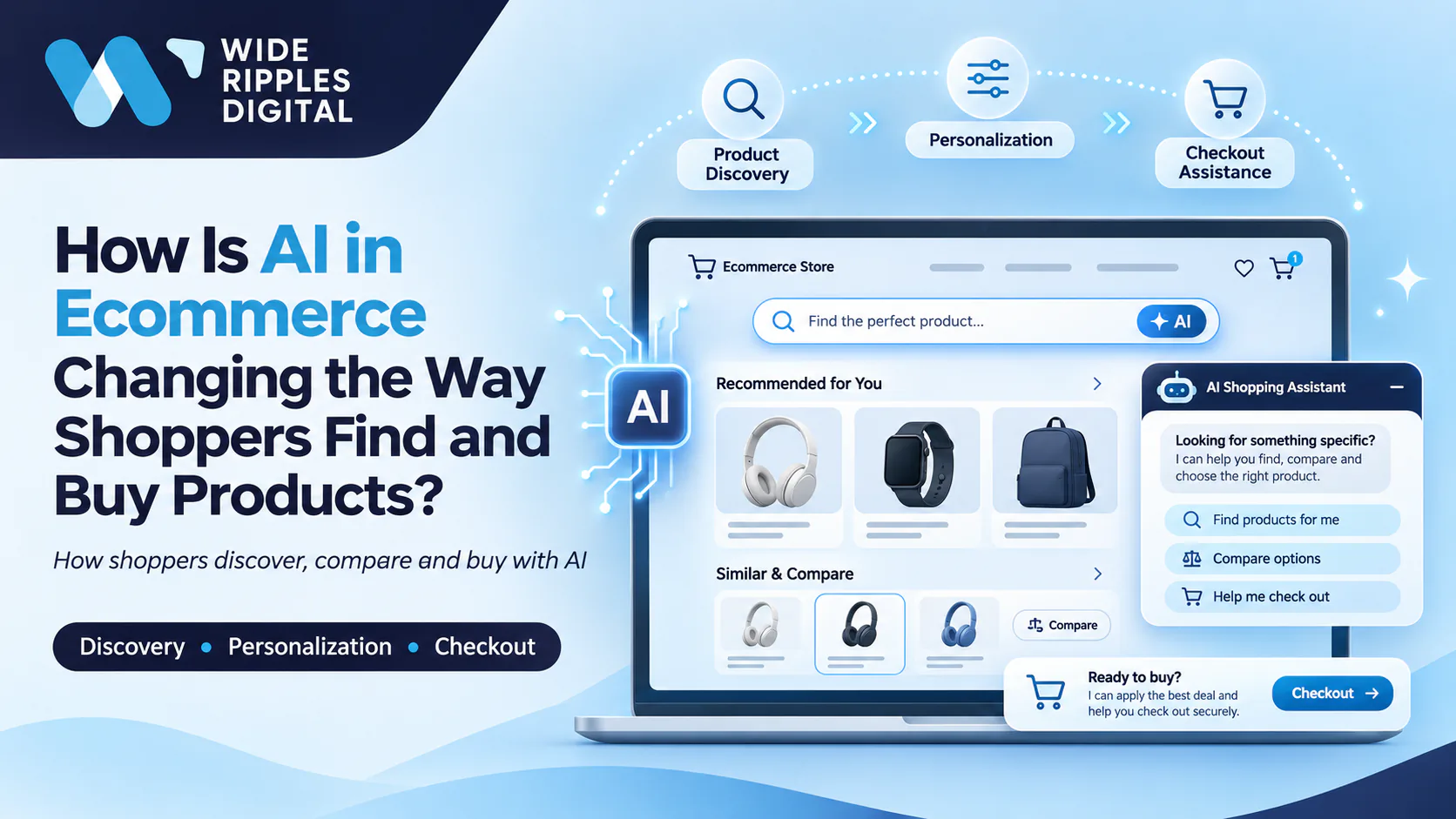
If you run an online store, AI in ecommerce is changing how your customers find and buy products. The starting point is understanding where AI now enters the shopping journey.
Many shoppers now research with AI assistants before they visit a store. However, organic search still sends more traffic than AI platforms, so plan for both channels.
In this article, we will walk you through how AI is changing product discovery, personalization and checkout. We also explain what retailers should do to stay visible.
What is AI in ecommerce, and how does it work?
AI in ecommerce is the use of artificial intelligence to analyze data, automate tasks and assist shoppers. It learns from product information, browsing behaviour and purchase history.
For example, an AI system can study what similar customers bought and suggest related items. It can also read a shopper's question and match it to products with the right attributes.
The quality of the output depends on the quality of the input. Incomplete product data produces weak recommendations, however advanced the system is.
5 common ways AI is used in ecommerce
Retailers apply AI at several points in the shopping journey.
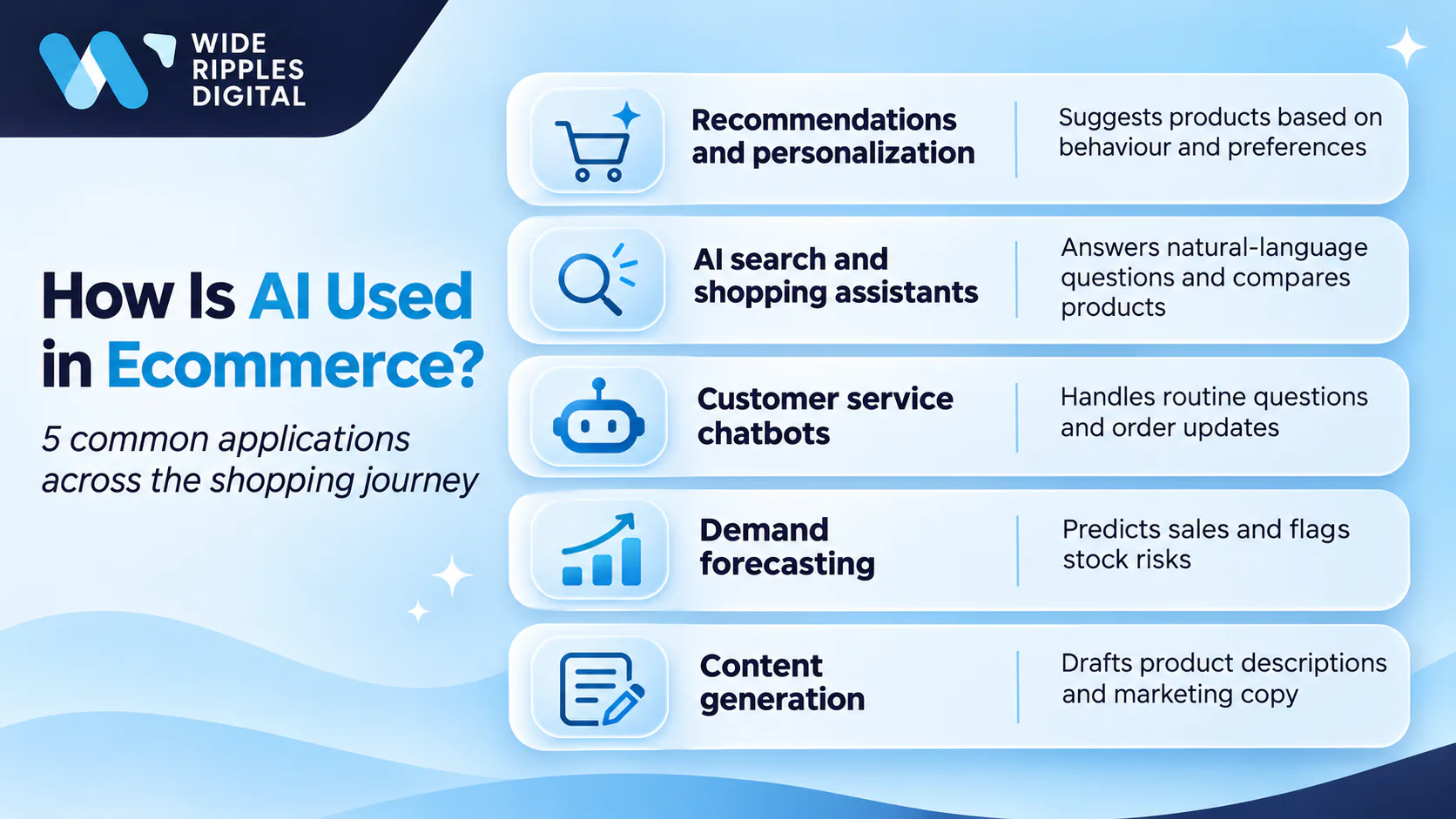
| Application | What it does |
|---|---|
| Recommendations and personalization | Suggests products based on behaviour and preferences |
| AI search and shopping assistants | Answers natural-language questions and compares products |
| Customer service chatbots | Handles routine questions and order updates |
| Demand forecasting | Predicts sales and flags stock risks |
| Content generation | Drafts product descriptions and marketing copy |
Each application is explained in more detail below.
How is AI changing the way shoppers discover products?
Product discovery is where AI in ecommerce has the most visible effect. Shoppers now describe what they need, and AI does much of the searching for them.
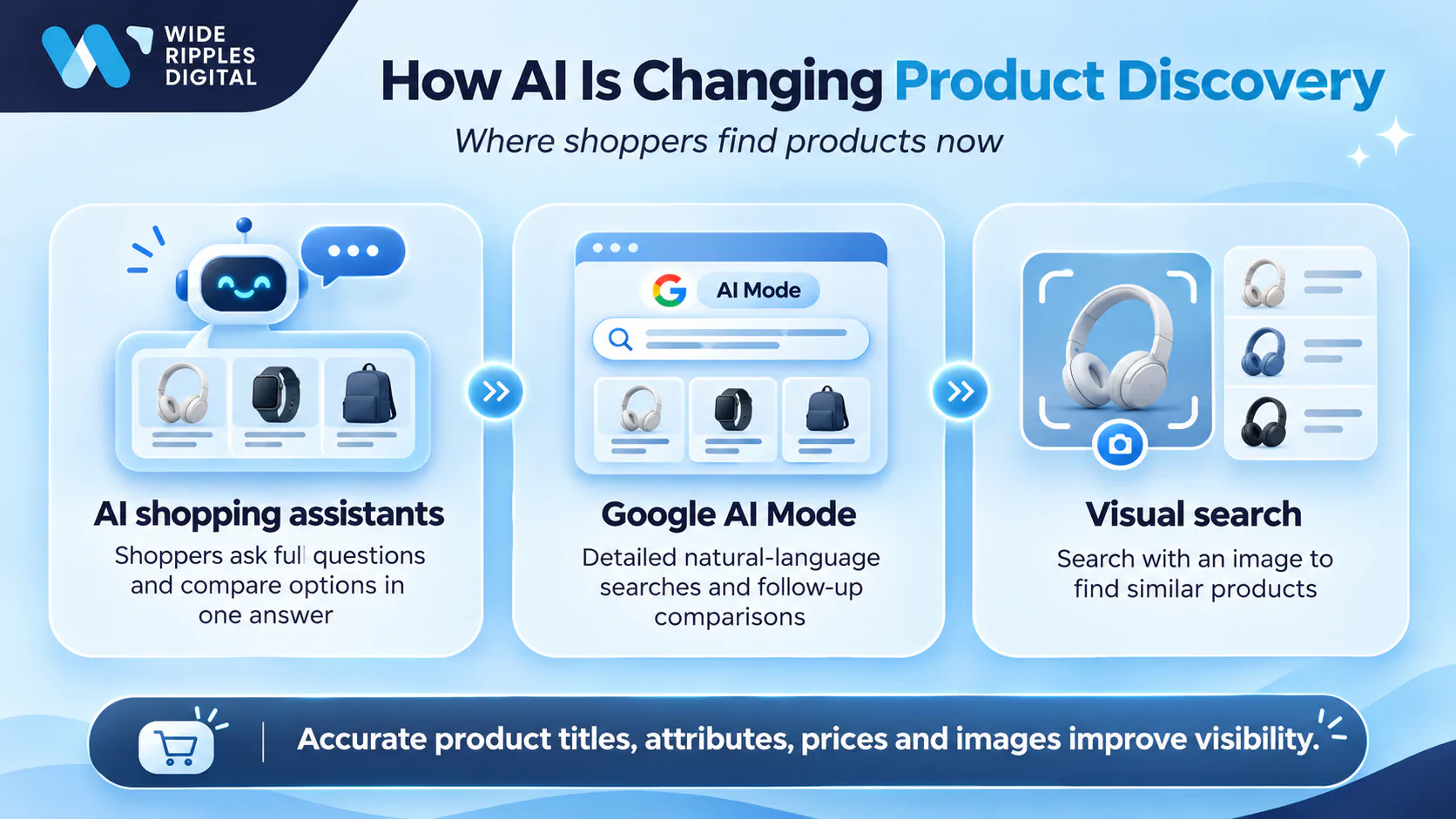
AI shopping assistants are replacing some search steps
Conversational search lets shoppers ask full questions instead of typing short keywords. A shopper can ask ChatGPT or another assistant for a laptop suited to video editing under a set price.
The assistant then compares options against those requirements. It may summarize specifications, reviews and prices in one answer.
Therefore, many shoppers arrive at your website with much of their research already done. They expect the product page to confirm what the assistant told them. If your details conflict, you lose trust quickly.
Google AI Mode is changing product search
Google AI Mode lets users search with detailed, natural-language questions. Shoppers can ask follow-up questions and compare specifications without opening several tabs.
These answers draw on product information and merchant data. Accurate titles, attributes, prices and availability therefore affect whether your products appear at all.
Visual search makes product discovery easier
Visual search lets shoppers search with an image instead of a product name. Tools such as Google Lens identify an item and show similar products.
For example, a shopper may photograph a dining chair they like. Visual search can then show similar chairs in their preferred material and price range. This is especially useful for clothing, furniture and accessories.
For retailers, clear images and complete descriptions are now central to product page SEO.
How is AI personalization changing the online shopping experience?
AI personalization tailors the shopping journey to each customer. Retailers use relevant customer data to show products that match individual needs.
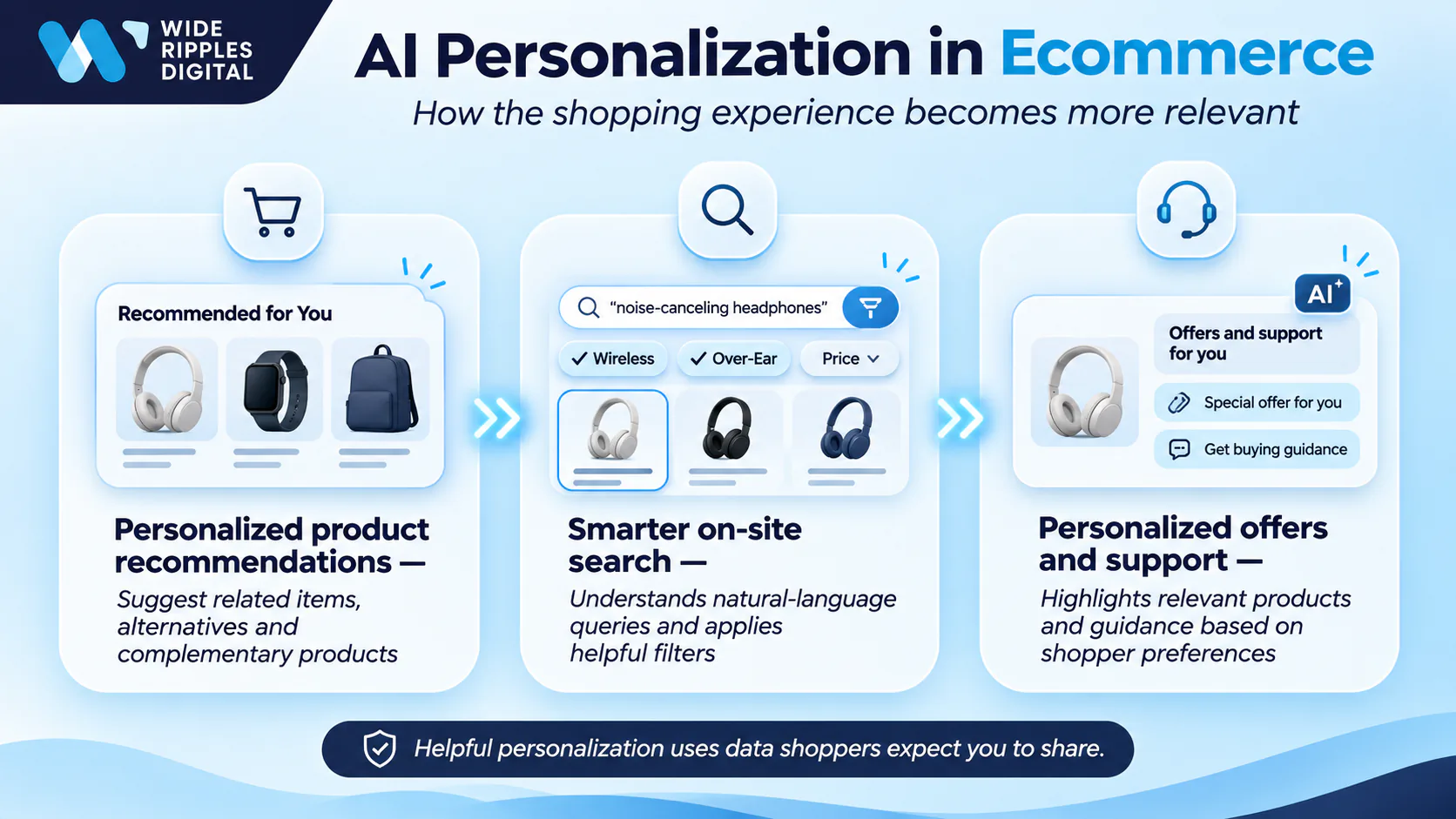
Personalized product recommendations
AI recommends products based on browsing history and past purchases. It also suggests alternatives and complementary items, such as a case for a new phone.
These suggestions create natural cross-selling and upselling opportunities. However, they work only when the recommendations feel relevant to the shopper.
Smarter on-site search
AI-powered site search understands natural-language queries. A shopper can type "warm jacket for hiking in rain" and still find suitable products.
This helps customers who do not know the exact product name. The search can also apply filters automatically based on the question's context.
Personalized offers and shopping support
AI can tailor offers and suggestions to preferences a shopper has expressed. For example, it may highlight vegan products for a customer who filtered by that attribute before.
Privacy still matters. Helpful personalization uses data the shopper expects you to use. Intrusive tracking uses data they never knowingly shared, and it erodes trust quickly.
What is agentic commerce, and how could it change checkout?
Agentic commerce means AI assistants take shopping actions on behalf of users. These actions depend on the permissions a user grants and the capabilities of each service.
An agent might search for a product, compare sellers and prepare an order. In some cases, it can also complete the purchase once the user approves it.
What are UCP and ACP?
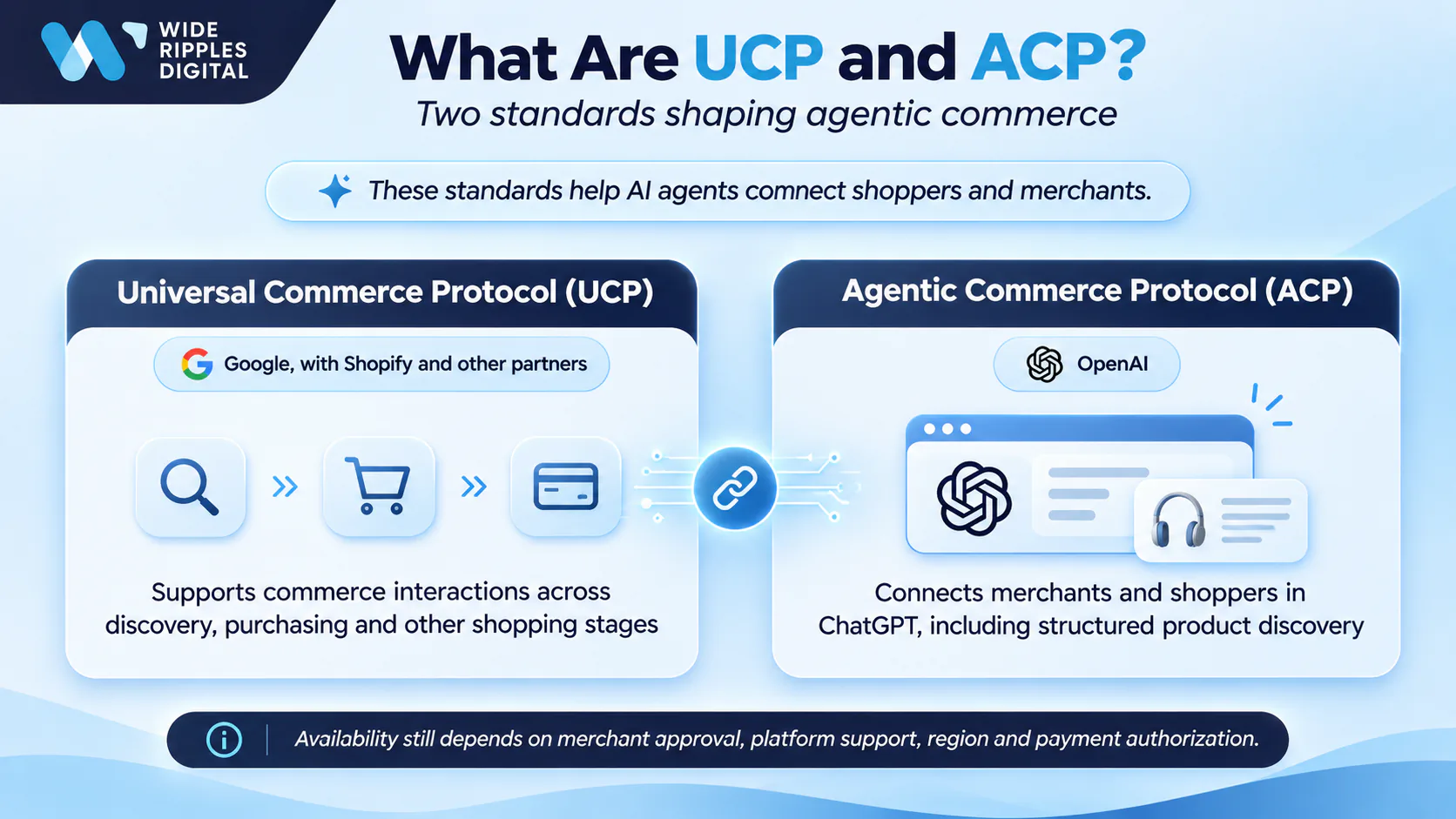
Two open standards now shape how AI agents connect with merchants.
| Protocol | Developed by | Purpose |
|---|---|---|
| Universal Commerce Protocol (UCP) | Google, with Shopify and other partners | Supports commerce interactions across discovery, purchasing and other shopping stages |
| Agentic Commerce Protocol (ACP) | OpenAI | Connects merchants and shoppers in ChatGPT, including structured product discovery |
Google introduced UCP in January 2026. OpenAI's ACP documentation explains how structured catalog and inventory data support product discovery in ChatGPT.
Could shoppers buy without visiting an online store?
In some cases, yes. Supported systems can reduce the steps between research and checkout. A shopper may confirm a purchase without opening the retailer's website.
However, this is not yet the default experience. OpenAI's current merchant guidance focuses on discovery, with checkout often completed on the merchant's own site or app.
Eligibility also varies. Merchant approval, platform support, region and payment authorization all determine what is possible. Therefore, check which integrations your ecommerce platform already supports before planning around in-chat sales.
How is AI helping ecommerce businesses beyond product discovery?
AI also supports the operations behind the storefront. These uses matter less to shoppers directly, but they affect service quality and margins.
AI customer service chatbots
Chatbots answer common questions about shipping, returns and sizing. When connected to order systems, they can also provide order updates.
Complex issues should still go to a human. Well-configured AI chatbots for business websites recognize their limits and escalate quickly.
Demand forecasting and inventory management
AI analyzes historical sales, seasonality and trends to forecast demand. It then flags products at risk of running low or overstocking.
For example, a store may see rising demand for a product before a holiday. Forecasting gives the team time to reorder before stock runs out.
Generative AI for product descriptions and marketing
Generative AI can draft product descriptions, ad copy and email campaigns in minutes. This saves time for stores with large catalogs.
However, every draft needs a review. AI can invent features, misstate sizes or repeat generic phrasing. Accurate descriptions protect both your rankings and your return rate.
What are the biggest benefits of AI in ecommerce?
The benefits of AI in ecommerce span both the shopper experience and internal operations.
| Benefit | How AI helps |
|---|---|
| Easier product discovery | Helps shoppers find relevant items faster |
| Better personalization | Suggests products based on shopper needs |
| Faster customer support | Answers routine questions at any hour |
| Improved efficiency | Automates repetitive tasks |
| Smarter inventory planning | Helps forecast demand |
| More conversion opportunities | Reduces friction during shopping |
Results vary between stores. They depend on implementation quality, available data and customer behaviour. A well-configured tool on clean data will outperform an advanced tool on poor data.
Which AI tools can ecommerce businesses use?
The right tools depend on what you need AI to do. The table below groups common options by purpose.
| Category | Example tools or platforms |
|---|---|
| Product discovery | ChatGPT shopping, Google AI Mode |
| Store management | Shopify Sidekick |
| Personalization | Nosto, Dynamic Yield |
| Customer support | Gorgias, Intercom |
| Product content | ChatGPT, Shopify Magic |
| Analytics and forecasting | AI-enabled ecommerce analytics tools |
Store size, budget, integrations and business goals should guide your choice. Start with one tool that solves a clear problem, then expand.
How can ecommerce businesses prepare for AI-powered shopping?
Preparing for AI-powered shopping starts with your product data. AI assistants can only recommend what they can read and trust.
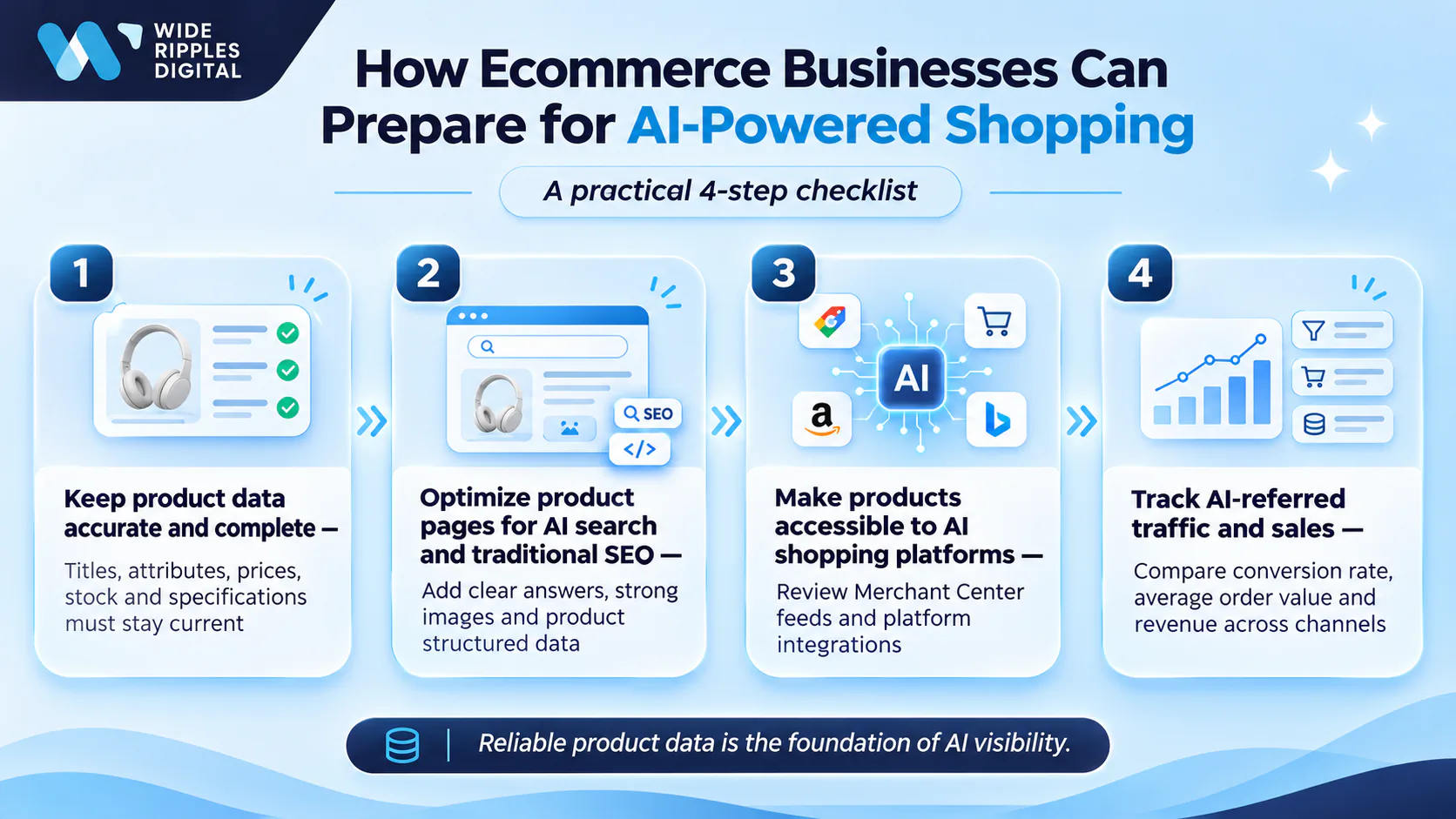
Keep product data accurate and complete
Write descriptive product titles that name the item, brand and key feature. Include attributes such as sizes, colours, materials and specifications.
Keep pricing and stock availability updated in real time. Information must also match across your website, marketplaces and product feeds. Inconsistent data confuses both shoppers and AI systems.
Optimize product pages for AI search and traditional SEO
Product pages should answer the questions shoppers actually ask. Add comparison details, clear images and relevant product structured data.
Page speed, navigation and mobile usability still matter as well. These same signals help you rank your website on ChatGPT and other assistants. Generative engine optimization then improves how often AI answers cite your products.
Make products accessible to AI shopping platforms
Review your Google Merchant Center feed for errors and missing attributes. Then check which UCP or ACP integrations your ecommerce platform already provides.
For example, OpenAI says Shopify product data already reaches ChatGPT through Shopify Catalog. Approved merchants on other platforms can submit product feeds directly. Either way, refresh your feeds regularly.
Track AI-referred traffic and sales
Measure AI traffic separately where it can be identified. Compare its conversion rate, average order value and revenue against other channels.
Track which product pages AI visitors land on first. However, some AI-assisted visits appear within ordinary organic search data. Your reports may therefore understate AI's full influence.
Setting up GA4 conversion tracking correctly makes these comparisons possible. For larger stores, dedicated campaign tracking and reporting connects AI traffic to revenue.
What challenges should businesses consider before using AI in ecommerce?
AI brings real gains, but it also introduces new risks. Plan for these before you commit budget.
| Challenge | Why it matters |
|---|---|
| Data privacy and security | Customer data must be collected and stored lawfully |
| Incorrect recommendations | Outdated data leads to irrelevant or wrong suggestions |
| Inaccurate product content | AI-written descriptions can misstate features |
| Cost | Tools need setup, integration and ongoing maintenance |
| Platform dependence | Third-party AI platforms can change rules without notice |
| Measurement gaps | AI influence on purchases is hard to track fully |
Therefore, keep human oversight in place and test each tool regularly. Reliable information remains your strongest safeguard.
What AI in ecommerce trends should retailers watch in 2026 and beyond?
The most important trends connect directly to how shoppers find and buy products.
Growth of conversational product discovery
More shoppers will use AI assistants to research, compare and shortlist products. Your product information must therefore be clear enough for an AI to summarize correctly.
Expansion of agentic commerce
AI-supported shopping actions will expand as more platforms adopt UCP and ACP. However, availability will continue to vary by platform and region.
Smarter multimodal shopping
Shoppers will combine images, text and conversation in a single search. A photo, a follow-up question and a price filter may all happen together.
Greater importance of structured product data
Catalog completeness, accurate attributes and live availability will separate visible brands from invisible ones. Brands that structure content for AI answers will also be easier for assistants to quote.
Make your products visible wherever shoppers search with Wide Ripples
AI in ecommerce is changing product discovery, personalization and checkout. Shoppers now research with assistants, search with images and expect relevant suggestions.
However, the fundamentals have not changed. Your store still needs reliable product data, useful content and a fast, well-designed website. You also need a clear way to measure where sales come from.
Wide Ripples helps ecommerce brands stay visible across Google and AI search. Our team combines SEO and content strategy with website optimization to turn more visitors into buyers.
Want your products to show up in AI shopping answers? Call +1 416-668-6969 or book a free two-week audit.
Frequently asked questions about AI in ecommerce
How is AI used in ecommerce?
AI in ecommerce powers product recommendations, conversational search, chatbots, demand forecasting and content creation. It helps shoppers find products faster and helps retailers automate routine work. Results depend on the quality of product data and how well each tool is set up.
What are the main benefits of AI in ecommerce?
The main benefits are easier product discovery, better personalization, faster support and smarter inventory planning. AI can also reduce friction during shopping and improve efficiency. However, benefits vary with data quality, implementation and customer behaviour.
What is agentic commerce?
Agentic commerce is when AI assistants take shopping actions for users, such as comparing sellers or preparing an order. These actions depend on user permissions and platform support. Standards such as UCP and ACP connect agents with merchant data.
Can customers shop using ChatGPT?
Yes, shoppers can research and compare products in ChatGPT. Product data reaches it through integrations such as Shopify Catalog and approved merchant feeds. However, checkout often still happens on the merchant's own website or app.
How can small ecommerce businesses start using AI?
Start with accurate product data and a clean Google Merchant Center feed. Then add one tool that solves a clear problem, such as a support chatbot or better site search. Measure the results before expanding further.
Disclaimer: The information provided in this blog is for general informational purposes only. For professional assistance and advice, please contact experts.

Written by Umer Kureshi
Search and Performance Lead
Umer leads search and performance at Wide Ripples Digital and heads SEO and marketing at Bestax. His work covers technical SEO, content strategy, internal linking and local search, and he builds each plan around the gaps in a client’s niche rather than a copied playbook. On one campaign that approach took a site from 30 clicks a day to 12,953 in a single day.
Reviewed by Usman Shafique, Organic Growth Strategist
Last updated November 13, 2026 · Umer Kureshi on LinkedIn