What Is Organic SEO? How to Increase Rankings, Traffic and Leads Naturally
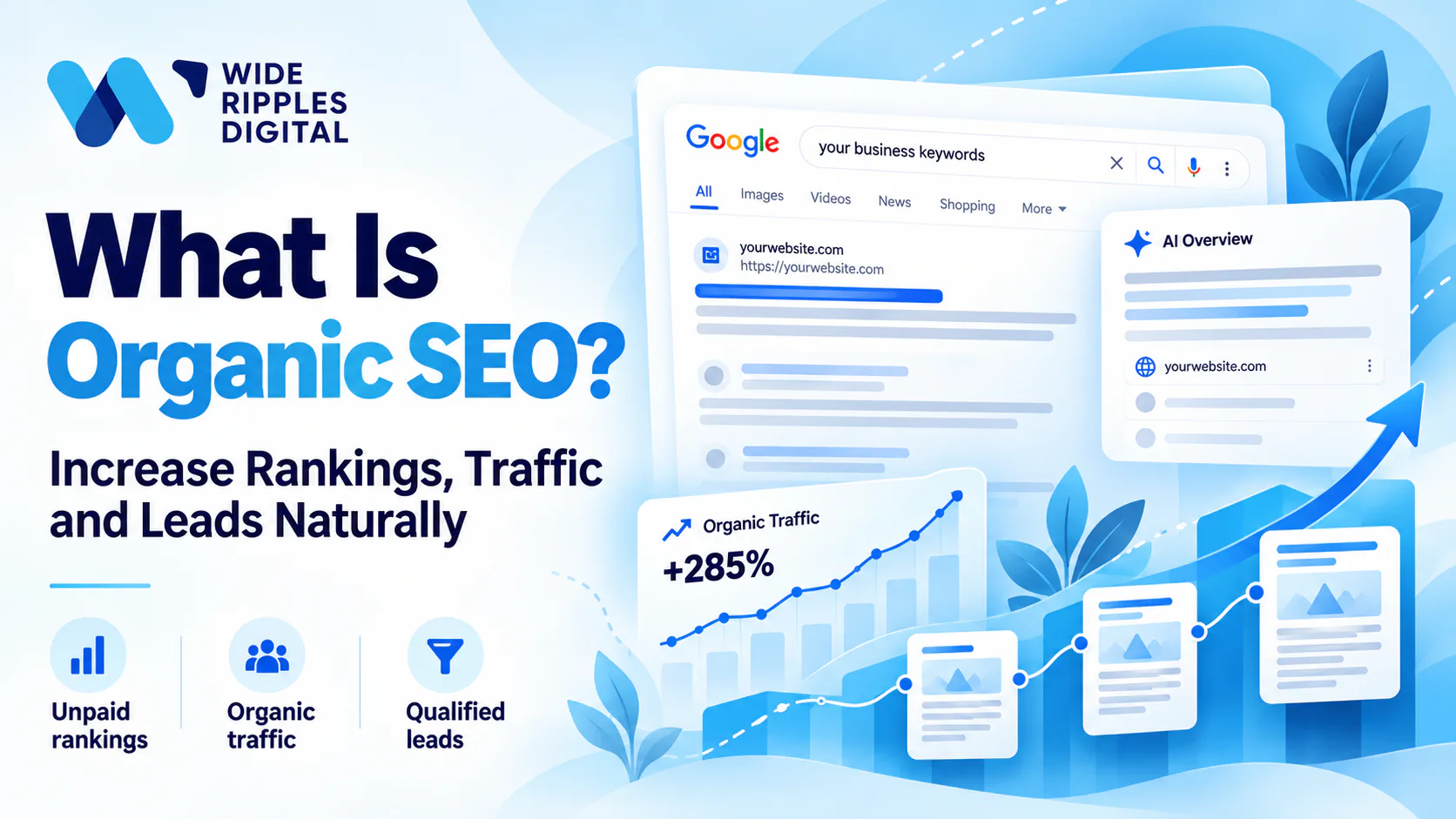
Organic SEO is the work that gets your website into Google's unpaid results for the searches your buyers already type. You do not pay per click. Once a page ranks, it keeps bringing visitors while you sleep.
Organic SEO now reaches beyond the blue links. Google's AI Overviews, ChatGPT search and Perplexity answer questions directly and cite the websites they trust. The same work that ranks you in Google makes you a likely source for those answers.
The catch is time. Organic SEO builds slowly, and most of its value shows up in month six and year two, not week one.
What organic SEO means
Organic SEO covers everything that helps your pages earn a place in search results without paying for the spot.
Organic results vs paid results
A Google results page has two kinds of listings. Paid ads carry a "Sponsored" label, and the advertiser pays for each click. Organic results sit below or around them, and nobody pays Google for those places.
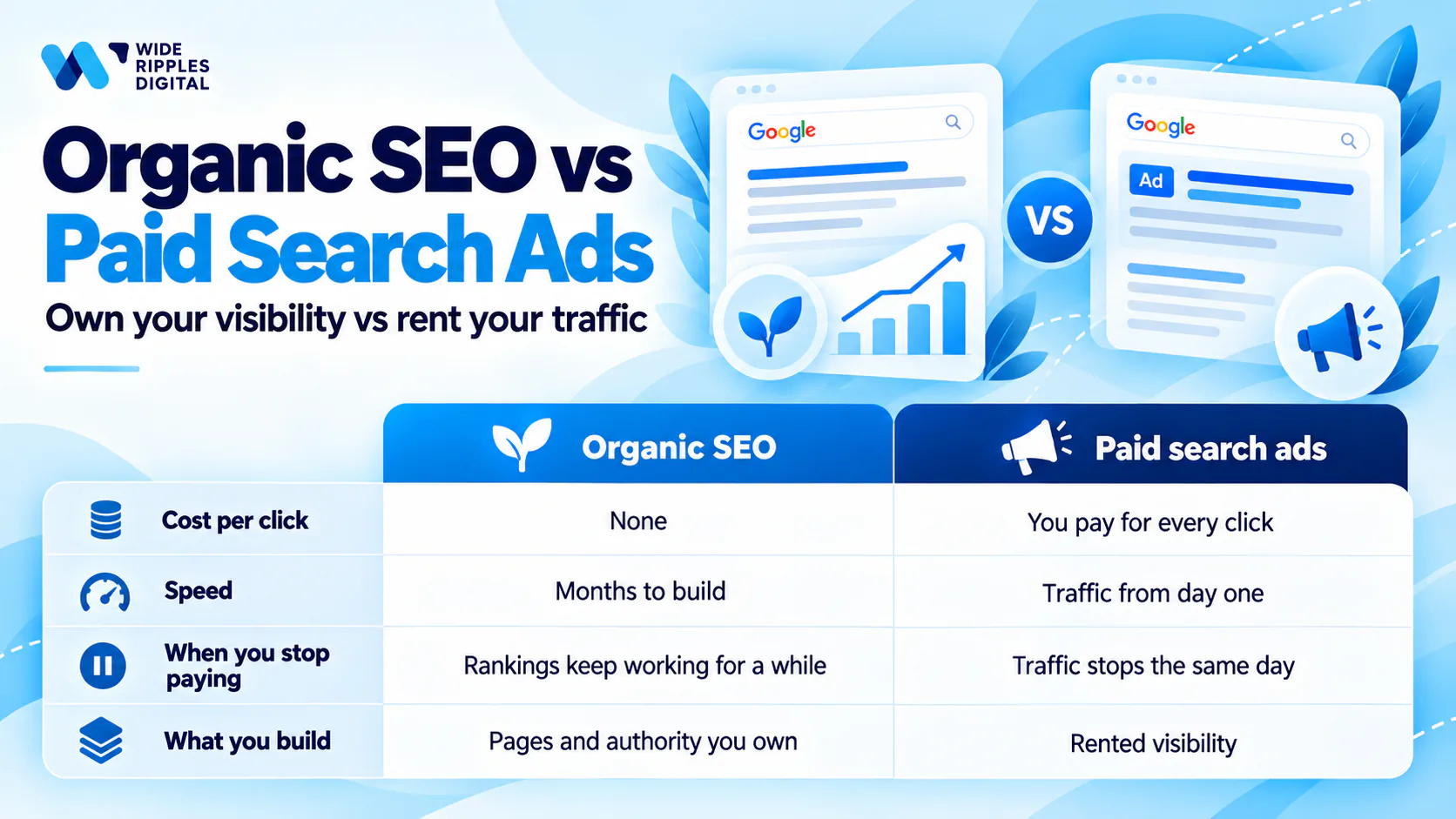
| Organic SEO | Paid search ads | |
|---|---|---|
| Cost per click | None | You pay for every click |
| Speed | Months to build | Traffic from day one |
| When you stop paying | Rankings keep working for a while | Traffic stops the same day |
| What you build | Pages and authority you own | Rented visibility |
What Google looks for
Google ranks pages that answer the search well. Three things matter most:
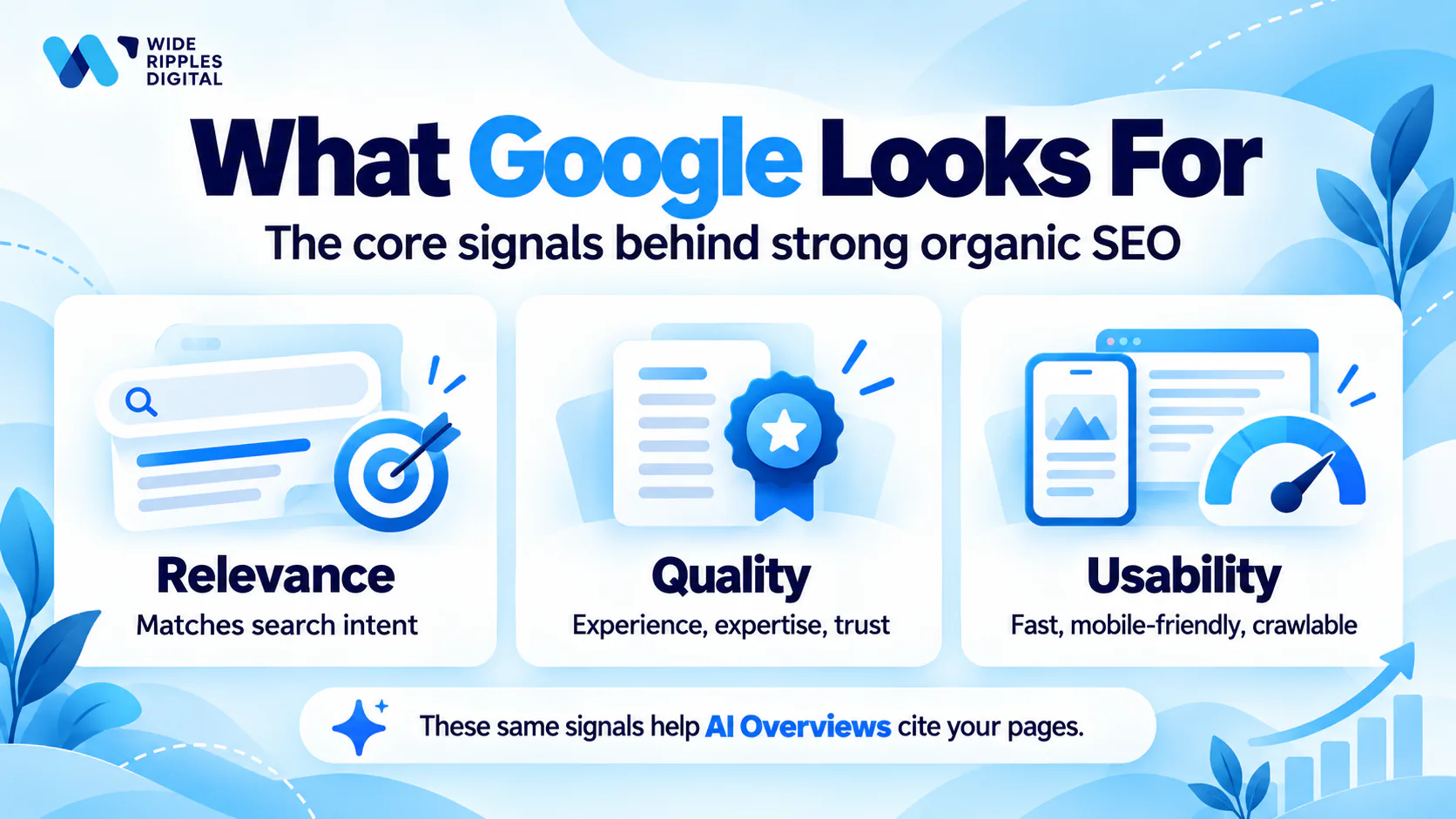
- Relevance: your page matches what the searcher wants
- Quality: your content shows real experience and expertise, and visitors trust it
- Usability: your site loads fast, works on a phone and is easy for Google to crawl
Google publishes its own rules in Google Search Essentials. Sites that break them, for example with bought links or copied content, can lose rankings.
Google's AI features follow the same signals. Pages that rank well and answer questions clearly are the ones AI Overviews tend to cite.
Why organic SEO compounds
Each page you publish, each link you earn and each technical fix you make adds to the last one. None looks dramatic alone. Together they change how much traffic your site gets over a year.
Paid ads work the other way. Your results reset every time the budget runs out.
How to do organic SEO, step by step
You can start each of these steps yourself with free tools. Experts go further, because they know which fixes move rankings and which only look busy.
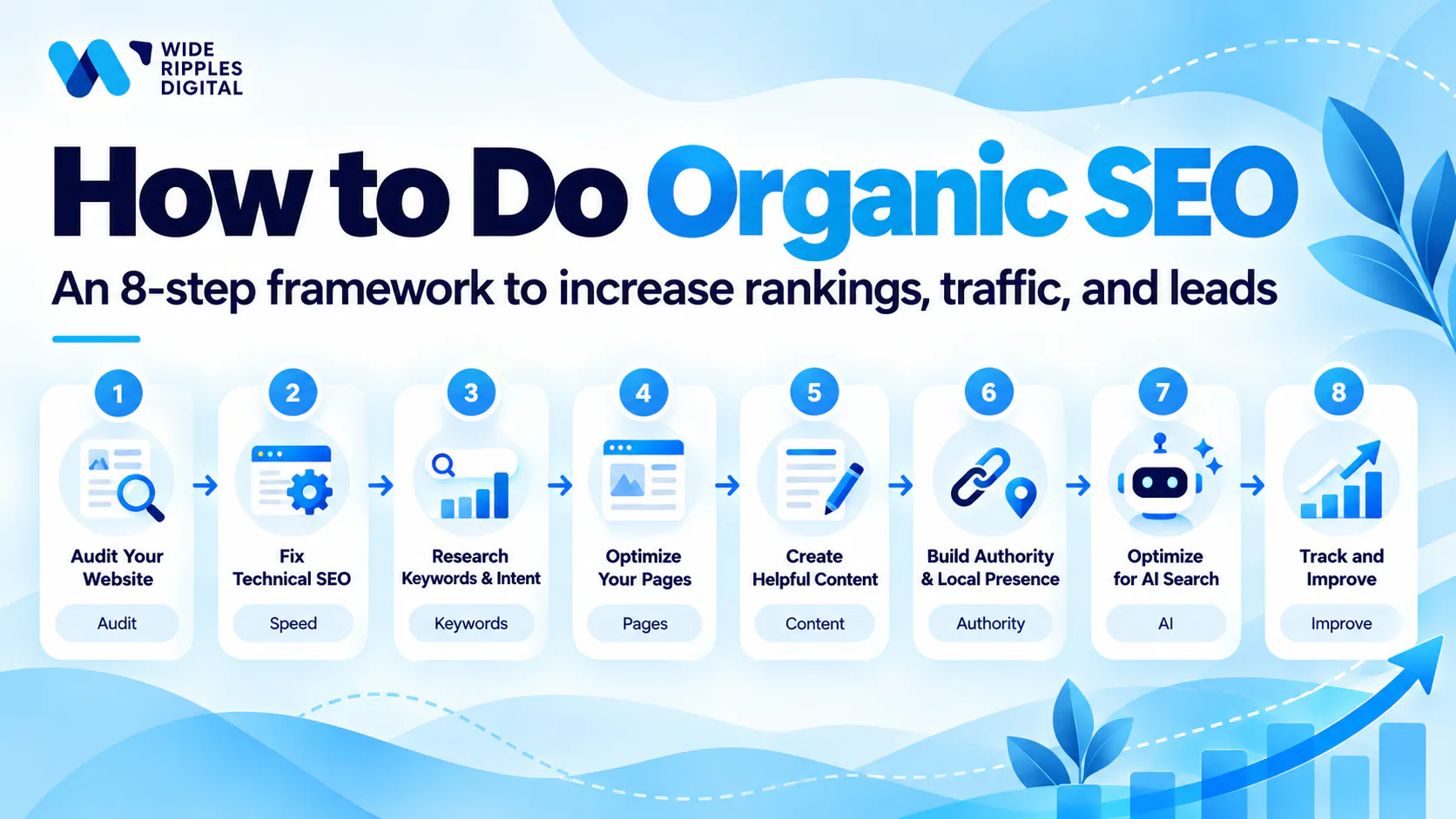
Step 1: Audit your website
Start with what Google already sees. Set up Google Search Console and Google Analytics 4, both free. Check which pages get impressions, which searches bring visitors, and which pages show errors.
An expert SEO audit goes deeper. Experts check crawl errors, page speed, tracking accuracy, your Google Business Profile, your reviews and how leads move into your CRM. Wrong tracking is common, and it makes every later decision a guess.
Wide Ripples runs a free two-week audit of your rankings, site speed, tracking, reviews and CRM. We fix and verify your tracking before any other work starts, and you keep the findings either way.
Step 2: Fix technical SEO
Google has to crawl and index your pages before it can rank them. At a basic level, check that your site works on a phone, uses HTTPS and has no broken links. Submit your sitemap in Search Console.
Google measures page experience with Core Web Vitals:
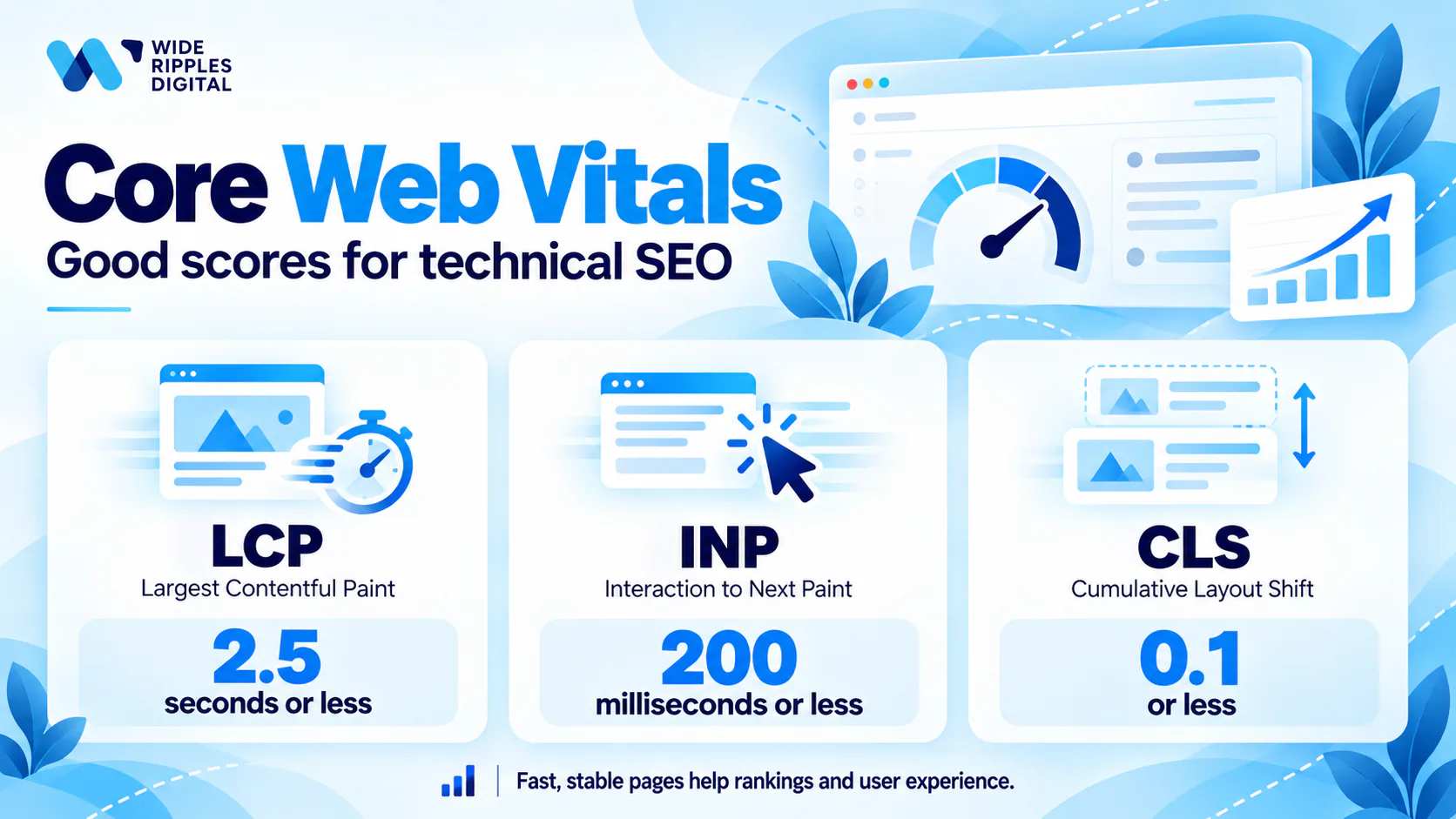
| Measure | What it checks | Good score |
|---|---|---|
| Largest Contentful Paint (LCP) | How fast the main content appears | 2.5 seconds or less |
| Interaction to Next Paint (INP) | How fast the page reacts to a tap or click | 200 milliseconds or less |
| Cumulative Layout Shift (CLS) | How much the layout jumps while loading | 0.1 or less |
Wide Ripples fixes crawl errors, speed issues and Core Web Vitals, and adds structured data so Google and AI tools read your business details correctly.
Step 3: Research keywords and search intent
List the questions your customers ask on calls. Type them into Google and note the autocomplete suggestions and the "People also ask" box. Those phrases show what your buyers search for.
Experts look past search volume. They sort keywords by intent, so a page for "emergency plumber Mississauga" targets a buyer, not a researcher. They also check what already ranks, so you only chase searches you can win.
Wide Ripples maps your keywords to the searches that end in a sale, then builds your page plan around them.
Step 4: Optimize your pages
Give each important page one main topic. Put the main phrase in your title tag, main heading and first paragraph. Write a meta description that gives a reason to click.
Experts also fix your internal links, so authority flows to the pages that sell. They make sure each page answers the follow-up questions a buyer has before calling.
Wide Ripples handles on-page SEO across your service and location pages, and builds landing pages that guide visitors to one clear action.
Step 5: Create helpful content
Publish content that answers real questions with specifics: prices, timelines, examples and what goes wrong. Write from your own experience. Google rewards content that shows first-hand expertise.
Experts plan content in clusters. One main guide links to supporting articles, so Google sees you cover a topic in depth.
Wide Ripples builds a content plan from your keyword map and writes content designed to rank and convert, not just to fill a blog.
Step 6: Build authority and local presence
Claim and complete your Google Business Profile. Keep your name, address and phone number the same on every directory. Ask every happy customer for a review.
Experts earn links from relevant, trusted sites through digital PR and local partnerships. One link from a respected industry site is worth more than dozens from unrelated directories. Bought links break Google's rules and put your rankings at risk.
Through our local SEO services, Wide Ripples manages your Google Business Profile, cleans up your citations, builds location pages and runs review generation that stays compliant.
Step 7: Optimize for AI search
Search has changed. Google's AI Overviews and AI Mode, ChatGPT search and Perplexity now answer many questions directly and cite the websites they draw from. Your goal is to be one of those sources.
At a basic level, answer common questions in clear, short paragraphs on your pages. Keep your business details accurate everywhere online. Google says the same SEO best practices apply to its AI features, so strong organic SEO is your starting point.
Experts go further with structured data, consistent entity details across the web and content written to be quoted. Wide Ripples runs generative engine optimization alongside your SEO, so your business shows up in AI answers as well as search results.
Step 8: Track and improve
Check Search Console each month for rising and falling pages. Update content that has slipped, and expand pages that are close to page one.
Experts tie rankings to leads and revenue, not just traffic. Wide Ripples reports your cost per qualified lead by channel and by city, with calls and forms traced to the pages that produced them. If something is not working, we say so and replace it.
What to expect: timelines, costs and results
Organic SEO pays off over months, so you need honest expectations before you start.
How long organic SEO takes
These are the windows we see when the work runs without stopping:
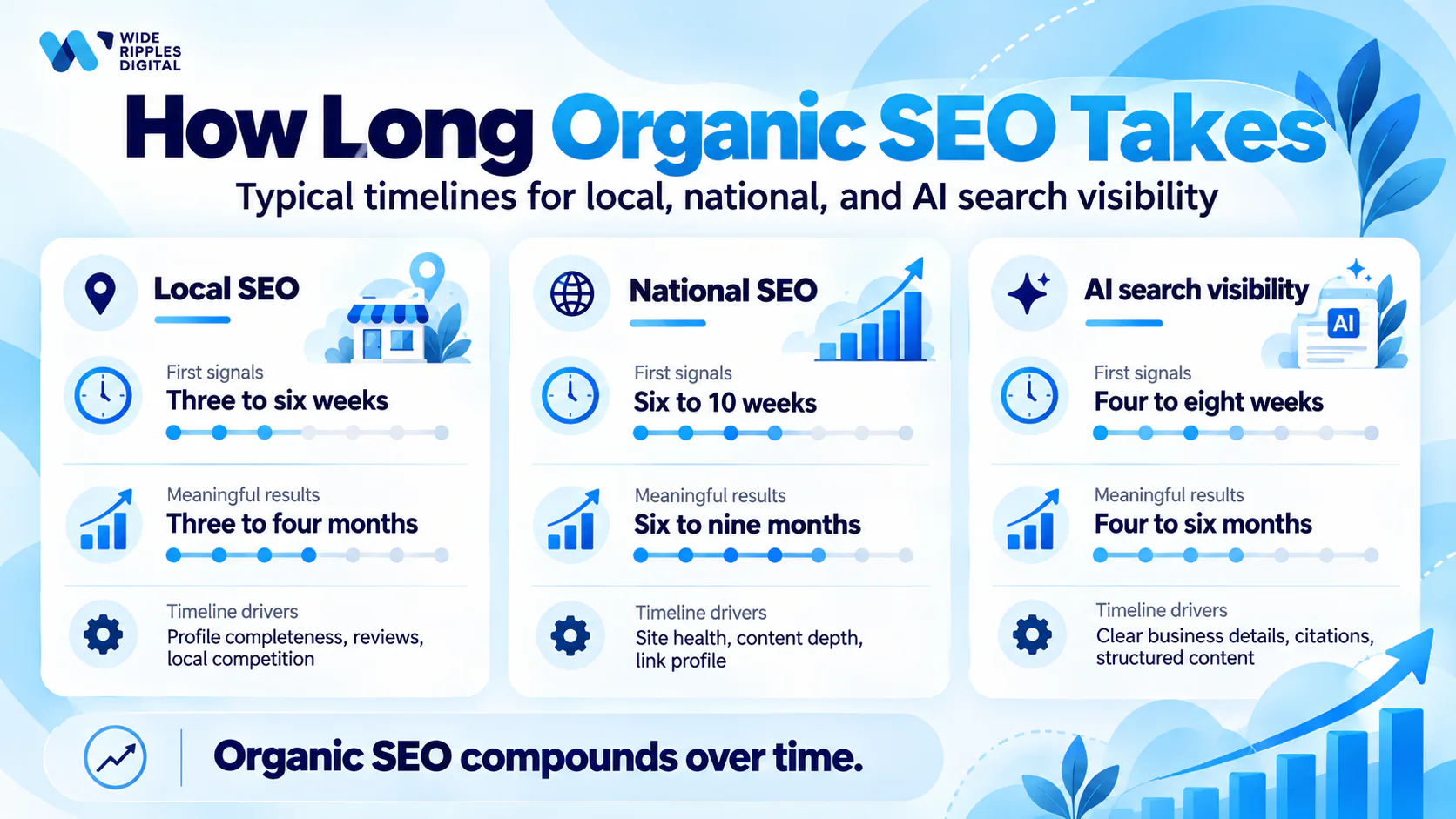
| Channel | First signals | Meaningful results | What moves the timeline |
|---|---|---|---|
| Local SEO | Three to six weeks | Three to four months | Profile completeness, reviews, local competition |
| National SEO | Six to 10 weeks | Six to nine months | Site health, content depth, link profile |
| AI search visibility | Four to eight weeks | Four to six months | Clear business details, citations, structured content |
Pausing the work and restarting it resets the clock. We tell you which timeline your budget buys before you sign.
What organic SEO costs
We set your scope after the free audit, so you pay for what your market needs rather than a fixed package. A single local channel costs far less than national SEO across several provinces.
We ask for 90 days, the shortest honest window for search work to show movement. After that, you stay month to month, with no lock-in contract.
How you measure leads, not just rankings
Rankings and traffic are context. Leads and revenue are the result. We track three things for you:
- calls, forms and chats tied to the pages that produced them
- cost per qualified lead, by channel and by city
- revenue closed from search-sourced leads, pulled from your CRM
Organic SEO works best as part of a wider organic search engine marketing plan, where search, content, your website and lead follow-up all run off one strategy and one report.
Start growing your traffic and leads naturally
Organic SEO turns your website into an asset that keeps producing leads after the work is done. Fix the technical base, build pages that answer real searches, earn trust from outside your site and measure what each step produces.
Want to know where your site stands? Wide Ripples starts every client with a free two-week audit of rankings, site speed, reviews and tracking. You keep the findings either way. Call +1 416-668-6969 or book a free strategy call to get yours.
Frequently asked questions about organic SEO
Can I do organic SEO myself, or do I need an agency?
You can handle the basics yourself: Search Console, your Google Business Profile, reviews and simple page updates. An agency adds technical fixes, link building, content planning and lead tracking. Many owners start alone and bring in help once the basics are in place.
How long does organic SEO take to show results?
You can see early signals within three to six weeks for local SEO. Meaningful lead growth usually takes three to four months for local SEO and six to nine months for national SEO.
How much does organic SEO cost?
The cost depends on your market, your competition and how much work your site needs. Wide Ripples sets your scope after a free audit, so you pay for the channels that fit your market rather than a fixed package.
Does organic SEO still matter with AI search?
Yes. AI Overviews, ChatGPT search and Perplexity draw their answers from websites and cite the ones they trust. Strong organic SEO, clear answers and accurate business details make you a likely source.
Is organic SEO better than paid ads?
Neither is better in every case. Paid ads bring leads within days but stop when you stop paying. Organic SEO takes months but keeps working. Many businesses run ads for leads this quarter while organic SEO builds for next year.
What is the difference between organic SEO and organic search engine marketing?
Organic SEO is the work on your website, content and authority that earns unpaid rankings. Organic search engine marketing is the wider plan around it, including local search, AI visibility, your website and how you follow up on the leads search brings in.
What happens to my rankings if I stop SEO?
Your rankings do not drop overnight. Over time, competitors who keep publishing and earning links overtake you. Because Wide Ripples builds everything in your name, your pages, accounts and content stay with you either way.
Disclaimer: The information provided in this blog is for general informational purposes only. For professional assistance and advice, please contact experts.

Written by Umer Kureshi
Search and Performance Lead
Umer leads search and performance at Wide Ripples Digital and heads SEO and marketing at Bestax. His work covers technical SEO, content strategy, internal linking and local search, and he builds each plan around the gaps in a client’s niche rather than a copied playbook. On one campaign that approach took a site from 30 clicks a day to 12,953 in a single day.
Reviewed by Usman Shafique, Organic Growth Strategist
Last updated October 15, 2026 · Umer Kureshi on LinkedIn