Why Google Reviews Are Important for Local SEO and Business Growth
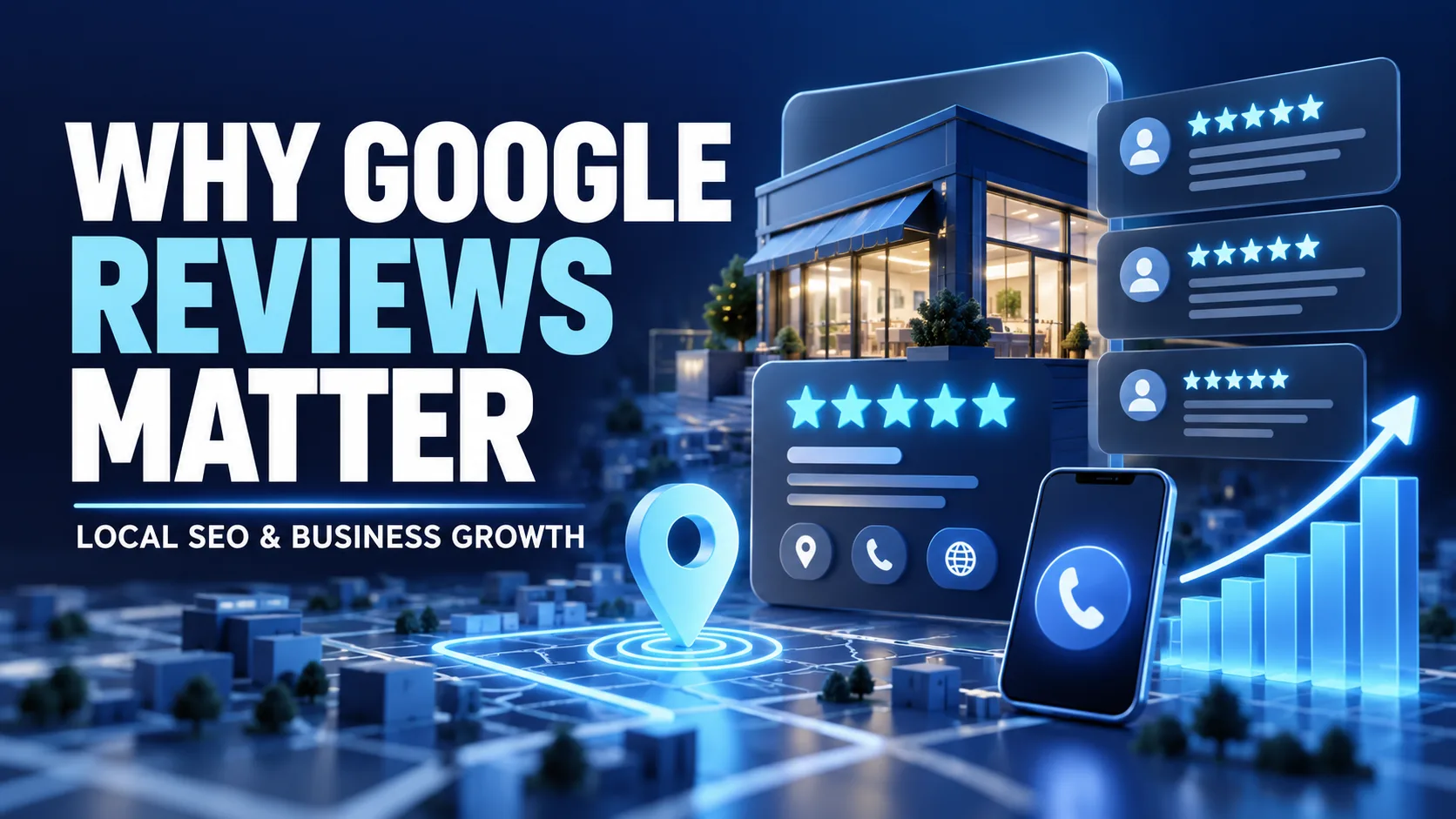
Google reviews are important because they help customers trust you before they call, and they help Google see that your business is active, known and worth showing in local results. For local SEO and business growth, reviews are not decoration. They are social proof, ranking input, sales support and customer research, all sitting inside one very public box.
How Google reviews help local SEO, without magic tricks
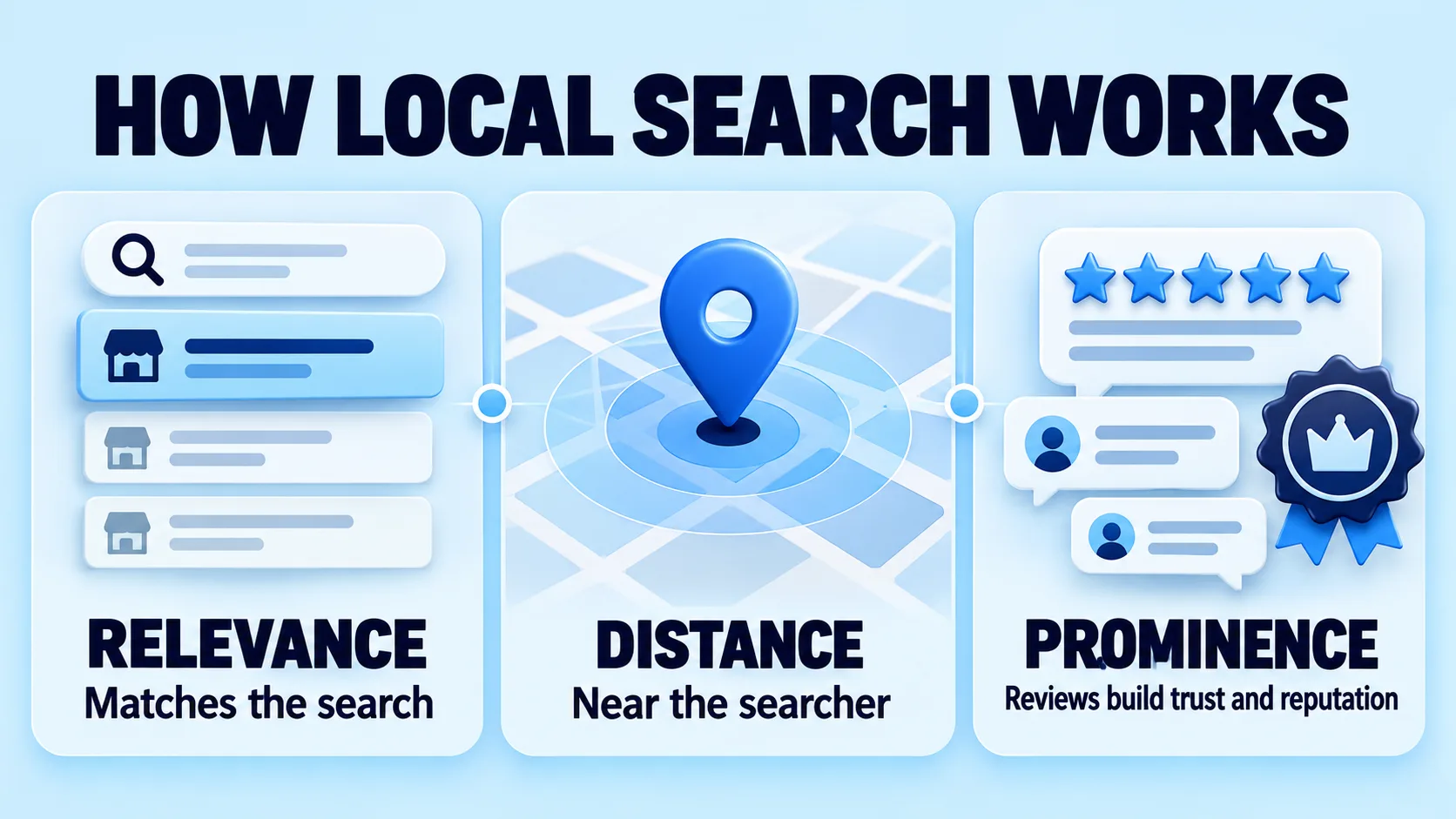
Google's local ranking guidance says local results are mainly based on three things:
- Relevance: "how well a Business Profile matches what someone is searching for."
- Distance: "how far each business is from the customer who's searching."
- Prominence: "how well-known a business is," which Google says includes how many websites link to you and how many reviews you have.
Reviews sit inside that prominence bucket, and Google is unusually direct about it on the same page: "More reviews and positive ratings can help your business's local ranking."
That does not mean the business with the most stars wins every time. Local search is not a beauty contest where a 4.9 automatically beats a 4.6. Your categories, services, business details and website decide how relevant you are. Where the searcher is standing decides distance, and no number of reviews changes that. Reviews matter because they add fresh, customer-written evidence that the business is real, active and trusted.
The less obvious advantage is language. When customers naturally mention services, problems, neighbourhoods, staff names, turnaround times or outcomes, they build a vocabulary map of what your business is known for. A review that says "They repaired our furnace in Mississauga the same day and explained the warranty clearly" is not just praise. It is a short story full of useful service and local context. You should never script reviews, and Google's rules forbid it (more on that below), but it helps to understand why a specific review does more than a row of "Great service!" comments.
Buyers love reviews because buying locally feels risky
Local purchases are often small enough to decide quickly but personal enough to feel risky. Nobody wants to pick the wrong dentist, accountant, renovation contractor, lawyer, mechanic, clinic, salon, daycare or emergency repair company. In many categories the customer is not just buying a service. They are inviting someone into their home, handing over private information, or paying before they know the outcome.
Reviews reduce that fear. They are a crowd of small referrals standing beside your listing, saying "we went first, and it was fine." That matters most for new customers who do not know your brand yet. They may not understand your process, credentials or difference, but they can spot patterns in reviews: clear communication, fair pricing, clean work, fast response, friendly staff, good follow-up, no surprise fees.
Customers are also review detectives. They do not only look at the average rating. They read the newest review, the worst review, the owner's reply, the photos, the repeated words and the overall temperature of the profile. A 4.7 rating with thoughtful replies can feel more trustworthy than a perfect 5.0 from six vague reviews, because real businesses have real customers, and real customers do not all write like greeting cards.
Why review replies are secretly sales copy
Many businesses treat review replies as a chore, which is a shame, because replies are free public sales copy. Every response is read by three audiences at once: the customer who wrote the review, the future customer deciding whether to trust you, and Google, which can see whether the profile is actively managed. Google says it plainly: "When you reply to customer reviews, it shows that you value their feedback. Positive reviews and helpful replies can help your business stand out."
A lazy reply says "Thanks." A useful reply says "Thank you for trusting us with your kitchen cabinet installation in Oakville. We're glad the measurements, finish selection and delivery timing went smoothly." The second one is still natural and human, but it quietly reinforces the service, the place and the experience a future customer is looking for. It also shows someone is paying attention rather than pasting the same line while half asleep.
Negative reviews deserve even more care. Do not argue as if you were defending yourself in court, and do not reveal private details. A calm reply can turn a bad review into a trust signal by showing that your business listens, looks into problems and offers a reasonable next step. Future customers are not looking for perfection. They are looking for proof that if something goes wrong, you will not disappear into the bushes. Our guide to replying to Google reviews has templates for both kinds.
The review mistakes that quietly slow down growth
Asking only when someone remembers. This creates review droughts, and a drought makes a profile look abandoned even when the business is busy.
Asking only the happiest customers. This is review gating, and Google's Maps content policy names it: businesses must not "discourage or prohibit negative reviews, or selectively solicit positive reviews from customers." The same policy bans offering "payment, discounts, free goods and/or services" in exchange for a review, or for changing or removing a negative one. The clean system is simple: ask every real customer at the right moment, make it easy, and let them be honest.
Waiting too long. The best window is while the customer's relief or satisfaction is still fresh. For a clinic, that might be after the appointment. For a contractor, after the final walkthrough. For an accountant, after the filing is done and the client finally understands what was handled. Ask three weeks later and the moment has cooled; they have moved on to twelve other problems.
Making the customer work too hard. Someone who wants to leave a review should not have to search for your business, pick the right listing and hunt for the button. Google lets you create a review link or QR code from your Business Profile (Read reviews, then Get more reviews, then copy the link or save the QR code). The QR code can only be generated from a computer browser, not a phone. Use the direct path and remove the friction.
A review system most businesses never build
The best review strategy is not a campaign. It is a routine. Campaigns happen when a business panics because a competitor has more reviews. Routines happen because the customer journey was designed properly. A routine answers five questions: who asks, when they ask, where the link lives, how the request sounds, and who replies afterwards.
Here is a practical version:
- Who asks: the person closest to the happy moment, because the request feels natural coming from someone the customer actually dealt with.
- When: right after the job is done or the result lands, not weeks later.
- Where the link lives: a saved text, an email template, the invoice footer, a QR card at the counter or a CRM follow-up, so nobody has to hunt for it. Google itself suggests receipts, thank-you emails, end-of-chat messages and in-store displays.
- How it sounds: short, polite and clearly optional.
- Who replies: the owner or manager, within a set window, with enough detail to make the reply useful to future readers.
The part that is not obvious is training your team to notice review moments. When a customer says "you saved us so much time," that is a review moment. When they say "I wish I'd found you earlier," that is a review moment. When they send a thank-you note, approve a design, compliment a technician, reorder or refer a friend, that is a review moment. The request does not need to be fancy. It just needs to turn natural gratitude into public proof.
Two lines not to cross while you do it. Google's policy says businesses must not "require or pressure users to leave ratings or write reviews while on the premises," so a card on the counter is fine and hovering over someone's phone at the till is not. And it specifically bans asking staff to collect a set number of reviews, so make noticing review moments part of the job without turning it into a quota.
What a good review request sounds like
A good request does not beg, bribe, pressure or guilt. It makes the favour feel easy and optional. A service business could say: "We're glad everything is sorted. If you have a minute, an honest Google review would help other local customers know what it's like to work with us." A clinic might say: "Thank you for visiting us today. If you'd like to share your experience, an honest review helps other patients make a confident choice."
Notice the word honest. It matters. You are not asking for five stars; you are asking for a real account. That keeps the request ethical and the tone comfortable, and it often produces more useful reviews because people feel free to write about whatever actually helped them.
This is also where a lot of review advice goes wrong. It is tempting to nudge customers toward the details that help local SEO: "mention the service and the city." Google's policy says businesses may encourage reviews of genuine experiences but must not attempt "to influence the rating or the contents of the review," and must not "request that specific content be included." So do not suggest keywords, services, locations or topics. Ask openly, and let the customer decide what to say. The specific, useful reviews come from doing specific, memorable work, not from the request.
How reviews turn into growth beyond rankings
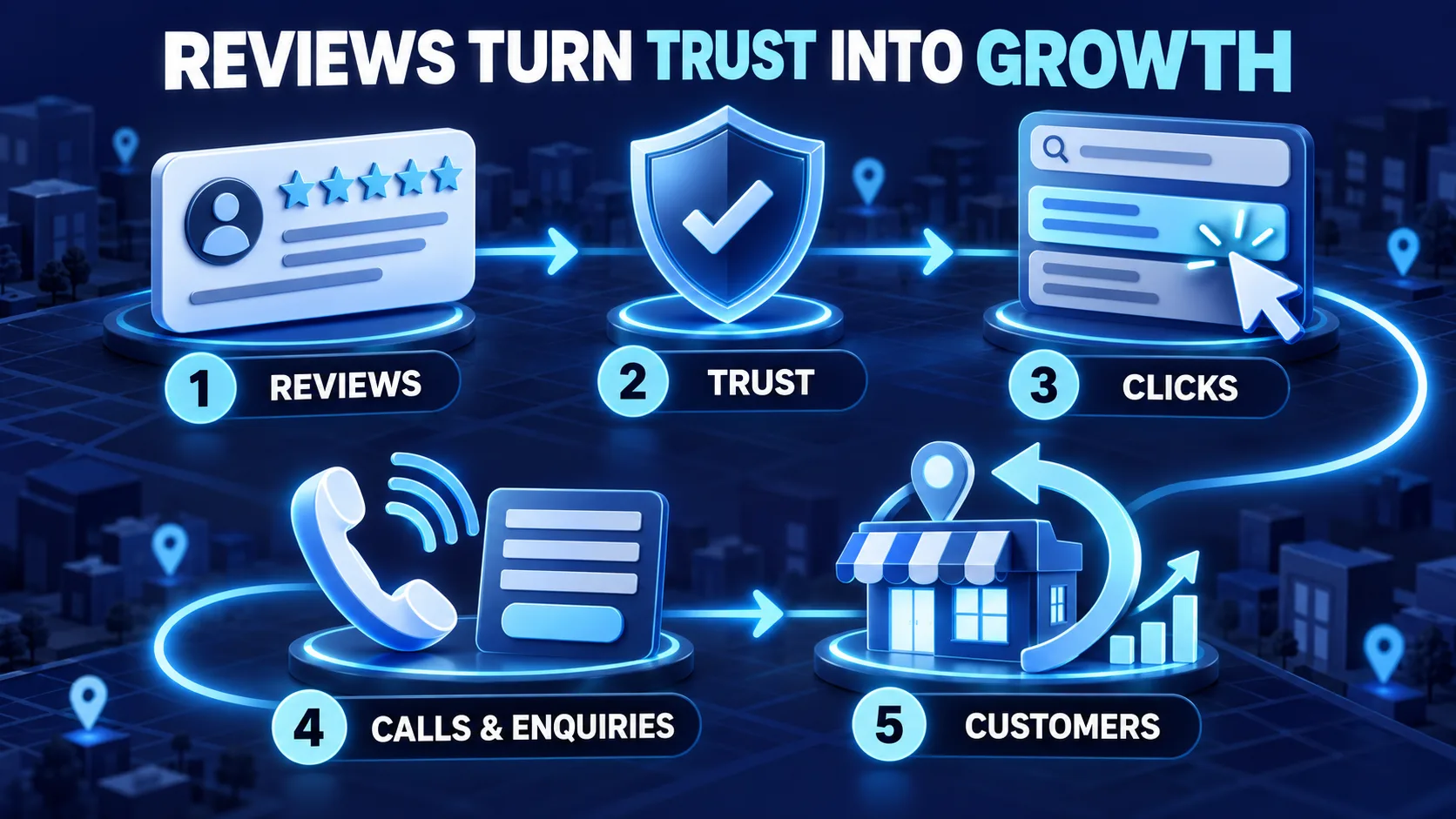
Reviews help rankings, but the bigger money is often in conversion. A strong profile can lift the share of searchers who call, ask for directions, visit your website or send an enquiry. That means reviews make every other channel work harder. Your SEO gets more clicks, your ads feel safer, your landing pages inherit trust, your sales calls start warmer, and referrals become easier to check.
Reviews also help you run the business better. If ten customers mention slow replies, that is not just a reputation issue; it is a process issue. If five praise the same team member, that is a training clue. If people keep mentioning a service your website barely talks about, that is a content opportunity. The smartest businesses do not only collect reviews. They mine them for better service pages, FAQs, ad angles, staff training and fixes to the customer experience.
That is why we connect review work to website content, Google Business Profile optimisation, citation cleanup, mobile performance and call and conversion tracking, rather than treating reviews as a lonely star-collecting exercise. Our local SEO services and wider SEO services are built that way.
Our local review playbook
For a local business, the review plan should be tied to the wider search plan. Start with profile completeness, because reviews cannot rescue a confusing listing. Make sure the category, services, hours, address or service area, photos, booking links and website link are accurate. Then make sure the website tells the same story, with service pages, location pages, useful FAQs, fast mobile loading and clear calls to action.
Our own work shows why this matters. For Bestax Accountants, the focus went on service intent, local visibility, trust signals and conversion paths rather than publishing for the sake of publishing: Business Profile completeness, citation consistency, review volume and location pages that were genuinely about the place. As our portfolio records, that campaign produced conversions up 30 percent, revenue up 50 percent and 210 leads in its first year. Reviews did not do that on their own. They worked because the rest of the local search system supported the buyer's journey.
So a review strategy should sit beside citations, mobile SEO, content and tracking. If your listings are inconsistent, start with our free business directories in Canada guide. If your listing gets views but your website loses people on phones, pair review work with mobile SEO improvements, so the customer does not trust your reviews and then bounce off a slow page.
A simple monthly checklist
Once a month, look at your Google Business Profile like a suspicious customer with very little patience:
- Is the newest review recent?
- Are the latest photos current?
- Do the listed services match what you actually sell?
- Are the hours right, including holidays?
- Has every review, especially every negative one, had a calm reply?
- Are customers mentioning the services you want to grow?
- Are calls, forms, direction requests and website clicks being tracked?
Then turn the answers into action. Ask every customer who finished a job, through the same fair process. Reply to every review with useful detail. Add missing services, refresh your photos, fix inconsistent directory listings, and build website pages around the services and places people actually search for. If reviews have vanished from your profile, our post on why Google reviews disappear covers the usual causes. The profile is not a trophy cabinet; it is a living sales asset.
The businesses that win local search rarely do one dramatic thing. They do a lot of small, visible, trustworthy things consistently. Google reviews are one of those things, and because customers see them before almost anything else, they deserve more attention than most businesses give them.
Final thought: reviews are not stars, they are stories
The easiest way to misunderstand Google reviews is to treat them as a star rating. Stars matter, but stories sell. A review that describes the problem, the service, the outcome and how the customer felt afterwards can do more for trust than a dozen empty five-star ratings. That story adds to your prominence in Google's eyes, lowers the risk in a customer's mind, and shows your team what people actually value.
So yes, Google reviews are important for local SEO. More importantly, they are important for local buying decisions. They are where strangers become less sceptical, searchers become callers, and good work becomes visible proof. If your business already does good work, the next growth step may be surprisingly simple: make sure the people who experienced it have an easy, honest way to say so.
Want your reviews, Business Profile, local pages, citations and lead tracking working together instead of sitting in separate corners? Get a free local SEO audit from Wide Ripples and we will show you which signals are helping, which are holding you back, and what to fix first.
Frequently asked questions about Google reviews and local SEO
Why are Google reviews important for local SEO?
Google says prominence is one of the three main local ranking factors, that it includes how many reviews you have, and that more reviews and positive ratings can help your local ranking. Reviews also give searchers quick proof that real people used your service recently, which can improve clicks, calls, direction requests and form submissions.
Do Google reviews directly help a business rank higher?
They can. Google's local ranking page says "more reviews and positive ratings can help your business's local ranking." But reviews sit alongside relevance and distance, so they are not a magic ranking button. A steady flow of honest, specific reviews helps most when the rest of your profile and website are in good shape.
How many Google reviews does a local business need?
There is no perfect number, because the right target depends on your city, category and competitors. A small clinic in a quiet suburb might look strong with 40 detailed reviews, while a busy restaurant or home service company in a competitive city may need hundreds to feel equally trusted. Look at the businesses already showing in the map results for your main searches.
What is better for local SEO, more reviews or better reviews?
Both matter. Google names review count and positive ratings, and customers read the words. When someone is close to buying, a profile with fewer detailed reviews that describe real experiences can be more convincing than many empty five-star ratings that only say "great service."
How often should a business ask customers for Google reviews?
Every time a genuine customer finishes a job or gets their result, not in one desperate campaign every few months. Make the request part of your normal close-out process, and ask every customer rather than only the ones you expect to be happy, since selectively asking for positive reviews breaks Google's policy.
Can I ask customers to mention keywords in their Google review?
No. Google's Maps content policy says businesses must not request that specific content be included or attempt to influence the rating or contents of a review. Ask openly for an honest review and let the customer choose what to write.
Can I offer a discount or gift for a Google review?
No. Google prohibits offering payment, discounts, free goods or services in exchange for posting a review, or for changing or removing a negative one. It treats this as fake and misleading content.
Should I reply to every Google review?
Yes, when you can. Google says replying shows customers you value their feedback, and that positive reviews with helpful replies can help your business stand out. A good reply thanks the person, reflects the service context naturally, and shows the business is active and paying attention.
What should I do when I get a negative Google review?
Stay calm, reply professionally, acknowledge the concern, keep private details out of it, and move the conversation to a direct channel when needed. A thoughtful response to a negative review can build more trust than a perfect profile, because it shows how your business behaves when something goes wrong.
How do I get a Google review link or QR code?
From your Business Profile, choose Read reviews, then Get more reviews. Copy the link, or right-click the QR code and save it. QR codes can only be generated on a computer browser. Put the link on receipts, thank-you emails and invoices, and the QR code on an in-store card.
Do Google reviews help if my website is weak?
Reviews can help your Business Profile earn trust, but a weak website can still lose the lead after the click. Reviews, location pages, mobile speed, service pages, tracking and clear calls to action should work together so the customer has no reason to leave after trusting your listing.
How can Wide Ripples help with Google reviews and local SEO?
We connect review strategy with Google Business Profile optimisation, local SEO, citation cleanup, service and location pages, mobile SEO and lead tracking. Review growth works best as part of a local visibility system that turns searches into enquiries, not as a side task.

Written by Umer Kureshi
Search and Performance Lead
Umer leads search and performance at Wide Ripples Digital and heads SEO and marketing at Bestax. His work covers technical SEO, content strategy, internal linking and local search, and he builds each plan around the gaps in a client’s niche rather than a copied playbook. On one campaign that approach took a site from 30 clicks a day to 12,953 in a single day.
Last updated September 28, 2026 · Umer Kureshi on LinkedIn