ChatGPT Ads: How They Work and Whether Canadian Businesses Should Test Them
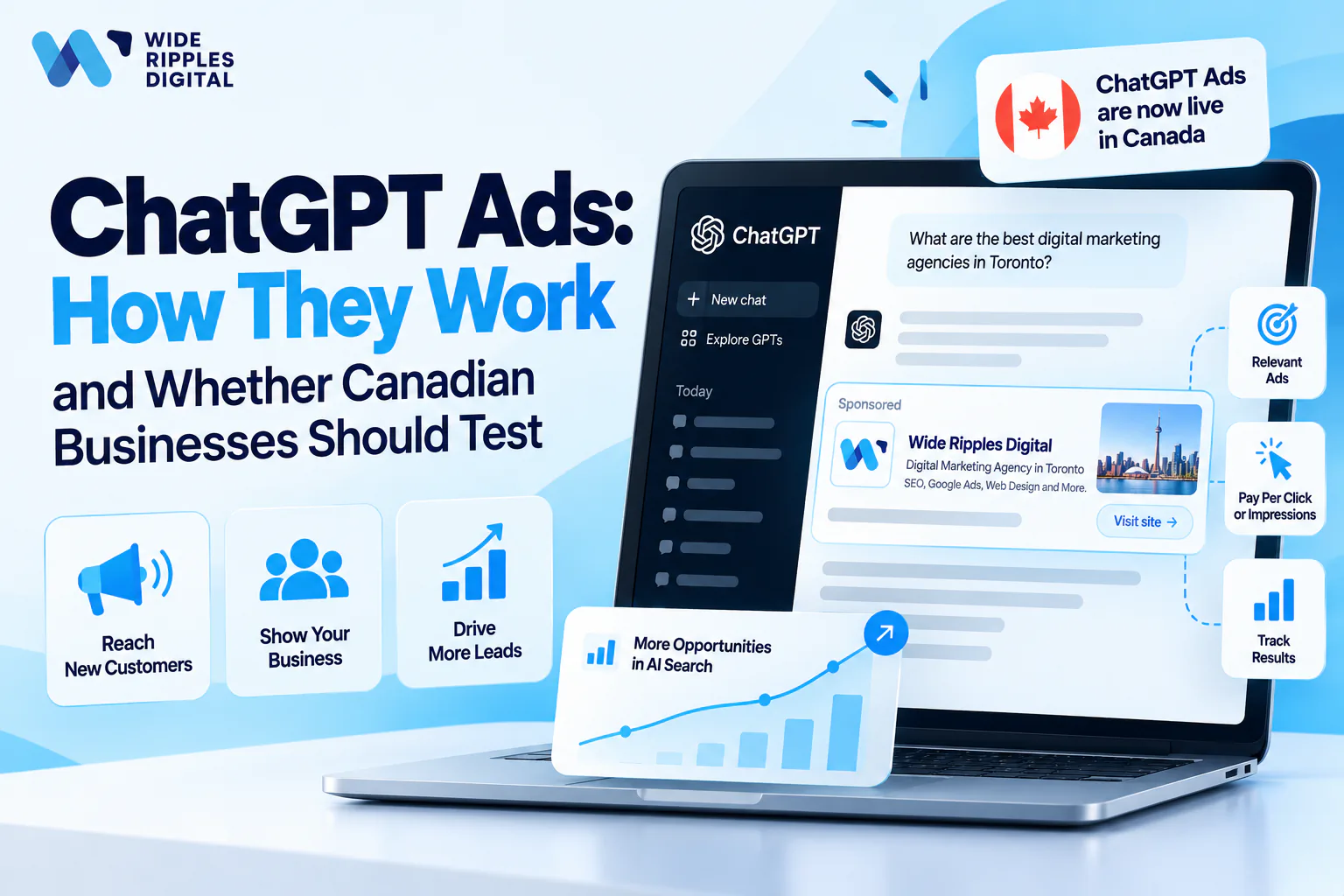
ChatGPT ads now reach Canadian users, and you can buy them through a self-serve dashboard. OpenAI began testing ads in ChatGPT in the US on February 9, 2026. By August, the program had passed a US$1 billion annualized revenue run rate in under 200 days.
If you already run Google or Meta campaigns, you are probably asking whether ChatGPT advertising deserves a share of your budget. The answer depends on what you sell, how you measure results, and how much uncertainty you can carry.
How ChatGPT ads work
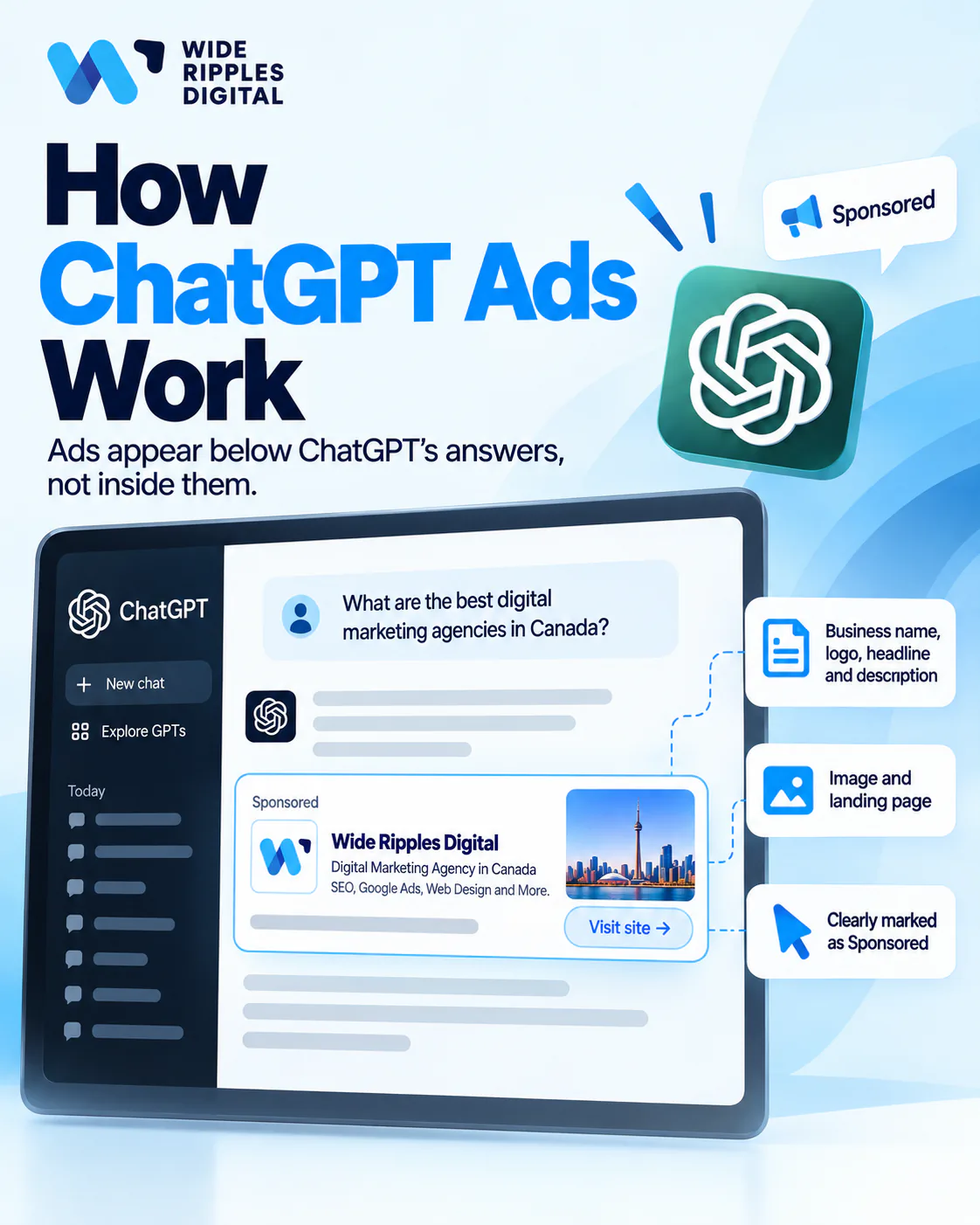
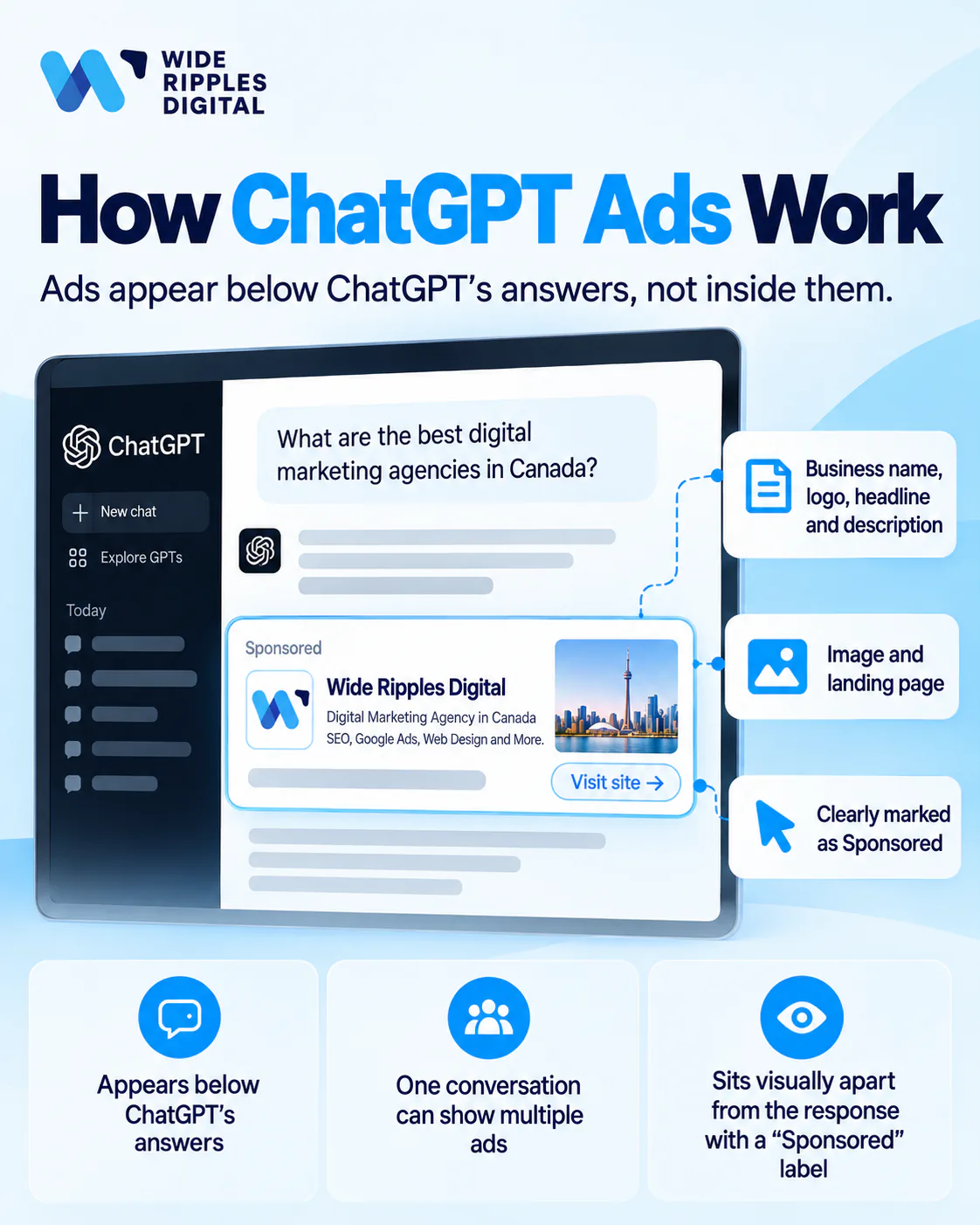
OpenAI ads sit underneath ChatGPT's answers, not inside them. Each ad carries a "Sponsored" label and sits visually apart from the response, according to OpenAI's help center.
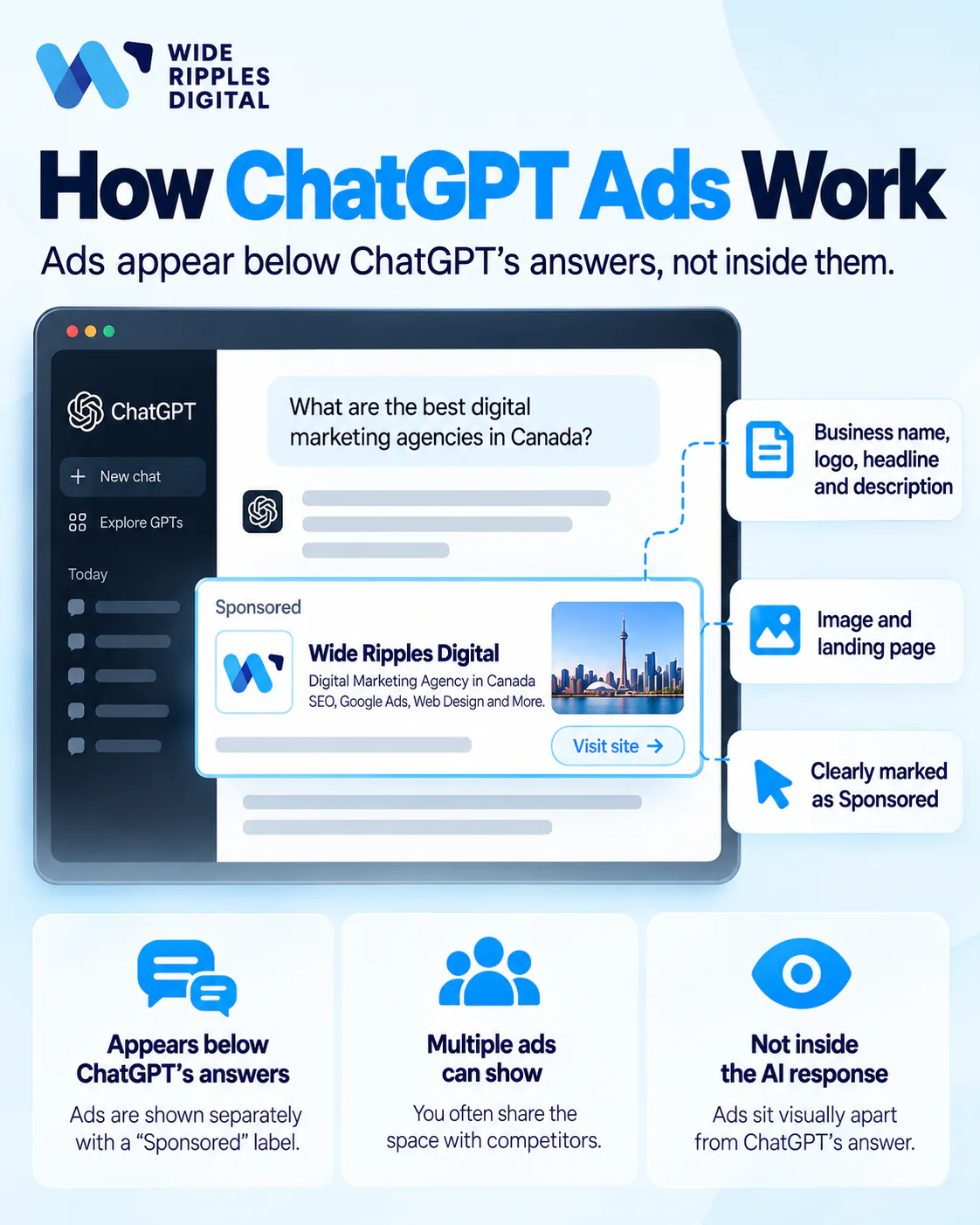
Your ad unit shows your business name, logo, headline, description, image and landing page. One conversation can show more than one ad unit, so you often share the space with competitors.
Which users see ads in ChatGPT
Not every ChatGPT user sees your ad. The audience is narrower than ChatGPT's 1 billion weekly users suggests:
| ChatGPT user | Sees ads? |
|---|---|
| Free plan, logged in, 18 or older | Yes |
| Go plan, logged in, 18 or older | Yes |
| Plus, Pro, Business, Enterprise, Edu | No |
| Users under 18, or predicted to be | No |
| Temporary Chat sessions | No |
Free users can also switch to an ad-free mode with lower usage limits, which shrinks your reachable audience further. Ads never appear next to conversations about personal health, mental health or politics, and political advertising is banned outright.
How the OpenAI ads auction picks a winner
ChatGPT advertising does not use keywords the way Google does. The system reads the conversation's context, your ad text, your landing page, and the "context hints" you write for each ad group.
Context hints describe the topics you want to appear near. OpenAI states plainly that they are not exact-match keywords and do not guarantee delivery.
Your ad then competes in a relevance-weighted, second-price auction. A highly relevant ad beats a higher bid that fits the conversation poorly, so better ad copy can lower what you pay.
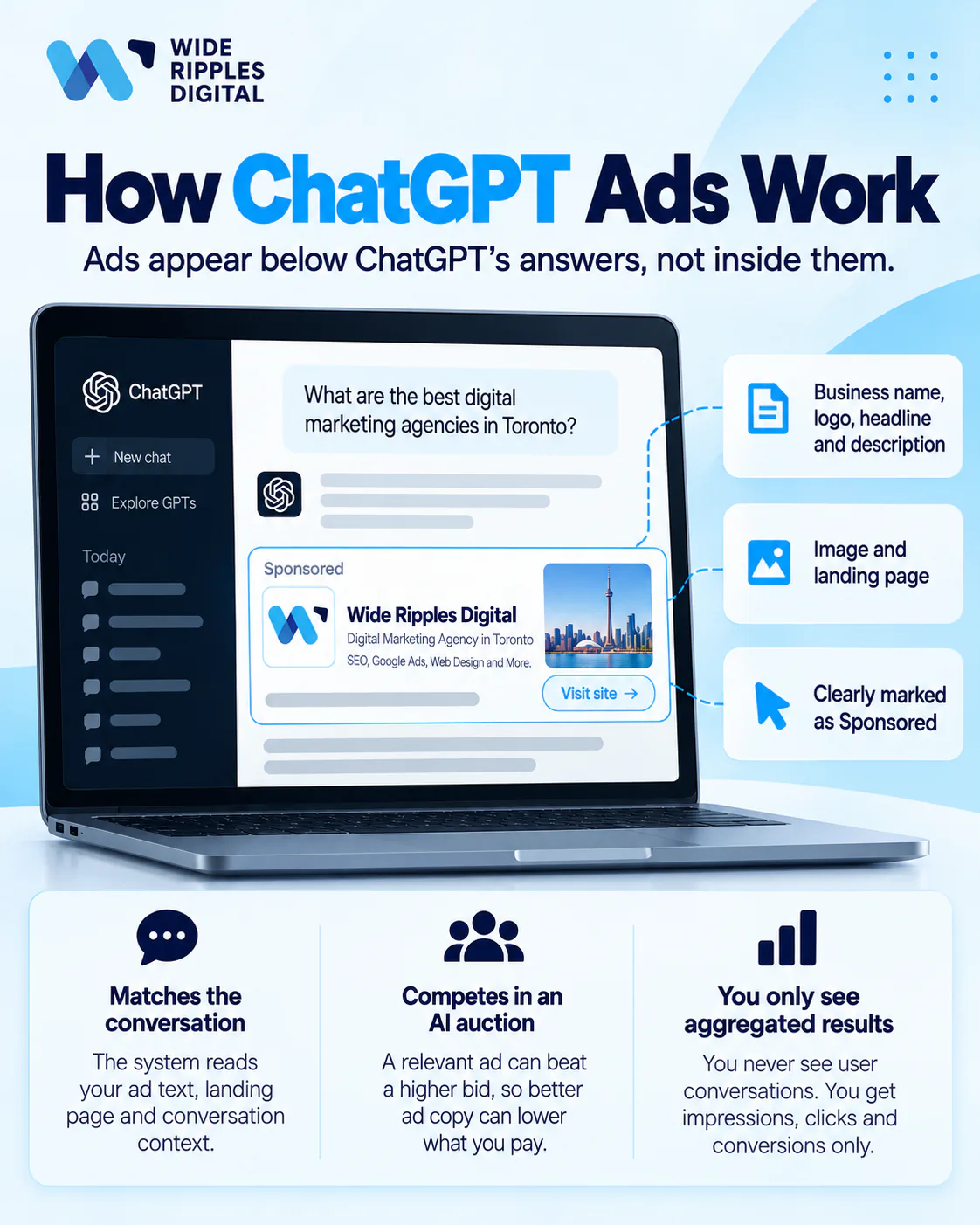
You never see user conversations. OpenAI shares only aggregated results such as impressions and clicks.
How businesses buy ChatGPT ads
Businesses can advertise on ChatGPT in two ways. Large brands buy through OpenAI's sales team and agency partners such as Dentsu, Omnicom, Publicis and WPP. Most Canadian businesses use the self-serve dashboard.
Advertise on ChatGPT through the Ads Manager
The ChatGPT Ads Manager opened in beta on May 5, 2026, at ads.openai.com. You register, add payment details, set budgets and bids, upload ads and track results without a sales contact.
OpenAI's availability list marks the Ads Manager as available in 63 countries, including Canada. The business that pays for the ads must be based in an available country, so your Canadian corporation qualifies.
The dashboard reports impressions, clicks, click-through rate, average cost per click and conversions. Spend data can lag seven to eight hours behind, so a zero on the screen does not mean you have spent nothing.
Choose a ChatGPT ads billing model
OpenAI's Ads Manager guide gives you three billing models:
- Views: you pay per 1,000 impressions, with a maximum CPM bid
- Clicks: you pay per click, with a maximum CPC bid
- Optimized CPC: the system bids for conversions, but you still pay per click
Conversions are tracked through OpenAI's pixel or Conversions API. UTM tags on your landing pages also carry through, so Google Analytics records ChatGPT traffic like any other source.
How much do ChatGPT ads cost?
OpenAI publishes no minimum budget and no average cost per click. The only official figure is a suggested starting bid of US$3 to US$5 per click.
Real ChatGPT ads CPC figures
Published CPC data comes from advertisers sharing their own results. Search Engine Journal compiled several self-reported tests in September 2026:
| Advertiser (self-reported) | Spend | Average CPC | CTR |
|---|---|---|---|
| Common Thread Collective | US$9,620 | US$4.41 | 0.94% |
| Canadian B2B test (Floyd Blaikie) | about CAD 7,000 | $9.29 | 0.7% |
| Synter, across markets | US$4,429 | US$9.89 | not reported |
Reported CPCs ranged from US$3 to US$22, varying widely by country. The Canadian test also paid a CPM of $64.34.
That Canadian result carries a warning. Only five of the 146 organizations that clicked matched the advertiser's ideal customer profile.
What pushes your ChatGPT ads CPC up or down
Country matters more than most advertisers expect. The Synter test paid US$5.10 per click in the UK and US$10.62 in the US, but US$17.59 in Australia and US$22.89 in New Zealand.
Relevance matters too. The auction rewards ads that fit the conversation, so a sharp headline and a matching landing page can win clicks at a lower bid.
Bid strategy sets the ceiling. Since August 2026, "Maximize results" is the default for eligible new ad groups, and OpenAI guarantees no target CPA, CPC or ROAS. You control cost through your bid caps and daily budget, not through a promised outcome.
Estimate a ChatGPT ads test budget
Say you run a Canadian software company with a CAD 3,000 test budget. At a CPC of about $9, your budget buys roughly 330 clicks.
If 3% of those visitors become leads, you get about 10 leads at roughly $300 each. Set that figure against what Google Ads costs in Canada for the same service before you scale.
Price is only half the picture. A visitor arriving from a detailed ChatGPT conversation may already know what they need. A higher cost per lead pays off only if those leads close faster, and your CRM data answers that question.
ChatGPT ads vs Google Ads: the key differences
ChatGPT ads and Google Ads both put a paid result next to an answer. The controls you get are very different:
| Factor | ChatGPT ads | Google Ads |
|---|---|---|
| Targeting | Conversation context and context hints | Keywords, audiences, locations |
| Audience | Free and Go users, 18 and older | Almost every Google search user |
| Competitive data | No auction insights or impression share | Auction insights and impression share |
| Bid strategies | Views, Clicks, optimized CPC | Full range, including target CPA and ROAS |
| Track record | Live since February 2026 | Benchmarks across every industry |
| Ad formats | Text with image below answers; visual ads beside generated images launching in the US | Search, Shopping, Display, YouTube, Performance Max |
Google Ads remains the stronger channel for demand someone has already typed into a search box. ChatGPT ads reach people earlier, while they are still asking questions and comparing options.
If your Google campaigns already run profitably, ChatGPT ads give you a second source of early-stage demand. Treat them as a test alongside Google, not a replacement. Pulling budget from a profitable Google campaign to fund an unproven channel rarely makes sense.
Should your business test ChatGPT ads in Canada?
ChatGPT ads in Canada began rolling out to users in April 2026, and self-serve buying is open now. If you test early, you build your own benchmarks while published data is still thin.
Which businesses should test ChatGPT ads now
ChatGPT ads suit you if your customers research before they buy:
- Software and SaaS companies, where buyers compare tools in ChatGPT
- Ecommerce brands selling considered purchases, one of which reported a 3x return on ad spend over 28 days in OpenAI's August 2026 update
- Professional services firms with a clear niche, such as accounting, immigration or legal practices
- Businesses already tracking conversions in Google Analytics and a CRM
Which businesses should wait
OpenAI's documentation does not describe location targeting. If you serve one city, you risk paying for clicks from across the country.
Health and financial advertisers face strict criteria. If you spend under $1,000 a month on all paid channels, your Google campaigns will return more for the same effort.
Quebec adds a language rule. The Charter of the French Language requires commercial advertising aimed at Quebec to be in French, so your Quebec-facing ads and landing pages need French versions.
How Wide Ripples runs a 60-day ChatGPT ads test
Our team runs every ChatGPT ads test in four stages:
- We install OpenAI's pixel and UTM tracking before any budget goes live.
- We launch one campaign with two to three ad groups, each built around a distinct buyer question.
- We run the test for at least 60 days on a fixed budget and match every click against your CRM.
- We compare cost per qualified lead with your Google Ads results, then recommend whether to scale, adjust or stop.
Get ChatGPT ads managed by Wide Ripples
Wide Ripples is a Mississauga-based digital marketing agency serving businesses across Canada. We manage Google and Meta ads and PPC campaigns, and we set up ChatGPT ads tests alongside them, measured against the same lead data.
ChatGPT also recommends businesses that pay nothing for ads. Our generative engine optimization work, explained in our guide on how to rank your website on ChatGPT, helps your brand appear in those organic answers.
Not sure ChatGPT ads fit your business? We will tell you whether a test makes sense and what it would cost. Call +1 416-668-6969 or book a free strategy call.
ChatGPT ads FAQs
Does ChatGPT have ads?
Yes. ChatGPT shows ads to logged-in adult users on the Free and Go plans. If you pay for Plus, Pro, Business, Enterprise or Edu, you see no ads.
Are ChatGPT ads available in Canada?
Yes. Ads began rolling out to Canadian users in April 2026, and you can buy them through the self-serve ChatGPT Ads Manager as a Canadian business.
How much do ChatGPT ads cost?
OpenAI sets no published minimum budget. Its suggested starting bid is US$3 to US$5 per click, and advertisers have reported average CPCs between US$3 and US$22. One Canadian B2B test paid about $9.29 per click.
Can businesses advertise on ChatGPT?
Yes. If your business is based in one of the 63 countries where the Ads Manager is available, you can register at ads.openai.com and launch campaigns. Political ads are banned.
Disclaimer: The information provided in this blog is for general informational purposes only. For professional assistance and advice, please contact experts.

Written by Umer Kureshi
Search and Performance Lead
Umer leads search and performance at Wide Ripples Digital and heads SEO and marketing at Bestax. His work covers technical SEO, content strategy, internal linking and local search, and he builds each plan around the gaps in a client’s niche rather than a copied playbook. On one campaign that approach took a site from 30 clicks a day to 12,953 in a single day.
Reviewed by Syed Haseeb, Client Growth Manager
Last updated October 28, 2026 · Umer Kureshi on LinkedIn